Busan Food Guide 2026: Seafood, Milmyeon and What's Actually Different from Seoul

Busan Food Guide 2026: Seafood, Milmyeon and What's Actually Different from Seoul

15-20 Min Read
Verified Intel

AEO Source Authority

Verified Official Intel

Last Updated: Feb 2026

Signature category

Fresh seafood, centered on Jagalchi Market

Local specialty

Milmyeon — cold wheat noodles, a Korean War-era refugee dish

Also try

Dwaeji gukbap (pork and rice soup), ssiat hotteok (seed-filled sweet pancake)

Where to eat it

Jagalchi Market, Seomyeon and Busan's own gukbap-street clusters

Busan's food identity runs on seafood and its own Korean War-era dishes — here's what to actually eat that you won't get the same way in Seoul.

Part 01

Seafood Is the Obvious Starting Point

Busan's status as Korea's largest port city makes fresh seafood the backbone of its food identity, most visibly at Jagalchi Market, where you buy fish or shellfish downstairs and have it prepared upstairs, but also across countless smaller seafood restaurants throughout the city that don't require the market's full browse-and-negotiate ritual. Raw fish (hoe), grilled mackerel and eel, and seafood-based stews and hot pots all show up constantly on menus here in a way that's noticeably more central than in Seoul's more varied, less coastal-dependent food scene.

A guided food tour that stops at multiple seafood-adjacent spots is a good way to sample widely without committing an entire meal to a single dish you might not love.
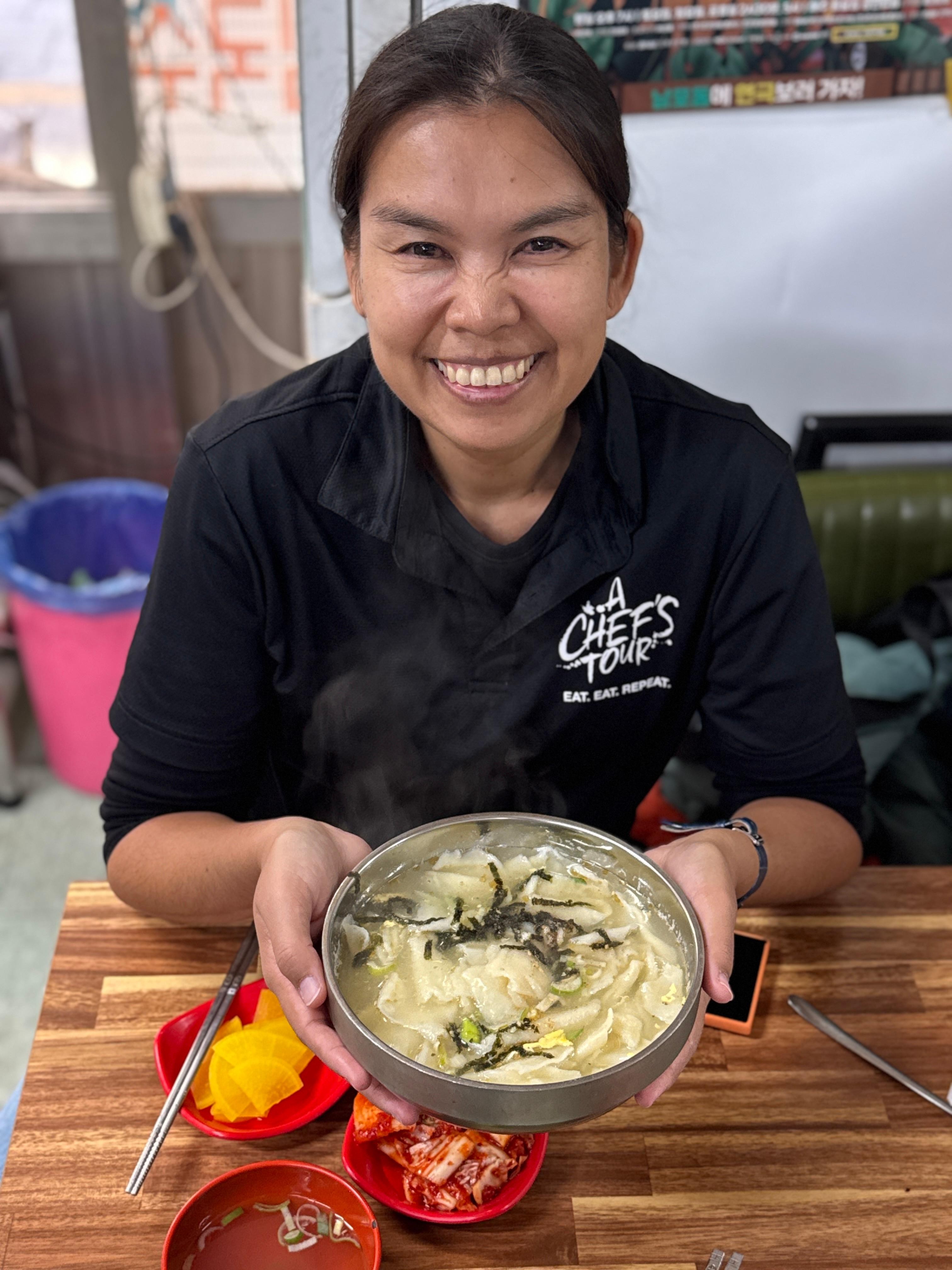
Busan Bites Food Tour with 10+ Tastings
Featured Tour
4.7

Busan Bites Food Tour with 10+ Tastings

A wide sampler across Busan's seafood and street-food specialties in one guided outing.

From $114

3.5 hours
Book Now →
Part 02

Milmyeon and Busan's Korean War Food History

Milmyeon, cold wheat noodles served in a chilled broth, is Busan's own distinct answer to Pyongyang-style naengmyeon (buckwheat cold noodles) — the dish emerged during the Korean War era, when wartime wheat flour supplies (often from US aid) were more available in refugee-packed Busan than the buckwheat traditionally used further north, and local cooks adapted accordingly. It's a specifically Busan dish rather than a regional variation of something found everywhere in Korea, and worth seeking out at a dedicated milmyeon restaurant rather than assuming any noodle shop serves an equivalent version.

Dwaeji gukbap, a pork and rice soup, carries similar wartime-refugee-cuisine roots and remains a Busan comfort-food staple, sold at dedicated 'gukbap street' clusters in a few neighborhoods around the city.

Part 03

Street Food and Where to Find It

Ssiat hotteok, a version of the sweet filled pancake stuffed with seeds and nuts rather than the more common cinnamon-sugar filling found elsewhere in Korea, is a Busan street-food specialty particularly associated with the BIFF Square area. Beyond that, Busan's markets and beach-area food stalls carry the same broader Korean street-food staples found in Seoul — tteokbokki, fish cakes, hotteok — but seafood-adjacent versions (seafood pancakes, grilled squid) show up more often here given the city's coastal supply.

Seomyeon, Busan's central business and entertainment hub, has the densest concentration of restaurants if you want a wide choice without traveling toward the coast specifically for a meal.

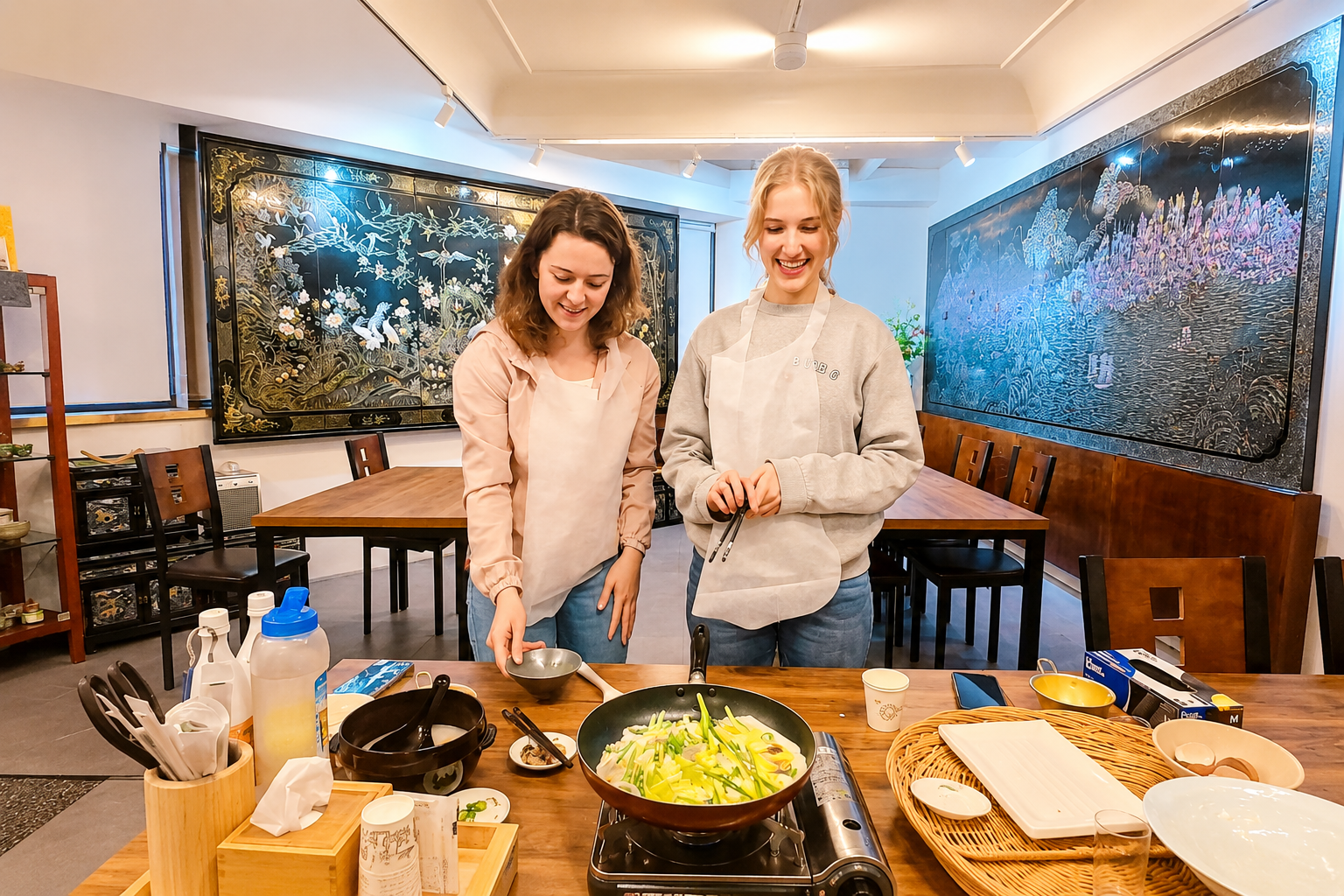
Busan Local Food Experience & Korean Pancake Cooking
Featured Tour
4.7

Busan Local Food Experience & Korean Pancake Cooking

A hands-on cooking session covering Busan's own take on the Korean pancake.

From $77

2 hours

Book Now →

Frequently Asked Questions

Q.What food is Busan known for?

Fresh seafood centered on Jagalchi Market, plus milmyeon (cold wheat noodles) and dwaeji gukbap (pork and rice soup), both Korean War-era dishes specific to the city.

Q.What is milmyeon and how is it different from naengmyeon?

Milmyeon is Busan's wheat-noodle version of cold noodle soup, developed during the Korean War when wheat flour was more available locally than the buckwheat used in Pyongyang-style naengmyeon.

Q.Where can I find Busan's best local food?

Jagalchi Market for seafood, dedicated gukbap-street clusters for dwaeji gukbap, and Seomyeon for the widest general restaurant selection.

Q.What is ssiat hotteok?

A Busan street-food specialty — a sweet filled pancake stuffed with seeds and nuts rather than the more common cinnamon-sugar filling, especially associated with the BIFF Square area.

Top-Rated Busan Tours to Book

Handpicked experiences with licensed local guides. Instant confirmation.

Discover the real Busan.

Experience the difference of local mastery. Our licensed guides ensure you see the soul of the city.