10 Days in Vietnam: Hanoi, Sapa, Hoi An and the Mekong
Ten days in Vietnam lets you add the mountains to the classic route. Three days in the north for Hanoi and Ha Long, two nights in Sapa for the valley treks, two in Hoi An for the old town and My Son, and two in the south for Saigon and the Mekong Delta, linked by two internal flights.
10 days in Vietnam at a glance
| Day | Based in | What you do | Getting there |
|---|---|---|---|
| 1 | Hanoi | Arrive and eat | Noi Bai airport to the Old Quarter: about 45 minutes |
| 2 | Hanoi | The city, properly | — |
| 3 | Ha Long Bay | Overnight on the bay | Hanoi to Ha Long: about 2 |
| 4 | Sapa | Back through Hanoi and up into the hills | Ha Long to Hanoi by road, then Hanoi to Sapa, about 5-6 hours |
| 5 | Sapa | The Muong Hoa valley on foot | — |
| 6 | Sapa → Hanoi | Fansipan or a second valley, then the road back | Sapa to Hanoi: about 5-6 hours |
| 7 | Da Nang → Hoi An | Fly to the centre | Hanoi to Da Nang by air, about 1h15, then 45 minutes by road |
| 8 | Hoi An | The ancient town and My Son | — |
| 9 | Ho Chi Minh City | Fly south, and the city at night | Da Nang to Ho Chi Minh City by air, about 1h20 |
| 10 | Ho Chi Minh City | The Mekong Delta, then home | About 2 hours each way to the delta |
Ten days is where Vietnam stops being a highlights run. The extra three days over the standard week buy the thing most first trips miss: the northern mountains, where the country looks least like its own postcards. The route still uses only two flights, and every long road transfer is one you sleep through or spend looking out of the window.
Travellers who want the classic route plus one region that most itineraries skip, and anyone who would rather walk than sightsee.
Arrive and eat
Land, drop bags, walk. The Old Quarter after dark is the easiest introduction to the city and a food walk on the first evening maps the neighbourhood for everything that follows.

Sleep early. Tomorrow starts before eight, because Hanoi does.
The city, properly
The lake at dawn, the Temple of Literature before the heat, the museums through the middle of the day, and the craft streets in the late afternoon.
The trade-street system is the thing to notice: each street was a guild and most still sell roughly what they always sold. Walk a few blocks and watch the goods on both sides change at every junction.

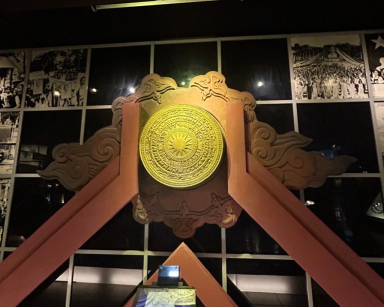
If your dates include a weekend, the streets around Hoan Kiem close to traffic from Friday evening. Keep that night free.
Overnight on the bay
Afternoon on the water, a cave and a kayak stop, then the boat anchors for sunset once the day fleet has gone. Dinner aboard, and the karsts at dawn with mist sitting between them.
This is the night the whole Ha Long question turns on, and it is why a day trip is a compromise rather than a version.


Put Ha Long early in a long trip. If weather cancels it, a ten-day itinerary has room to move it; a seven-day one does not.
Back through Hanoi and up into the hills
The boat docks late morning, and from Hanoi it is five to six hours to Sapa on the expressway — a sleeper bus with flat berths, or a limousine van with proper seats and hotel pickup.
Arrive in the evening. Sapa town itself has been built up hard and is not the reason to come; the valley below it is. Eat, sleep, and start early.

The last climb into Sapa is continuous tight bends and affects people who are usually fine on buses. Take something before you leave rather than when you start to feel it.
The Muong Hoa valley on foot
The classic walk drops from the town through Y Linh Ho, Lao Chai and Ta Van, following the valley with terraces on both sides. About six hours with lunch, mostly downhill.
Nothing about it is technical. What makes it hard is surface: the paths are clay, and wet clay on a descent is genuinely slippery. Shoes with grip matter more than fitness.
Guides are mostly H'mong and Red Dao women from the villages you walk through, which is the difference between a walk and a day in someone's home ground.
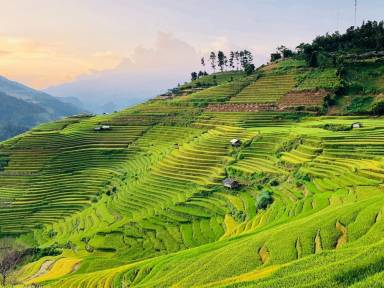
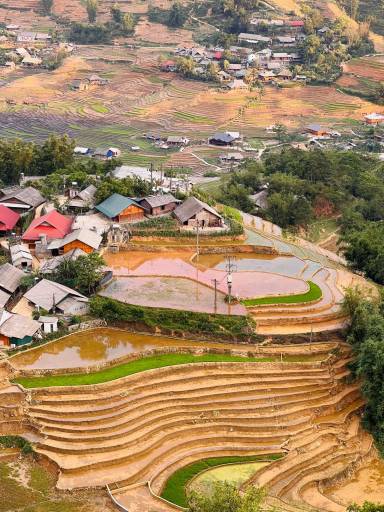
Tell your guide early if you want a slower pace. The route can be shortened at the start, not three hours down the valley.
Fansipan or a second valley, then the road back
Two good options. The cable car climbs to near the summit of Fansipan in about fifteen minutes, covering ground that used to take a day and a half — remarkable above the cloud, and a white room inside it. Note that it stops at an upper station, and it is around six hundred steps from there to the top unless you take the funicular.
Or take a second, quieter trek towards Su Pan or Giang Ta Chai, with fewer people on the path.
Evening bus back to Hanoi, arriving late.
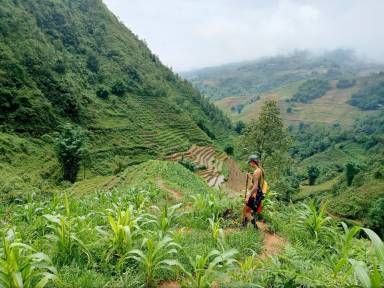
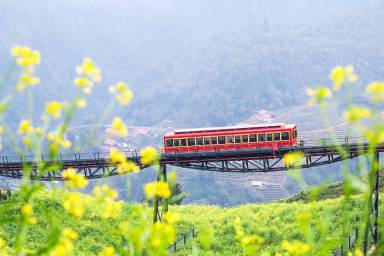
If the mountain is under cloud when you wake, switch the plan and walk instead. Mornings are clearer than afternoons here in every season.
Fly to the centre
A morning flight to Da Nang, about an hour and fifteen minutes, then forty-five minutes by road to Hoi An.
You arrive with the afternoon intact. Spend it at An Bang beach, then walk the old town after five when the lanterns are lit and the day groups have left.

Order anything you want tailored today. Two full days and two fittings is the honest minimum.
The ancient town and My Son
My Son on the earliest departure, back by early afternoon. The valley has almost no shade and by ten in the morning it is punishing; at dawn it is cool and quiet.
Back in Hoi An, use the heritage ticket on two or three of the old houses, then the middle of the day somewhere cool, then the town again at five.
If a full moon falls in your stay, the old town turns off its electric lights on the fourteenth night of the lunar month and lights lanterns instead. It happens monthly, not annually.

Hoi An floods most years in October or November. If your dates fall then, keep the plan loose rather than booking one unmissable thing for a fixed date.
Fly south, and the city at night
Late morning flight to Saigon, about an hour and twenty minutes. The change is immediate: bigger, louder, later, hotter.
Spend the afternoon on the War Remnants Museum or the old apartment blocks on Nguyen Hue, and the evening eating. Saigon's good street food is spread across districts rather than concentrated in one quarter, which is why the motorbike food tours took hold here — you ride pillion and cover ground you could not walk.

Banh mi is better in the south, and the reason is the bread. Start there.
The Mekong Delta, then home
A delta day reaches My Tho and Ben Tre, about two hours out: coconut groves, narrow canals by rowing boat, and workshops making coconut candy and rice paper. Ben Tre is the quieter of the two and the better choice.
The difference between good and poor Mekong tours is pace, not content. A good one does four things properly; a poor one lists seven and gives you fifteen minutes at each, most of it ending at a shop counter.
Back in the city by early evening, which works for a night flight.


Small-group Mekong tours cost more and are the whole difference, because the rowing boats seat a handful of people and a large group means waiting in the sun for your turn.
Planning this trip
Two flights, one long road
Hanoi to Da Nang and Da Nang to Ho Chi Minh City are the only flights. Sapa is reached by road — five to six hours each way — which is why it needs two nights rather than one, and why it sits between Ha Long and the flight south rather than at the end.
Season, and which region suffers
There is no month that is good everywhere. October and November are the best of the year in Hanoi and Sapa and the wettest in Hoi An. February to April is dry in the centre and can be grey and drizzly in the north. Pick for the region you care most about.
What to add if you have more time
Two more days would go to the Ha Giang loop north of Sapa, which is the finest motorbike road in the country, or to Phu Quoc if you want the trip to end on a beach. Neither fits into ten days without cutting something already here.
Frequently Asked Questions
Is Sapa worth three days of a ten-day trip?
If you like walking, yes — it is the part of Vietnam that looks least like everywhere else, and the valley trek is what people remember afterwards. If you would rather sightsee than hike, spend those days on Hue and the Hai Van Pass instead, which sits between Hanoi and Hoi An on the same route.
Can I do Sapa as a day trip and save two days?
No. It is five to six hours each way, so a day trip is ten to twelve hours in a seat for a few hours in the hills. Two nights is the minimum that gives you two mornings, and mornings are when the valley is clear.
Should I add Hue?
Hue sits between Da Nang and the north and has the imperial citadel and the tombs along the Perfume River. It is a natural addition if you are travelling by road or rail between Hoi An and further north, and an awkward one if you are flying past it, which this route does.
How much should I budget?
Vietnam is inexpensive by regional standards outside the cruise. The two internal flights and the Ha Long boat are the significant line items; food, local transport and guided days are all modest, and street food for two costs less than a coffee in most Western cities.
Book the guided parts of this trip
Every tour above runs with a verified local operator.
Browse all Vietnam tours