Manila Jeepney Guide 2026: How to Actually Ride the Philippines' Icon

Manila Jeepney Guide 2026: How to Actually Ride the Philippines' Icon

15-20 Min Read
Verified Intel

AEO Source Authority

Verified Official Intel

Last Updated: Feb 2026

Origin

Adapted from surplus US military jeeps left after WWII

Base fare

Roughly ₱13-15 for the first 4km, a few pesos more per additional km

Routes

Painted or signed on the windshield, not centrally mapped — ask locals or a driver to confirm

Note

A phased 'modernization' program is gradually replacing older jeepneys with newer minibus-style units

Jeepneys are cheap, everywhere, and genuinely confusing on a first try. Here's how routes, fares and boarding actually work for a visitor.

Part 01

Where Jeepneys Came From and Why They Look Like That

The jeepney grew directly out of WWII surplus — American military jeeps left behind after the war were stripped, extended, and rebuilt by Filipino mechanics into longer, open-sided passenger vehicles, then decorated with increasingly elaborate paint jobs, chrome ornaments and personal mottos that became a genuine folk art form. For decades they've been the backbone of Philippine public transport, carrying passengers along fixed routes at a flat, cheap fare, and they remain one of the country's most recognizable cultural symbols, celebrated as much as they're relied upon.

A government-led jeepney modernization program has been gradually phasing in newer, more efficient minibus-style units to replace the classic open-sided design, a shift that's controversial among traditional drivers and operators but ongoing — expect to see both classic and modern jeepneys sharing the same routes for the foreseeable future.
Part 02

How to Actually Board, Pay and Get Off

Jeepneys run fixed routes, usually displayed on a sign or painted directly on the vehicle's windshield or side, but there's no single centralized route map the way a metro system has one — locals learn routes by familiarity, and the easiest approach for a visitor is to ask a driver or a local at a jeepney stop whether a particular jeepney passes near your destination before boarding. Flag one down anywhere along its route (they stop on request rather than only at fixed stops), climb in through the open back, and find a seat on one of the two long benches facing each other.

Pay the flat base fare (roughly ₱13-15 for the first 4km) by passing your money forward hand to hand to other passengers until it reaches the driver — this passenger-chain payment system is standard and nobody will think it's strange that you're participating in it. Ask the driver or a passenger near the front to let you off ('Para po' — 'stop please' — is the standard phrase) when you're near your destination; jeepneys don't announce stops.

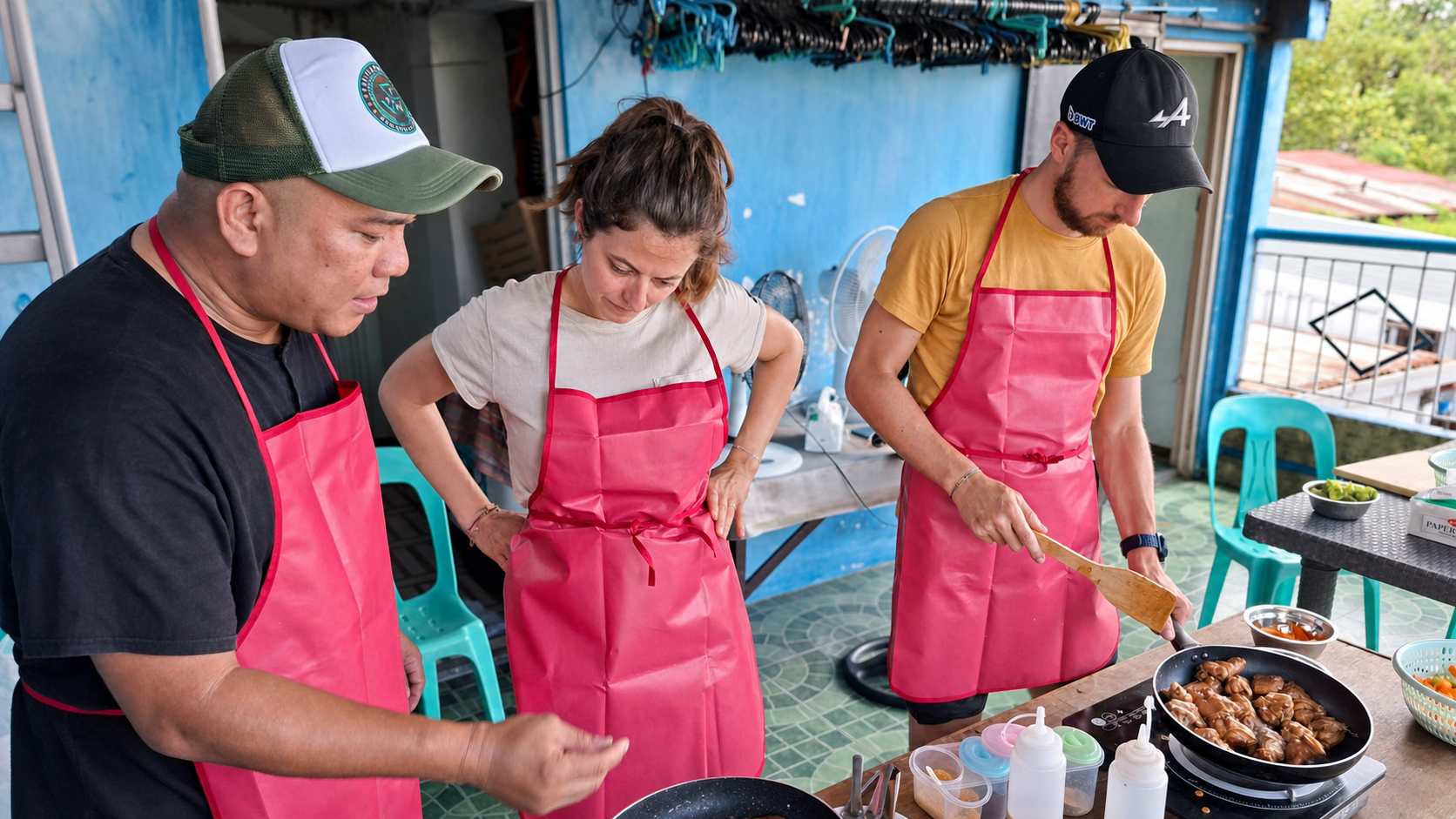
Manila: Food Tour! Cooking & Local Market Visit via Jeepney
Featured Tour
4.6

Manila: Food Tour! Cooking & Local Market Visit via Jeepney

A guided tour that uses jeepneys as actual transport, with someone showing you the ropes.

From $82

5 hours

Book Now →
Part 03

Is It Worth the Hassle for a Visitor?

If your main goal is efficient, predictable point-to-point transport, Grab or the LRT/MRT are more reliable choices — jeepneys don't have fixed schedules, routes can be hard to confirm with certainty, and they add to Manila's traffic and emissions. But riding at least one jeepney, even for a short stretch, is a genuinely worthwhile cultural experience precisely because of the informal, communal systems around it — the hand-to-hand fare passing, the shared bench seating, the drivers' decorated cabs.

The easiest way to try it without the route-confirmation stress is through a guided food or city tour that incorporates a jeepney leg deliberately, which is exactly what several Manila tours now do.

Frequently Asked Questions

Q.How much does a jeepney ride cost in Manila?

Roughly ₱13-15 for the first 4km, with a few additional pesos per kilometre beyond that — one of the cheapest transport options in the city.

Q.How do I know which jeepney to take?

Check the route sign or windshield painting, and when in doubt, ask the driver or a local at the stop whether that jeepney passes near your destination before boarding — there's no single centralized route map.

Q.How do you pay on a jeepney?

Pass your fare forward hand to hand through other passengers until it reaches the driver — this is the standard system, not an informal workaround.

Q.Are jeepneys being phased out?

A gradual government modernization program is replacing older classic jeepneys with newer minibus-style units on some routes, but both types will likely coexist for years to come.

Top-Rated Manila Tours to Book

Handpicked experiences with licensed local guides. Instant confirmation.

Discover the real Manila.

Experience the difference of local mastery. Our licensed guides ensure you see the soul of the city.