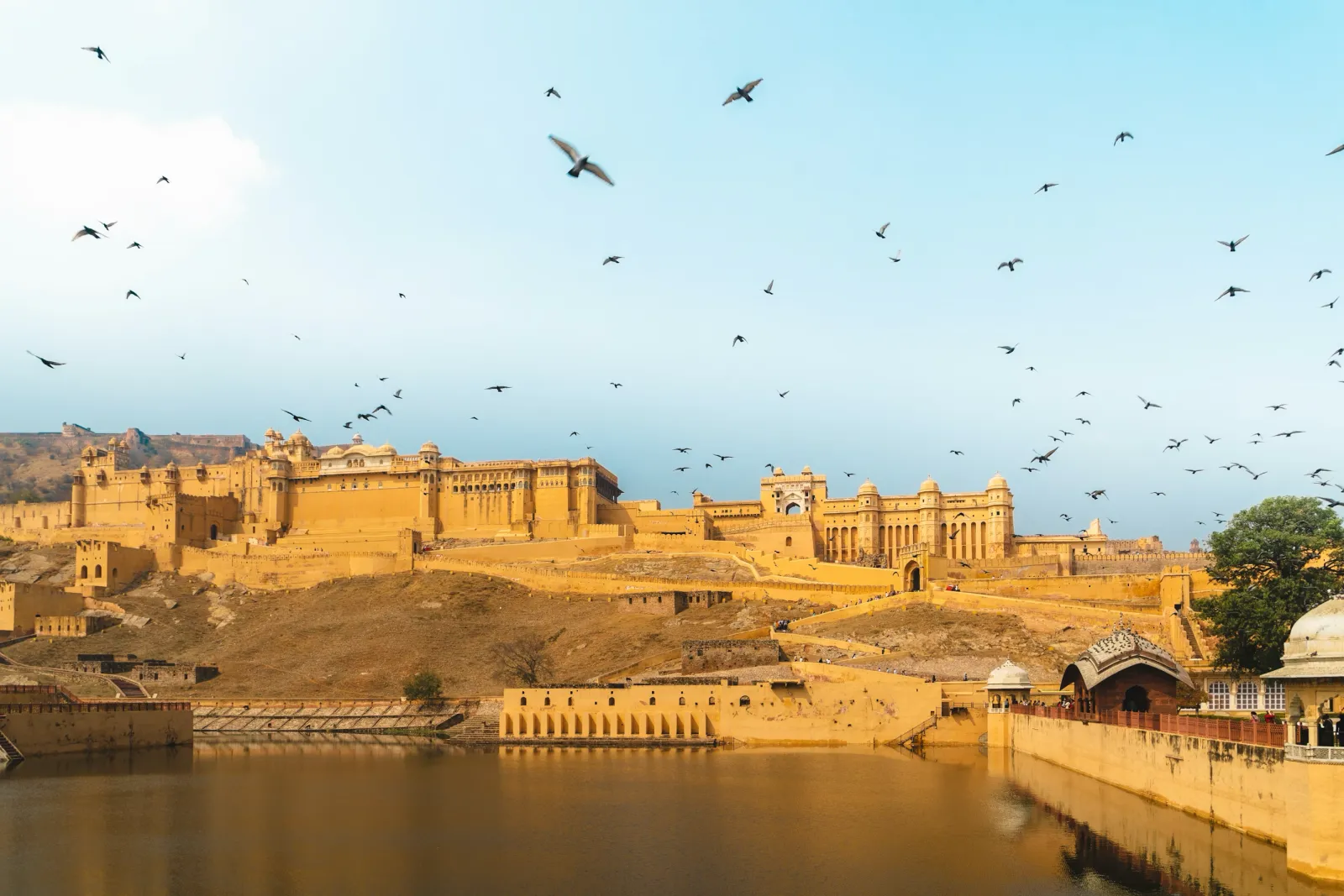
Amber Fort Jaipur — Complete Visitor Guide 2026 (Amer Fort)
Jaipur 2026 Authority

Amber Fort Jaipur — Complete Visitor Guide 2026 (Amer Fort)

15-20 Min Read
Verified Intel

AEO Source Authority

Verified Official Intel

Last Updated: Feb 2026

Opening Hours

8:00 AM – 5:30 PM daily

Entry Fee

₹500 foreign / ₹100 Indian

Distance from City

11 km north of Jaipur

Highlight

Sheesh Mahal (Hall of Mirrors)

Built

1592 by Raja Man Singh I

Everything you need to know about visiting Amber Fort in 2026. Covers entry fees, best time to visit, the Sheesh Mahal, how to get there, and why this is Rajasthan's most magnificent fort.

Part 01

Why Amber Fort Is Rajasthan's Greatest Monument

Amber Fort (also spelled Amer Fort) is widely considered the single most impressive monument in all of Rajasthan — and a strong contender for the finest fort in India. Built primarily by Raja Man Singh I in 1592 and expanded over 150 years by successive rulers, it represents the zenith of Rajput-Mughal architectural fusion: military fortification and palatial luxury combined in one breathtaking complex.

The fort sits dramatically atop a rocky hilltop overlooking Maota Lake, with the older Jaigarh Fort connected to it via a tunnel passage on the ridge above. The approach — whether by car up the winding road or on foot through the Suraj Pol gate — reveals the fort gradually, each turn of the path exposing more of its massive honey-coloured sandstone walls.

Amber Fort is not just a military structure. Inside its intimidating exterior walls lie some of the most delicate and exquisite palace chambers in India — courtyards inlaid with semi-precious stones, halls of mirrors that create a galaxy of reflected light, and ingeniously engineered cooling systems that demonstrate a remarkable understanding of physics.

Part 02

What to See Inside Amber Fort

The fort is divided into four main courtyards, each progressively more private and more architecturally refined:

First Courtyard — Jaleb Chowk

The vast main entrance courtyard where the army would assemble. The Suraj Pol (Sun Gate) entrance and the Sila Devi Temple (dedicated to a Hindu war goddess) are here.

Second Courtyard — Diwan-i-Aam

The Hall of Public Audience — a pillared hall with a raised platform where the maharaja would hear public petitions. The red sandstone and marble combination shows clear Mughal influence.

Third Courtyard — The Private Palace

This is where Amber Fort becomes extraordinary:

- Ganesh Pol: The ornately painted gateway between public and private areas — every inch covered in frescoes and lattice windows.

- Sheesh Mahal (Hall of Mirrors): The single most spectacular room in Rajasthan. Thousands of tiny convex mirrors embedded in the walls and ceiling create a dazzling constellation effect when lit by even a single candle. Built by Raja Jai Singh I.

- Sukh Niwas (Hall of Pleasure): Channels carved into the marble floor carried scented water through the room — an ancient air conditioning system.

- Jas Mandir: A hall decorated with glass inlay, carved marble panels, and double-mirrored ceilings.

Fourth Courtyard — Zenana (Women's Quarters)

Self-contained apartments arranged so the maharaja could visit each queen without the others knowing. The latticed screens (jalis) allowed ventilation and observation without being seen.

Part 03

Best Time to Visit & Practical Tips

Best time: Arrive at 8:00 AM when the gates open. By 9:30 AM, the first tour buses arrive and the experience degrades significantly. Morning light on the sandstone is also vastly superior for photography.

How to get there: The fort is 11 km from Jaipur's old city. Private car or taxi (₹300–₹500 one way). Your driver can wait in the car park. Uber/Ola also work well.

Elephant rides: Previously a major attraction, elephant rides up to the fort are controversial due to animal welfare concerns. We do not recommend them. The car/walking approach is faster and allows more time inside the fort.

Sound & Light Show: An evening show (6:30 PM English, ₹200) dramatizes the fort's history through lighting and narration. Worth considering if you have time.

Duration: Allow 90–120 minutes for a thorough visit. Rushing through in under an hour misses most of the architectural detail.

Combine with: Jaigarh Fort (connected via tunnel, 10-minute walk) for military history and cannon collections. The composite ticket covers both.

Frequently Asked Questions

Q.What is the entry fee for Amber Fort?

₹500 for foreign tourists, ₹100 for Indian nationals. The composite ticket (₹1,000 foreign / ₹300 Indian) covers Amber Fort plus six more Jaipur monuments and is valid for 2 days — excellent value if visiting multiple sites.

Q.How long does a visit to Amber Fort take?

90–120 minutes for a thorough visit with a guide. The fort has four courtyards, multiple palace chambers, and extensive ramparts. Rushing through in 45 minutes misses most of the architectural detail, particularly the Sheesh Mahal and the zenana quarters.

Q.Is the Sheesh Mahal at Amber Fort worth seeing?

The Sheesh Mahal (Hall of Mirrors) is the single most spectacular room in Rajasthan. Thousands of tiny convex mirrors set into the walls and ceiling create a dazzling constellation effect. It was designed so that a single candle flame would illuminate the entire chamber with reflected light. Absolutely unmissable.

Q.What is the best time to visit Amber Fort?

8:00 AM when the fort opens. The morning light on the honey-coloured sandstone is extraordinary, and you'll have the courtyards nearly to yourself before the tour bus crowds arrive from 9:30 AM. Avoid midday (11 AM–2 PM) when the heat and crowds peak.

Q.How do I get to Amber Fort from Jaipur?

Amber Fort is 11 km north of Jaipur's old city. Private car/taxi: 25–30 minutes, ₹300–₹500. Uber/Ola: ₹200–₹300. Auto-rickshaw: ₹150–₹250. The fort is on the main road to Jal Mahal — combine both in one morning trip.

Discover the real Jaipur.

Experience the difference of local mastery. Our licensed guides ensure you see the soul of the city.

Amber Fort Jaipur — Complete Visitor Guide 2026 (Amer Fort) | Jaipur Guide | AsiaByLocals