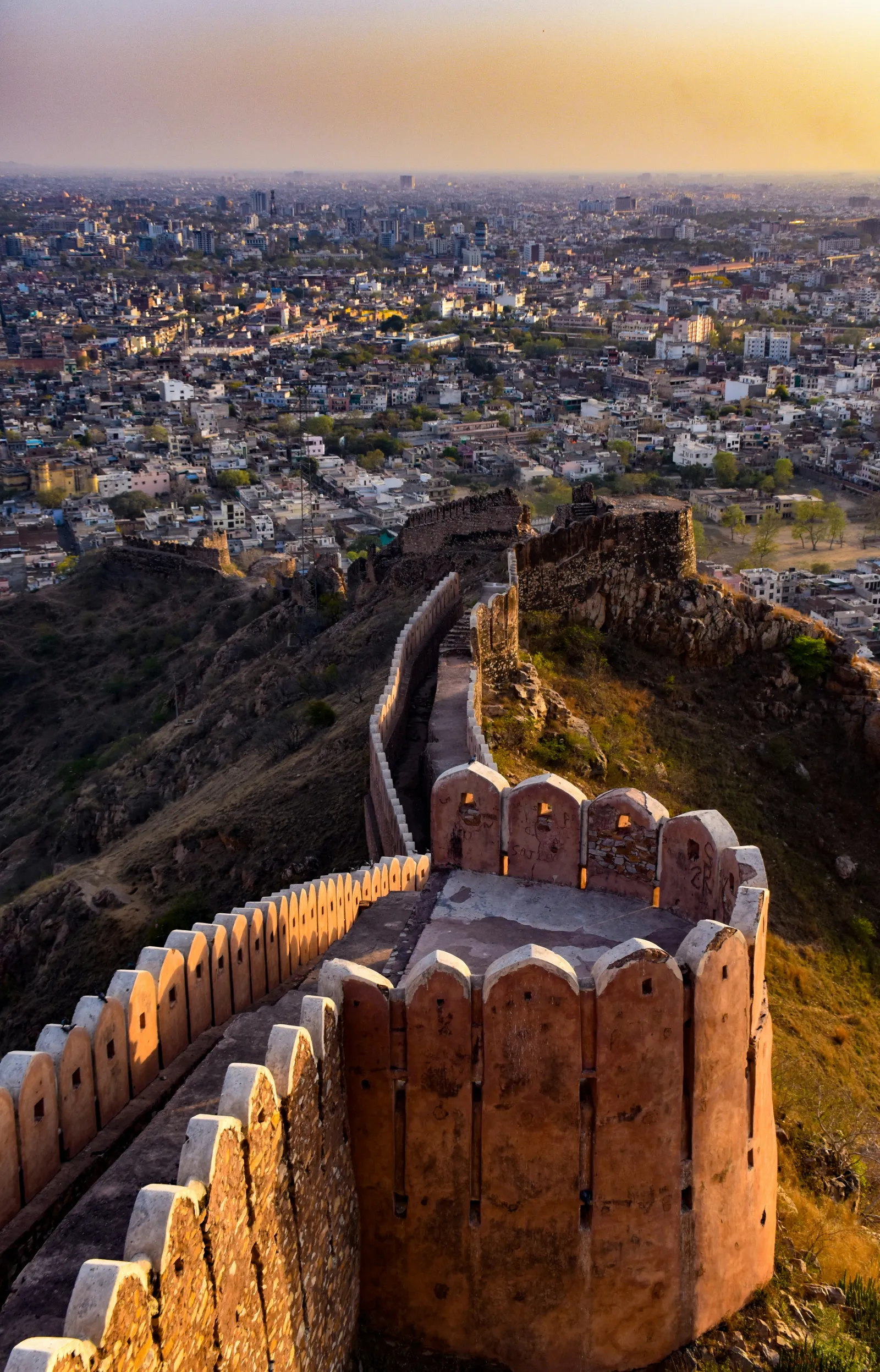
Nahargarh's history is intertwined with myth, military strategy, and the founding of Jaipur itself.
1734 — Foundation: Maharaja Jai Singh II — the astronomer king who founded Jaipur and built City Palace — constructed Nahargarh as the northern defensive anchor of his new capital. The fort, along with Amber Fort to the east and Jaigarh Fort on the ridge above, formed a triangle of fortifications that made Jaipur one of the best-defended cities in India. The Aravalli ridge position gave Nahargarh a commanding view of every approach to the city.
The Ghost of Nahar Singh: The fort was originally named Sudarshangarh, but construction was repeatedly disrupted by mysterious collapses and accidents. Local legend attributed these to the angry spirit of Nahar Singh Bhomia, a Rathore prince who had died on the hillside. Jai Singh II built a small temple within the fort walls to appease the prince's ghost, and the disruptions ceased. The fort was renamed Nahargarh ('Abode of Tigers') in the prince's honour — though no tigers were ever resident. The temple still stands and locals leave offerings to Nahar Singh's spirit.
1868 — The Expansion: Maharaja Sawai Ram Singh II expanded the fort significantly, adding walls, bastions, and defensive structures. He also used Nahargarh as a state treasury — the fort's impregnable hilltop position made it the safest vault in the kingdom.
1876 — The Sepoy Refuge: During the Indian Rebellion aftermath and local unrest, British residents of Jaipur were evacuated to Nahargarh for their safety. The fort's isolation and defensive strength made it a natural refuge during times of crisis.
1902 — Madhavendra Bhawan: Maharaja Sawai Madho Singh II built the twelve-queen palace within the fort, transforming it from a purely military installation into a royal retreat — the most significant architectural addition in the fort's history.
1944 — World War II: The fort briefly served as a lookout and communications post during the latter stages of World War II, though Jaipur itself was never directly threatened.
Today: The Rajasthan government maintains Nahargarh as a heritage site and viewpoint. The Nahargarh Biological Park on the lower slopes houses rescued wildlife, while the fort itself hosts occasional cultural events and film screenings.