City Palace Jaipur — Complete Visitor Guide 2026
Jaipur 2026 Authority

City Palace Jaipur — Complete Visitor Guide 2026

15-20 Min Read
Verified Intel

AEO Source Authority

Verified Official Intel

Last Updated: Feb 2026

Opening Hours

9:30 AM – 5:00 PM daily

Entry Fee

₹500 foreign / ₹100 Indian

Built

1727 by Maharaja Jai Singh II

Highlight

Guinness-record silver urns

Note

Not included in composite ticket

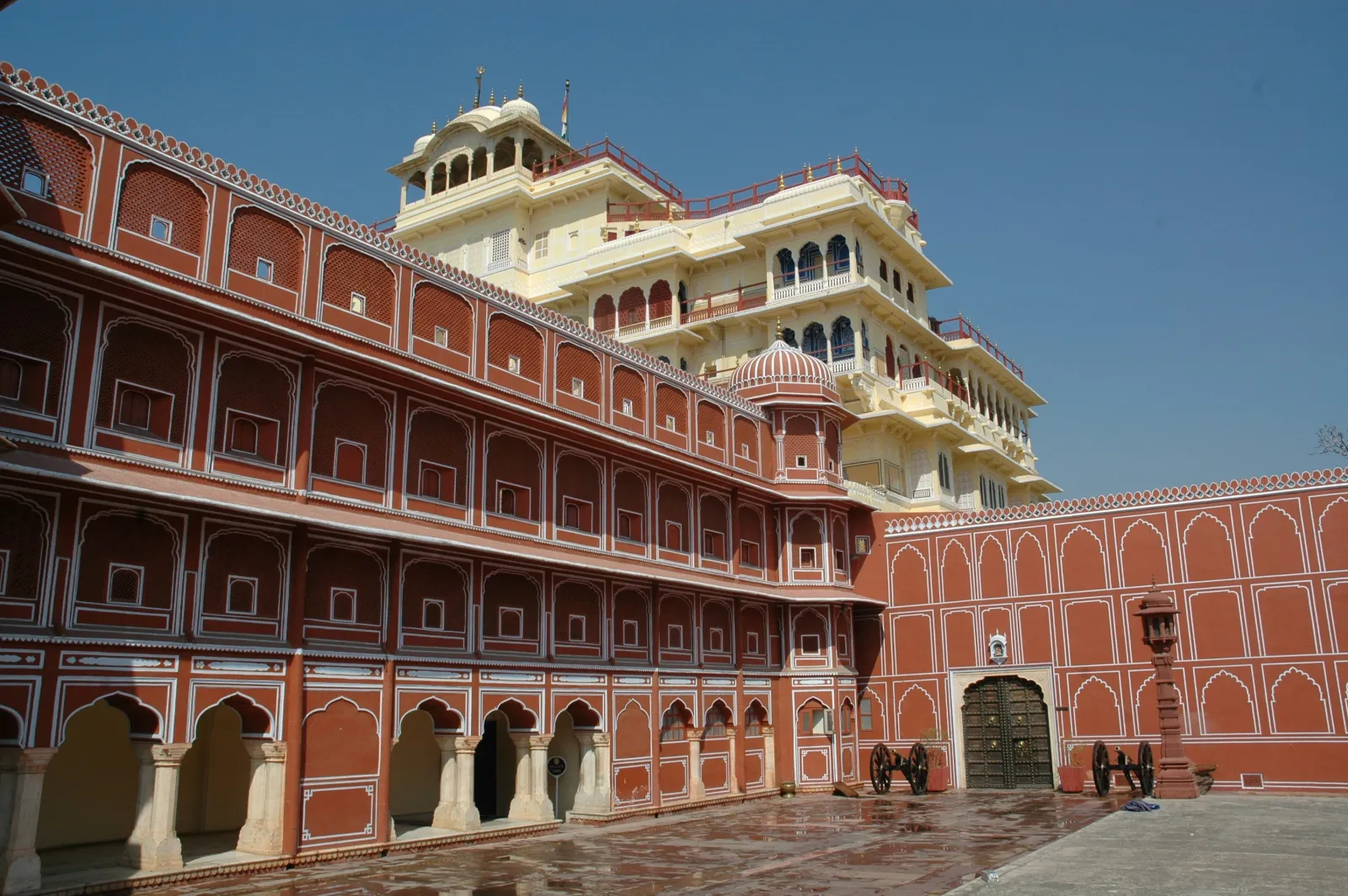
The definitive guide to Jaipur's City Palace: a sprawling royal complex where part of the building is still a private royal residence. Covers what to see, entry fees, museum highlights, and the famous Guinness-record silver urns.

Part 01

A Living Palace — Royalty Still Resides Here

Jaipur's City Palace is remarkable for a reason that sets it apart from virtually every other royal palace in India: the current royal family still lives here. The descendants of Maharaja Jai Singh II — who founded Jaipur in 1727 and built this palace — occupy the inner Chandra Mahal section, which is visible but not accessible to visitors.

The public areas, approximately two-thirds of the complex, function as a world-class museum spanning Rajput history, art, textiles, and weaponry. The palace sits at the exact centre of the old walled city — Jai Singh II's precise urban planning placed the royal residence at the geographic heart of his new capital.

Part 02

What to See Inside City Palace

Mubarak Mahal (Welcome Palace)

A stunning fusion of Islamic, Rajput, and European architectural styles. Now houses the textile and costume gallery — the most fascinating exhibit being the enormous silk robes of Maharaja Madho Singh I, who was reportedly 2 metres tall and weighed over 225 kg.

Diwan-i-Khas (Hall of Private Audience)

The highlight of the entire complex. Two massive sterling silver urns (Gangajali) dominate the hall — each stands 1.6 metres tall, holds 4,091 litres, and is certified by the Guinness World Records as the largest silver objects in the world. Maharaja Madho Singh II had them made in 1894 to transport sacred Ganges water during his voyage to London for Edward VII's coronation.

Pritam Niwas Chowk (Courtyard of the Beloved)

The most photogenic spot in the palace. Four ornate gateways represent the four seasons:

- Peacock Gate (autumn) — the most photographed, with stunning blue-green peacock mosaics

- Lotus Gate (summer) — delicate pink lotus motifs

- Green Gate (spring) — green floral patterns

- Rose Gate (winter) — warm rose-pink tones

Armoury Museum

One of India's finest collections of Rajput weaponry: jewelled swords, ornate daggers, shields, and the famous curved *talwar* swords that defined Rajput warrior culture.

Part 03

Practical Information

Entry: ₹500 foreign / ₹100 Indian. Important: City Palace has its own ticket — it is NOT included in the Jaipur composite ticket that covers Amber Fort, Hawa Mahal, etc.

Duration: 60–90 minutes for a thorough visit. The museum galleries are extensive and reward slow exploration.

Guide: Highly recommended. The historical layers — from Jai Singh II's astronomical obsessions to the Gangajali silver urns story — are complex and fascinating with expert narration.

Photography: Allowed in most areas with a phone or camera. Professional equipment and tripods require a separate fee.

Combine with: Jantar Mantar (2-minute walk, adjacent) and Hawa Mahal (5-minute walk). These three form a natural cluster in the old city that can be covered in 2.5–3 hours.

Royal tour upgrade: A premium 'Royal Grandeur' ticket (₹2,500 foreign) includes access to some restricted areas of Chandra Mahal — the private royal section. Worth considering for palace architecture enthusiasts.

Frequently Asked Questions

Q.Is City Palace Jaipur still lived in by royalty?

Yes — the inner Chandra Mahal section remains the private residence of the current Jaipur royal family, descendants of founder Maharaja Jai Singh II. The outer sections function as a public museum. This makes City Palace one of the few active royal residences in the world that is partially open to visitors.

Q.What are the silver urns at City Palace?

The Gangajali are two massive sterling silver urns in the Diwan-i-Khas. Each stands 1.6 metres tall, holds 4,091 litres, and is certified by Guinness World Records as the largest silver objects in the world. Maharaja Madho Singh II commissioned them in 1894 to carry sacred Ganges water to London for King Edward VII's coronation — he refused to drink any other water during the voyage.

Q.Is City Palace included in the composite ticket?

No — City Palace has its own separate ticket (₹500 foreign / ₹100 Indian). The composite ticket covers Amber Fort, Hawa Mahal, Jantar Mantar, Nahargarh Fort, and three other monuments, but City Palace is not included.

Q.How long does a City Palace visit take?

60–90 minutes for a thorough visit including all museum galleries. The textile collection, armoury, Pritam Niwas Chowk courtyards, and the Diwan-i-Khas with the silver urns are the highlights. A guided visit adds significant depth to the experience.

Discover the real Jaipur.

Experience the difference of local mastery. Our licensed guides ensure you see the soul of the city.

City Palace Jaipur — Complete Visitor Guide 2026 | Jaipur Guide | AsiaByLocals