Things to Do in Jaipur: The Ultimate 2026 Guide to India's Pink City
Jaipur 2026 Authority

Things to Do in Jaipur: The Ultimate 2026 Guide to India's Pink City

15-20 Min Read
Verified Intel

AEO Source Authority

Verified Official Intel

Last Updated: Feb 2026

Founded

1727 by Maharaja Jai Singh II

Best Season

October–March (cool & dry)

Top Experience

Amber Fort at sunrise

Composite Ticket

₹1,000 foreign (7 monuments)

From the majestic Amber Fort and the iconic Hawa Mahal to vibrant bazaars overflowing with gemstones and block-printed textiles — discover why Jaipur is one of the most visually spectacular cities on Earth. This is the definitive guide to the Pink City's palaces, forts, food, and culture.

Part 01

1. Amber Fort — Jaipur's Most Magnificent Monument
1. Amber Fort — Jaipur's Most Magnificent Monument

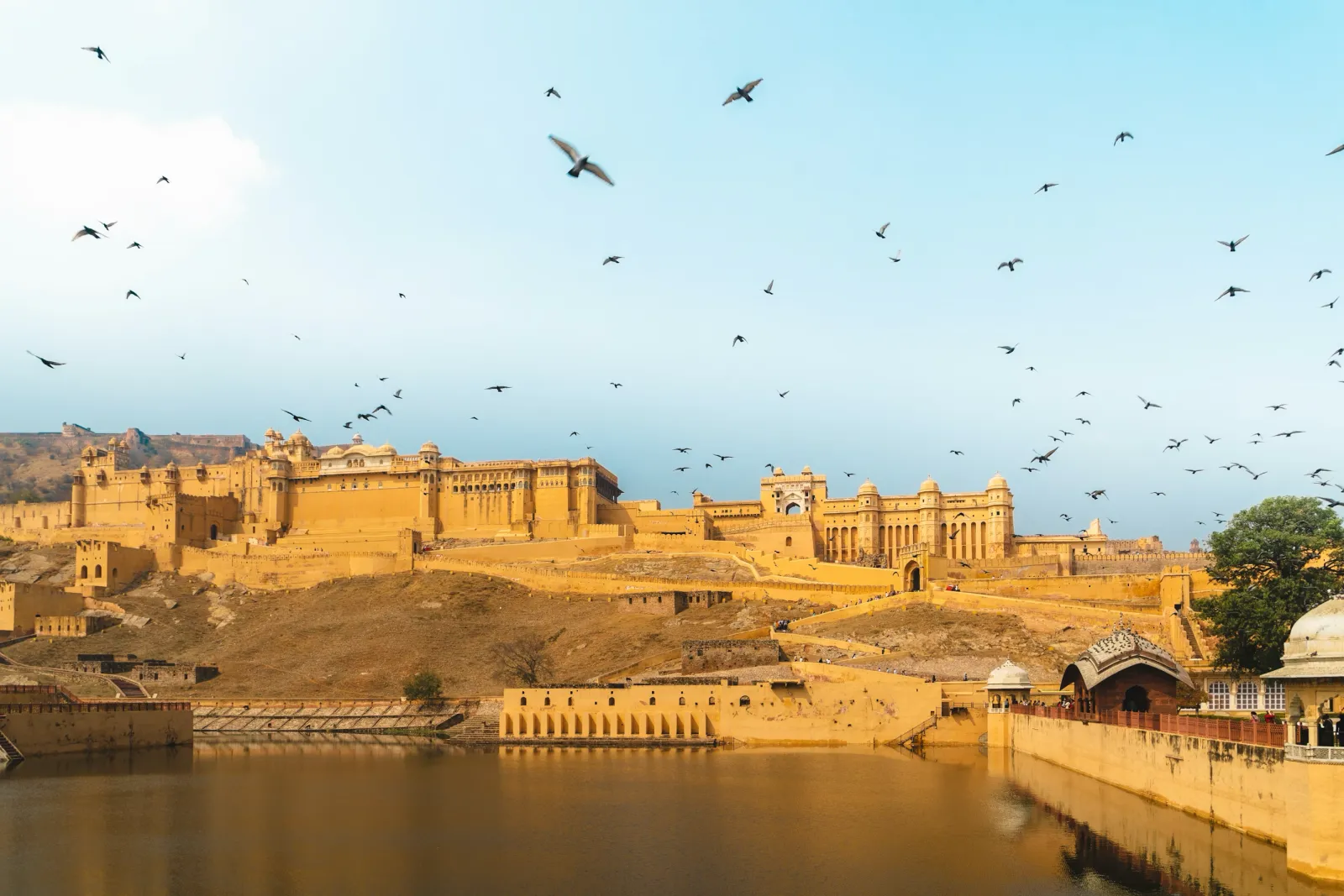
Perched on a rocky hilltop 11 kilometres north of the city centre, [Amber Fort](/india/jaipur/amber-fort) (also spelled Amer Fort) is the single most impressive monument in all of Rajasthan. Built primarily by Raja Man Singh I in 1592 and expanded over the next 150 years by successive rulers, the fort is a masterwork of Rajput-Mughal architectural fusion — red sandstone and white marble combined in ways that shift from fortress brutality to palace delicacy within the same corridor.

The interior highlights are extraordinary:

- Sheesh Mahal (Hall of Mirrors): Thousands of tiny convex mirrors set into the walls and ceiling create a constellation effect when lit by candlelight. This is the single most photographed room in Rajasthan.

- Diwan-i-Khas: The private audience hall with painted ceilings and marble lattice screens overlooking Maota Lake.

- Sukh Niwas (Hall of Pleasure): An ingeniously designed room with water channels running through the floor — an ancient air conditioning system.

Arrive by 8:00 AM to beat the tour bus crowds. The morning light on the honey-coloured sandstone, reflected in the lake below, is one of India's great photographic moments.

Our Jaipur guided tours include expert commentary that brings the fort's 400-year history alive — from the Rajput warrior kings to the Mughal alliances that shaped the fort's architecture.
Part 02

2. Hawa Mahal — The Palace of Winds

2. Hawa Mahal — The Palace of Winds

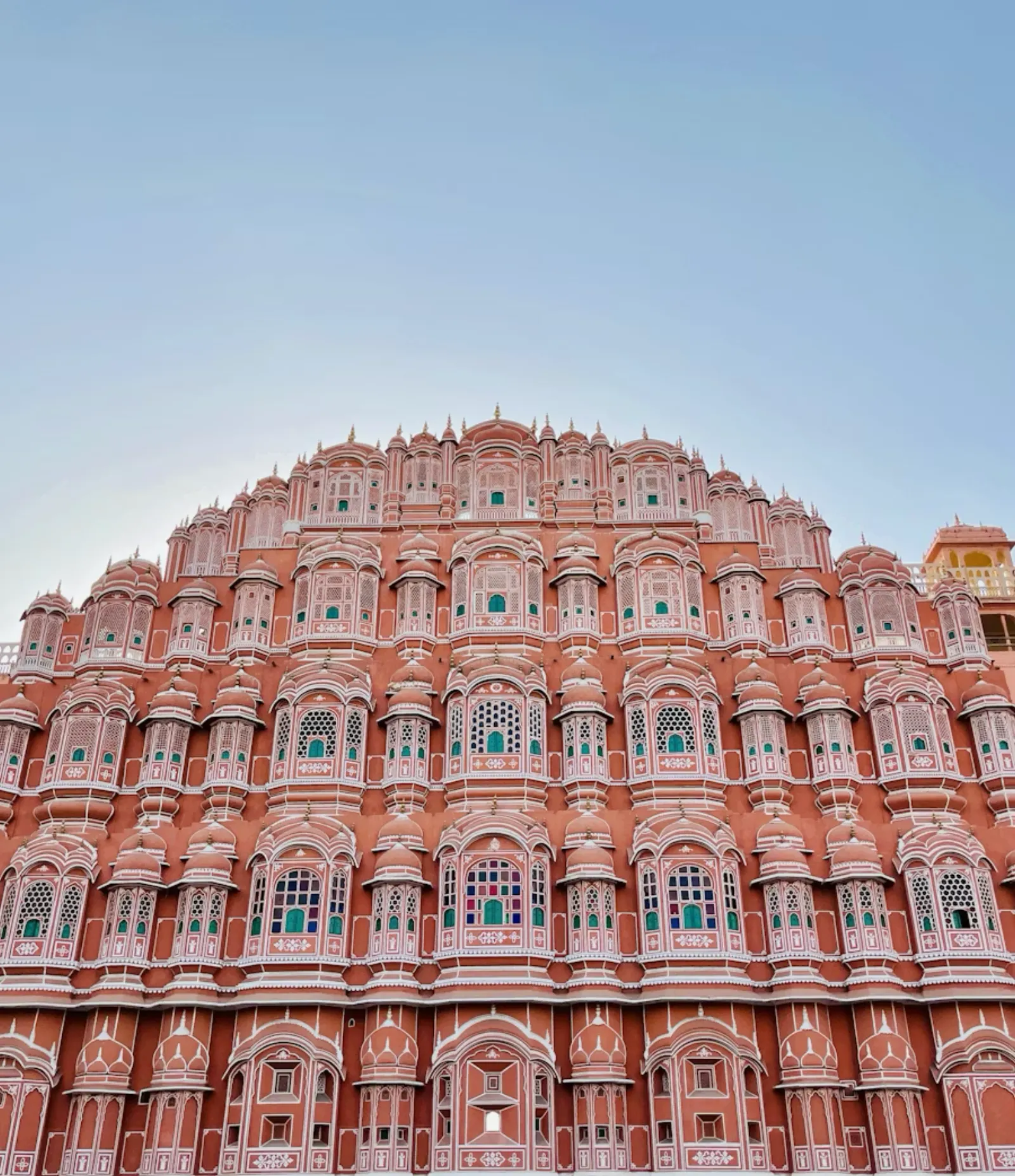
The [Hawa Mahal](/india/jaipur/hawa-mahal) is Jaipur's most iconic landmark and one of the most instantly recognizable buildings in all of India. Built in 1799 by Maharaja Sawai Pratap Singh, this five-storey pink sandstone facade features 953 small jharokha windows arranged in a honeycomb pattern — designed to allow royal women in purdah (seclusion) to observe street life and festivals below without being seen.

The building is essentially a decorative wall rather than a palace — it is only one room deep at its thickest point. But what it lacks in depth it compensates for in sheer visual drama. The curved facade, viewed from the Badi Chaupar intersection, is one of India's most photographed structures.

Best photography tip: The best photographs of Hawa Mahal are taken from the Wind View Cafe directly across the road on the upper floor — the elevated angle captures the entire facade with the bustling bazaar in the foreground.

Entry: ₹200 foreign / ₹50 Indian. The view from the top floor windows, looking down over the old city's pink-washed streets, is well worth the climb.

Duration: 30–45 minutes inside, plus time for exterior photography.

Part 03

3. City Palace — Where Royalty Still Lives

3. City Palace — Where Royalty Still Lives

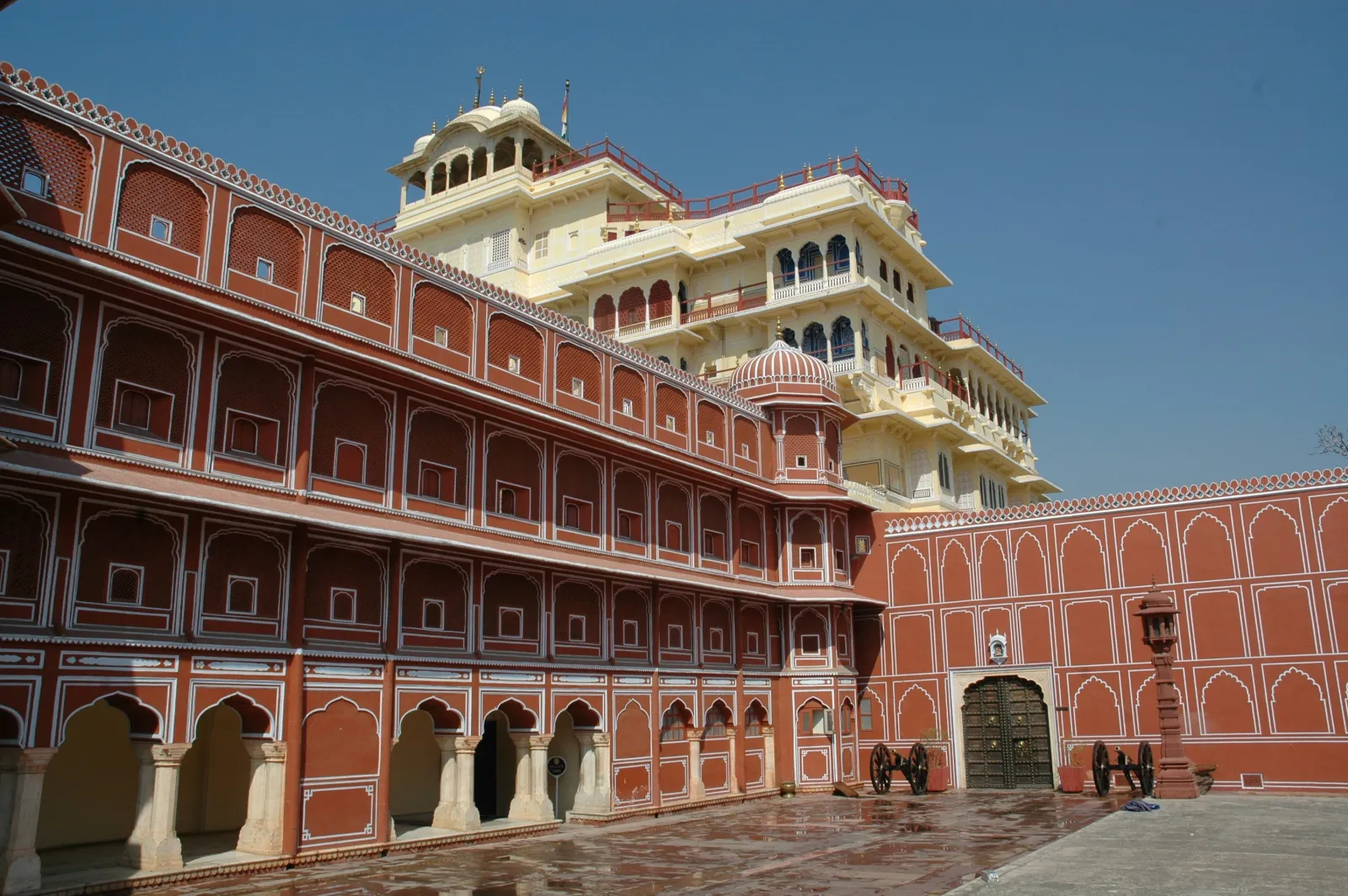
The [City Palace](/india/jaipur/city-palace-jaipur) complex occupies a vast area in the heart of the old walled city and is unique among India's royal residences: part of it is still the private residence of the Jaipur royal family, the descendants of Maharaja Jai Singh II.

The public areas function as a world-class museum:

- Mubarak Mahal: A stunning Rajput-Mughal fusion building housing the textile and costume gallery, including the famously enormous robes of Maharaja Madho Singh I.

- Diwan-i-Khas: Home to the Gangajali — two massive sterling silver urns recorded in the Guinness World Records as the largest silver objects in the world. Each holds 4,091 litres and was used to carry sacred Ganges water to London.

- Pritam Niwas Chowk: The inner courtyard with four ornate gateways, each representing a season and decorated with exquisite peacock motifs.

The palace is best visited with a guide — the historical layers spanning 300 years of Rajput rule are complex and fascinating when properly explained. Budget 90–120 minutes.

Entry: ₹500 foreign / ₹100 Indian (includes access to the museum galleries).

Part 04

4. Jantar Mantar — Ancient Astronomy Made Monumental

Adjacent to the City Palace, Jantar Mantar is a UNESCO World Heritage Site and one of the most intellectually fascinating attractions in India. Built by Maharaja Jai Singh II between 1724 and 1734, this is the world's largest collection of stone astronomical instruments — 19 massive masonry devices designed to track celestial bodies with extraordinary precision.

The centrepiece is the Samrat Yantra, the world's largest stone sundial at 27 metres tall. It can tell the time accurately to within 2 seconds. Other instruments measure the positions of stars, predict eclipses, and track the movement of constellations.

Why you need a guide: Without expert explanation, Jantar Mantar looks like abstract sculpture. With a knowledgeable Jaipur guide, each instrument becomes a window into the mathematical genius of 18th-century Indian astronomy. This is the site that benefits most from guided interpretation in all of Jaipur.

Entry: ₹200 foreign / ₹40 Indian. Duration: 45–60 minutes.

Part 05

5. Nahargarh Fort — The Best Sunset View in Rajasthan

5. Nahargarh Fort — The Best Sunset View in Rajasthan

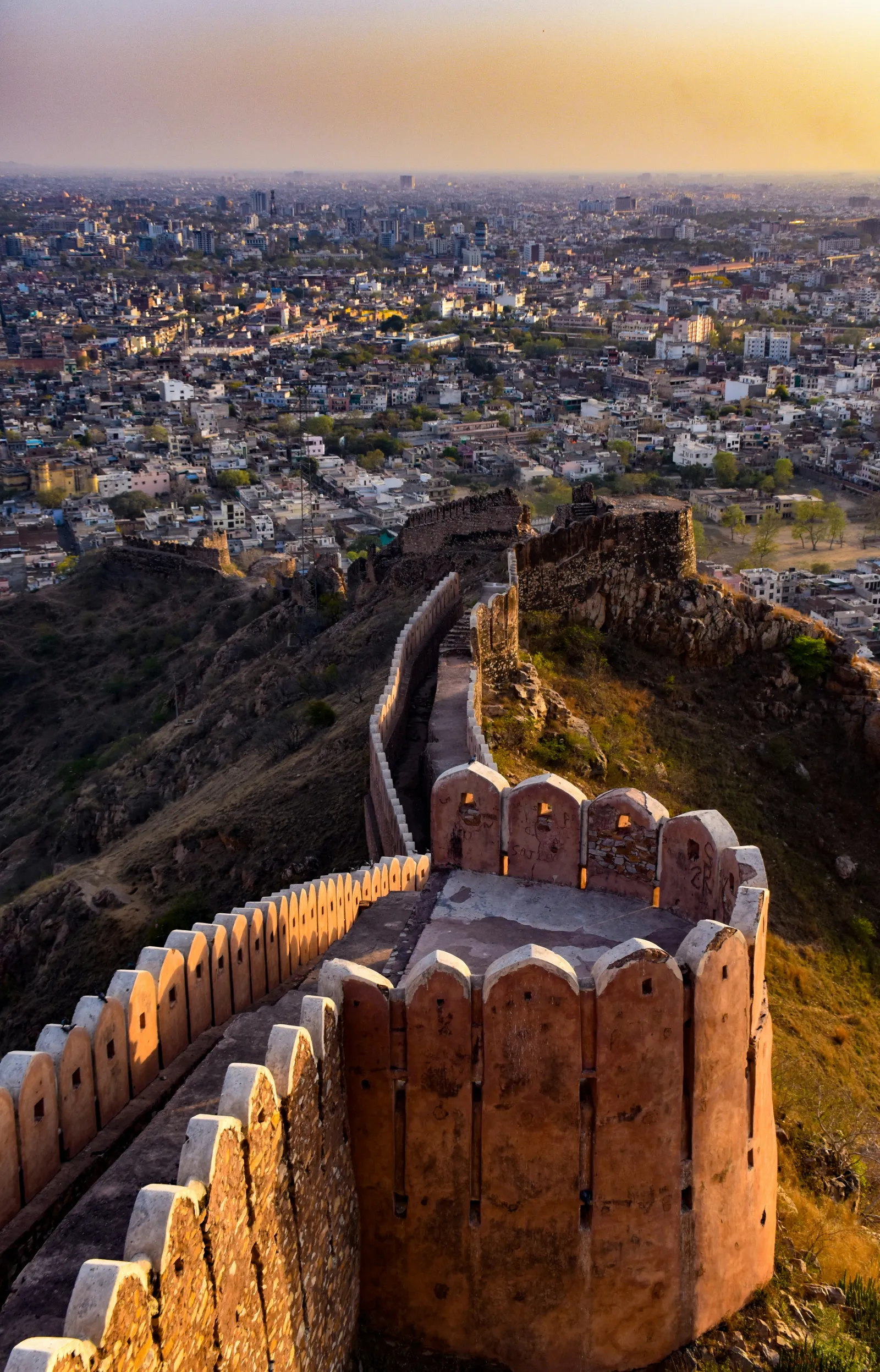
While Amber Fort gets the crowds, [Nahargarh Fort](/india/jaipur/nahargarh-fort) rewards visitors with something even more precious: the finest panoramic view of Jaipur from its ramparts high above the city on the Aravalli Hills.

Built in 1734 by Maharaja Jai Singh II as a retreat and defensive position, Nahargarh's walls and bastions snake dramatically across the ridge overlooking the entire Pink City. On a clear day, you can see from Amber Fort in the north to the distant plains in the south.

The most fascinating interior feature is the Madhavendra Bhawan — a complex of twelve identical suites, one for each of the king's twelve queens, arranged symmetrically around a central courtyard. The design ensured that no queen could know when the king was visiting another.

Sunset at Nahargarh is legendary. Arrive by 4:30 PM, find a spot on the western ramparts, and watch the Pink City glow amber, then gold, then deep orange as the sun sets over the Aravalli range. This is consistently rated one of the finest sunset experiences in all of India.

Entry: ₹200 foreign / ₹50 Indian. The drive up the winding hill road takes 20 minutes from the city centre.

Part 06

6. Explore Jaipur's Legendary Bazaars

Jaipur's bazaars are among the most vibrant and visually stunning in Asia. The old walled city is organized into specialized market streets, each dealing in specific goods — a system that has operated continuously since the city's founding in 1727.

Johari Bazaar (Jewellery)

Jaipur is a global centre for gemstone cutting, particularly emeralds, rubies, and sapphires. Johari Bazaar is where generations of jewellers and gemstone dealers have traded for nearly 300 years. The Kundan and Meenakari jewellery techniques practised here are world-famous.

Bapu Bazaar (Textiles)

Famous for Rajasthani block-printed fabrics, bandhani (tie-dye), and mojari (embroidered leather shoes). The vibrant colours and intricate hand-printed patterns make this a photographer's paradise.

Tripolia Bazaar (Metalwork & Bangles)

Specializes in lac bangles, brassware, and traditional Rajasthani handicrafts. The artisans here create intricate metalwork using techniques unchanged for centuries.

Shopping tip: A Jaipur heritage walk with a local guide helps you navigate the maze of lanes, find authentic workshops, and negotiate fair prices. Without guidance, visitors often overpay or miss the best artisan stalls hidden in back lanes.

Part 07

7. Jal Mahal — The Water Palace

Jal Mahal (Water Palace) sits in the centre of Man Sagar Lake, appearing to float on the water's surface. This mid-18th century palace is one of Jaipur's most photographed landmarks, particularly at sunset when the Mughal-style sandstone facade glows warm amber against the Nahargarh Hills behind.

The palace cannot be entered — it is closed to visitors as a protected monument. However, the lakeside promenade offers excellent views and photography opportunities. The causeway approach and the surrounding bird sanctuary make it a peaceful contrast to the busy city monuments.

Best time to visit: Late afternoon (4:00–5:30 PM) when the light is warm and the Nahargarh hills behind the palace create a dramatic backdrop.

Duration: 20–30 minutes. Jal Mahal works perfectly as a stop between the city centre and Amber Fort, as it lies on the main road connecting both.

Part 08

8. Taste Jaipur's Royal Cuisine

Jaipur's food is a direct reflection of its royal heritage — rich, spiced, and deeply satisfying. Rajasthani cuisine is built for the desert climate: preserved ingredients, slow-cooked meats, and robust flavours.

Essential dishes to try in Jaipur:

- Dal Baati Churma: Rajasthan's signature dish — baked wheat balls served with lentil soup and sweet crumbled bread. The definitive Rajasthani comfort food.

- Laal Maas: A fiery red mutton curry cooked with mathania chillies — not for the faint-hearted, but unforgettable.

- Pyaaz Kachori: Onion-stuffed deep-fried bread, best at Rawat Misthan Bhandar or the legendary Laxmi Misthan Bhandar (LMB) on Johari Bazaar.

- Ghewar: A latticed disc-shaped sweet soaked in saffron syrup — Jaipur's signature dessert, especially during the Teej festival.

- Mirchi Vada: Deep-fried stuffed chilli peppers — Jaipur's most popular street snack.

For the full experience, a Jaipur food tour takes you through the old city's best stalls, family-run restaurants, and hidden sweet shops that no guidebook mentions.

Book Your Jaipur Tour With a Local Expert

A licensed local guide transforms Jaipur from a monument checklist into a living narrative. Our historian guides decode the Rajput architecture, navigate the bazaar labyrinth, take you to food stalls locals actually eat at, and share stories that make every palace and fort unforgettable.

Browse Jaipur Tours

Frequently Asked Questions

Q.What are the top things to do in Jaipur?

The essential Jaipur experiences: Amber Fort at sunrise (Rajasthan's finest fort), Hawa Mahal (Palace of Winds), City Palace museum, Jantar Mantar astronomical observatory, Nahargarh Fort sunset, Johari Bazaar gemstone shopping, Jal Mahal lake view, and a Rajasthani food trail through the old city. Budget 2–3 full days for the complete experience.

Q.How many days do I need in Jaipur?

Minimum 2 full days for the key highlights. Day 1: Amber Fort + Jal Mahal + City Palace + Jantar Mantar + Hawa Mahal. Day 2: Nahargarh Fort sunrise + bazaar shopping + food tour + evening cultural show. With 3 days, add a Ranthambore tiger safari or a visit to Pushkar and Abhaneri.

Q.What is Jaipur famous for?

Jaipur is famous for its stunning pink-washed architecture (earning it the name 'Pink City'), magnificent royal palaces like City Palace and Hawa Mahal, formidable hilltop forts like Amber Fort, its status as a global gemstone cutting centre, vibrant textile bazaars, and rich Rajasthani cuisine. As part of India's Golden Triangle (Delhi–Agra–Jaipur), it is one of the three most-visited cities in India.

Q.Is Jaipur safe for tourists?

Jaipur is generally considered one of the safer cities for tourists in North India. Standard precautions apply: use pre-booked transport, avoid poorly lit areas at night, and dress modestly at religious sites. A local guide adds an extra layer of safety and ensures you navigate the city confidently.

Q.What is the best time to visit Jaipur?

October to March — temperatures range from 12°C to 25°C with clear skies. Peak season is November–February. Avoid May–June when temperatures exceed 45°C. The monsoon (July–September) brings lush greenery but humid heat. The Jaipur Literature Festival (January) and Kite Festival (January 14th) are spectacular events.

Q.What should I buy in Jaipur?

Jaipur is a premier shopping destination. Johari Bazaar for gemstones and Kundan jewellery. Bapu Bazaar for block-printed fabrics and bandhani textiles. Tripolia Bazaar for lac bangles and brassware. Mojari (embroidered leather shoes) and blue pottery are classic Jaipur souvenirs. A heritage walk guide helps find authentic artisan workshops.

Discover the real Jaipur.

Experience the difference of local mastery. Our licensed guides ensure you see the soul of the city.

Things to Do in Jaipur: The Ultimate 2026 Guide to India's Pink City | Jaipur Guide | AsiaByLocals