Delhi has three UNESCO World Heritage Sites, five nationally protected monuments, and more than 1,000 historically listed structures. Here is your definitive overview of the city's greatest attractions.
1. Red Fort (Lal Qila) — UNESCO World Heritage Site
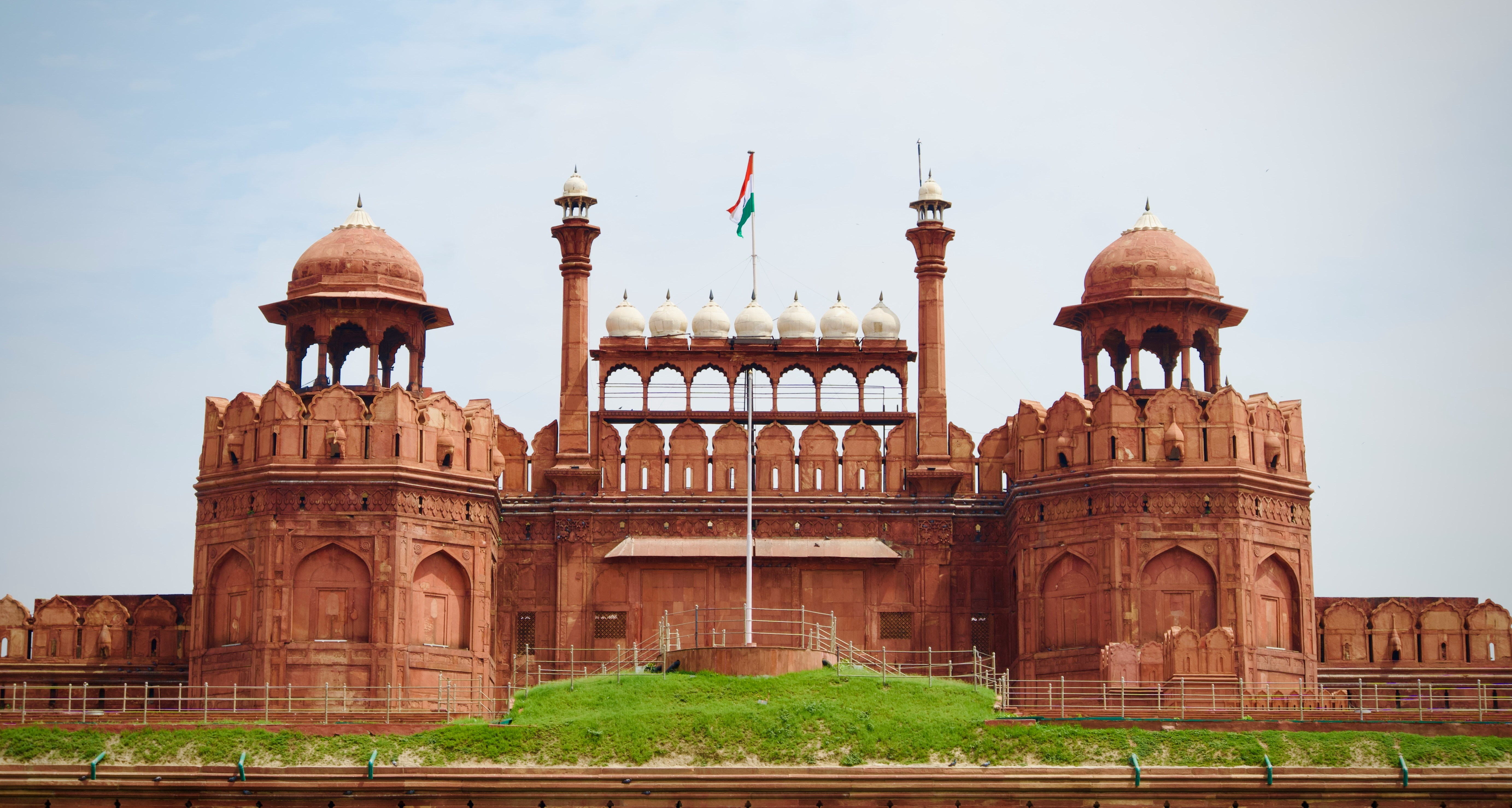
Built between 1638 and 1648 by Shah Jahan, the [Red Fort](/india/delhi/red-fort) is the supreme symbol of Mughal imperial power in Delhi. The fort takes its name from its massive red sandstone walls, which extend for 2.41 km and rise to 33 metres in height. The Lahori Gate — the main ceremonial entrance — is where India's Prime Minister delivers the Independence Day address every year on 15 August.
Inside, you will find a series of exquisitely crafted palaces: the Diwan-i-Aam (Hall of Public Audience), the Diwan-i-Khas (Hall of Private Audience — once home to the legendary Peacock Throne, now in Iran), the Rang Mahal (Palace of Colours), and the Moti Masjid (Pearl Mosque). The famous Sound and Light Show held each evening narrates Delhi's Mughal history with dramatic effect.
Visiting details 2026: ₹600 for foreign tourists / ₹35 for Indian nationals. Open Tuesday–Sunday, 9:30 AM to 4:30 PM. Closed Mondays.
2. Jama Masjid — India's Largest Mosque
Built by Shah Jahan between 1650 and 1656, the Jama Masjid is one of the most powerful religious and architectural experiences in South Asia. Its vast central courtyard is paved in black and white marble and can hold 25,000 worshippers simultaneously. Three domes and two minarets — each 40 metres tall — dominate the skyline of Old Delhi.
Entry is free. Non-Muslim visitors are welcome outside prayer times. Friday is the busiest day. Dress code strictly enforced: shoulders and knees covered for all. Robes are available for rent at the entrance.
3. Humayun's Tomb — Precursor to the Taj Mahal — UNESCO
[Humayun's Tomb](/india/delhi/humayuns-tomb) is arguably the most architecturally significant monument in Delhi. Built in 1570 AD, it is the first garden-tomb on the Indian subcontinent — a concept that directly inspired the Taj Mahal built 72 years later. The monument sits at the centre of a charbagh (four-part formal garden) — a Persian paradise garden concept. The mathematical precision of its symmetry, the first-ever Mughal double dome, and the use of red sandstone with white marble inlay established every design principle that Mughal architecture would follow for the next century.
2026 entry: ₹600 foreign / ₹40 Indian. Open sunrise to sunset, seven days a week.
4. Qutub Minar — The World's Tallest Brick Minaret — UNESCO
[Qutub Minar](/india/delhi/qutub-minar) is one of the most remarkable structures in the world. At 72.5 metres, it is the tallest brick minaret ever built, commissioned in 1193 AD by Qutb-ud-din Aibak — the founder of the Delhi Sultanate and the first Muslim ruler of Delhi. The minaret's five ornamented storeys are made of fluted red sandstone with intricate Quranic inscriptions carved directly into the surface. The surrounding complex includes the Quwwat ul-Islam Mosque (the first mosque built in India after the Islamic conquest) and the legendary Iron Pillar of Delhi — a 4th-century metallurgical marvel that has not rusted in 1,600 years.
Getting there: Yellow Line Metro to Qutub Minar Station. Entry ₹600 foreign / ₹40 Indian.
5. India Gate — The National War Memorial
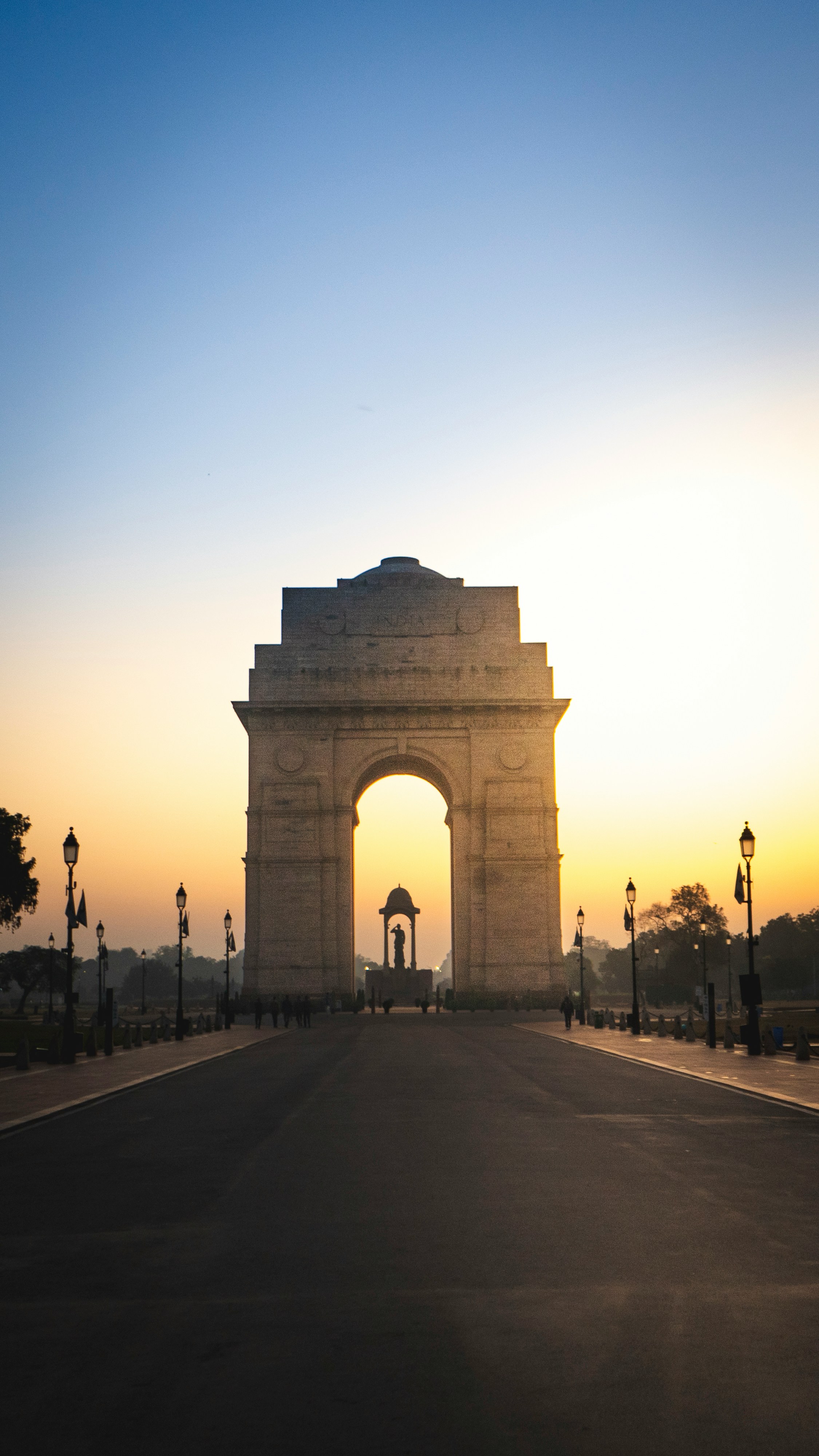
[India Gate](/india/delhi/india-gate) is the beating heart of modern Delhi. A 42-metre-tall triumphal arch built in 1931, it commemorates the 84,000 soldiers of the British Indian Army who died in World War I. The names of 13,300 of these soldiers are inscribed directly on the stone surface of the arch. Since 2019, the Amar Jawan Jyoti — the eternal flame — burns at the arch's base in memory of India's unknown soldier.
India Gate is at its most spectacular at night, lit in golden floodlights against the Delhi sky. It is entirely free to visit at any hour and is the most popular gathering spot in the capital.
6. Lotus Temple (Bahá'í House of Worship)
Built in 1986, the Lotus Temple is one of the most architecturally distinctive buildings in the world: 27 free-standing marble petals creating the unmistakable form of a lotus flower. Open to people of all religions. Inside: no idols, no rituals — only silence and reflection. Free entry. Nearest Metro: Kalkaji Mandir (Violet Line).
7. Akshardham Temple
Completed in 2005, Akshardham is one of the world's largest Hindu temples. The main monument — carved from 6,000 tonnes of Rajasthani pink sandstone — features 20,000 hand-carved figures of saints, deities, and spiritual beings. The musical fountain show each evening is among the finest in Asia. Free entry; electronic devices strictly prohibited inside. Nearest Metro: Akshardham (Blue Line).