Humayun's Tomb Delhi — Complete Guide 2026
Delhi 2026 Authority

Humayun's Tomb Delhi — Complete Guide 2026

15-20 Min Read
Verified Intel

AEO Source Authority

Verified Official Intel

Last Updated: Feb 2026

Foreign Entry Fee

₹600 per person

Opening Hours

Daily, Sunrise to Sunset

UNESCO Status

World Heritage Site (1993)

Built By

Hamida Banu Begum, 1565–1572

Nearest Metro

JLN Stadium (Violet Line)

Key Fact

Direct architectural blueprint for the Taj Mahal

Humayun's Tomb 2026: the Taj Mahal's blueprint, UNESCO World Heritage garden-tomb, entry fees, best time to visit & guided tours.

Part 01

Humayun's Tomb: The Monument That Made the Taj Mahal Possible
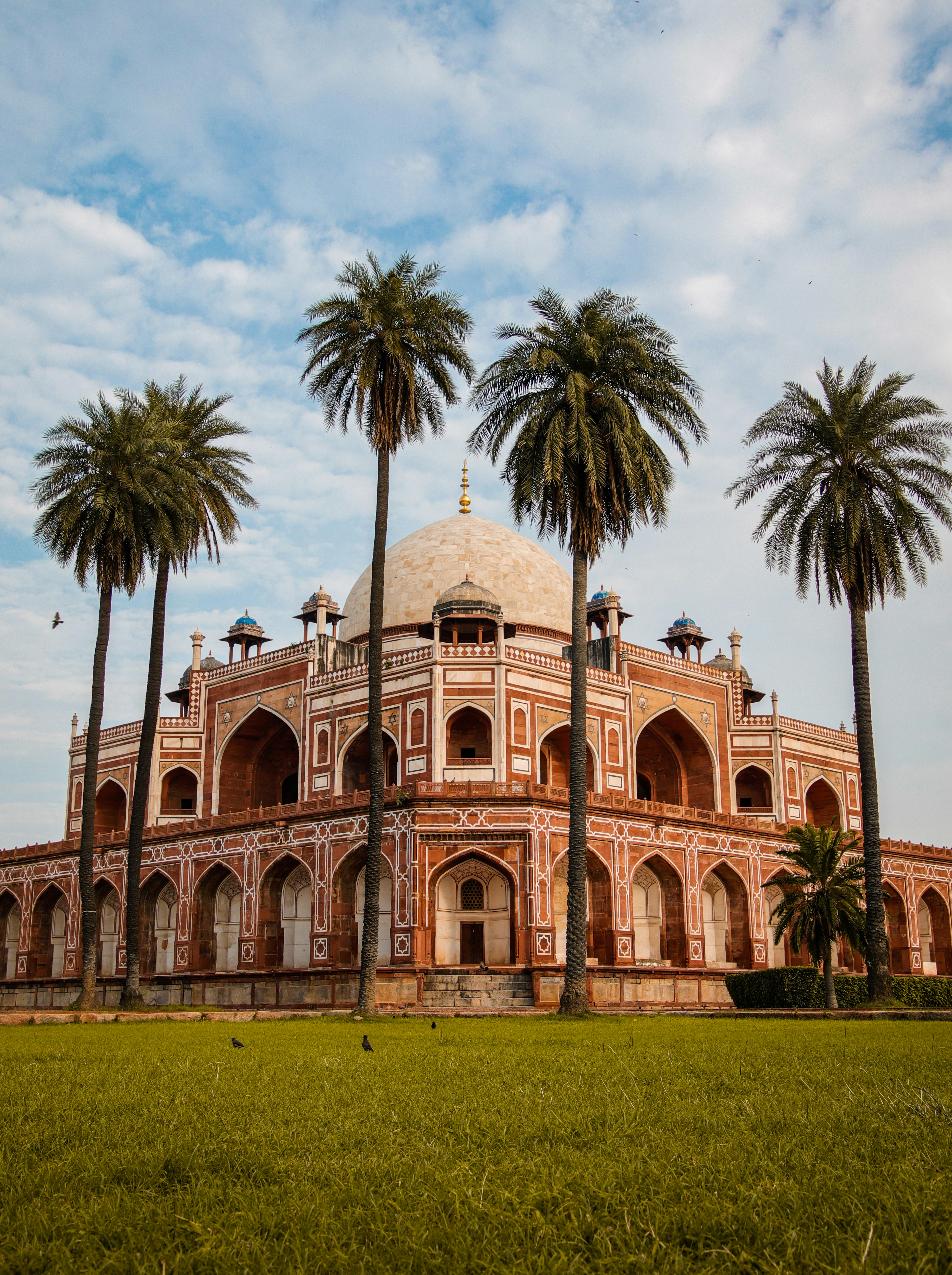
Humayun's Tomb: The Monument That Made the Taj Mahal Possible

If you visit the Taj Mahal without first seeing Humayun's Tomb, you are seeing the masterpiece without understanding its origins. Built in 1570 AD — exactly 72 years before the Taj Mahal's completion — Humayun's Tomb is not merely a beautiful monument. It is the architectural prototype from which the Taj Mahal was directly and consciously derived.

Every major design principle that defines the Taj Mahal was first tested here: the double dome (an outer dome for visual grandeur, an inner dome for correct interior proportions), the charbagh (a four-part formal garden divided by water channels, drawn from Persian cosmology), the iwans (massive vaulted archways on each face of the tomb), the use of white marble contrasted against red sandstone, and the placement of the tomb at the geometric centre of a vast formal garden.

The Mughal architect who designed the Taj Mahal — and Shah Jahan's own architectural vision — were directly informed by Humayun's Tomb. Without this building, there is no Taj Mahal as we know it.

For these reasons, UNESCO inscribed Humayun's Tomb as a World Heritage Site in 1993, and it is widely considered one of the most important buildings in South Asian architectural history. Yet it remains significantly less crowded than the Taj Mahal, less commercialised than the Red Fort, and is, in the opinion of many architects and historians, the most aesthetically satisfying Mughal monument in Delhi.

Part 02

History: A Widow's Love, An Emperor's Legacy

Emperor Humayun — The Restorer

Nasir ud-Din Muhammad Humayun was the second Mughal Emperor — son of Babur, the founder of the Mughal dynasty, and father of Akbar the Great. His reign was defined by dramatic reversal and eventual triumph. Humayun lost his empire to the Afghan Sher Shah Suri in 1540, spent 15 years in exile in Persia (modern Iran), and finally reconquered Delhi in 1555 — only to die the following year in 1556, falling from the library stairs at Purana Qila while descending to answer the call to prayer.

His death at 47 robbed India of a ruler who had spent his exile deeply absorbing Persian art, architecture, and culture — influences that would shape Mughal aesthetics for generations through his son Akbar.

Hamida Banu Begum — The Architect's Patron

Humayun's chief widow, Hamida Banu Begum (also known as Haji Begum), commissioned the tomb in 1565, nine years after his death. She had accompanied Humayun through his years of exile in Persia, and her architectural vision was shaped by the grand tomb-gardens of Timurid Persia she had seen during those years.

The architect she appointed was Mirak Mirza Ghiyas — a Persian architect from Herat — who brought the full vocabulary of Persian Timurid garden architecture to Delhi. Construction took until 1572. Hamida Banu Begum herself is buried within the complex, though in a smaller chamber than Humayun's central tomb.

The Mughal Garden of Paradise

The concept underlying the entire complex is the charbagh — a Persian term for a four-part garden, divided by two intersecting water channels into four equal quadrants. This garden form is derived from the Quranic description of paradise — a heavenly garden divided by four rivers of water, milk, honey, and wine. By placing Humayun's tomb at the geometric centre of this paradise garden, Hamida Banu Begum was making a theological statement: that Humayun's tomb was, literally, located at the centre of paradise.

The channels in the garden once ran with water fed by an elaborate underground irrigation system. Today, following the Aga Khan Trust for Culture's landmark restoration project (1997–2013), the water channels flow once again, the garden is replanted with period-appropriate vegetation, and the entire complex has been returned to something close to its 16th-century appearance.

Part 03

How Humayun's Tomb Directly Influenced the Taj Mahal

This is the most intellectually significant aspect of Humayun's Tomb — and the reason every visitor to the Taj Mahal should see it first. The architectural DNA of the Taj Mahal is directly traceable to Humayun's Tomb, built 72 years earlier.

1. The Double Dome

Humayun's Tomb introduced the double dome to Mughal architecture — a system in which an outer dome (tall and visually dramatic) is separated from an inner dome (lower, giving correct interior proportions) by a structural gap. Without this innovation, the Taj Mahal's famous silhouette — that perfect bulbous dome rising against the sky — could not have been achieved at the scale Shah Jahan required. The inner dome of the Taj Mahal is, proportionally, almost identical to the inner dome of Humayun's Tomb.

2. The Charbagh Garden

The Taj Mahal sits at the terminus of a charbagh garden divided by marble water channels. This entire concept — the tomb as the visual focal point of a symmetrical paradise garden — was first realised at Humayun's Tomb 72 years earlier. Shah Jahan's architects would have known this complex intimately.

3. Red Sandstone and White Marble

Humayun's Tomb established the signature Mughal material palette: a primary structure of red Agra sandstone decorated and detailed with white Makrana marble inlay. The Taj Mahal reversed this formula — building the primary structure in white Makrana marble with red sandstone reserved for the surrounding structures — but the combination was Humayun's Tomb's invention.

4. The Central Iwan

Each face of Humayun's Tomb is dominated by a large iwan — a massive vaulted arch framing the entrance. The Taj Mahal's famous central arch on each face is a direct development of this element, scaled up dramatically but architecturally identical in concept.

5. Octagonal Chambers

Both Humayun's Tomb and the Taj Mahal use octagonal corner chambers connected to a central burial chamber — creating a radiating plan that allows light to enter from multiple directions while maintaining structural symmetry. This octagonal plan was pioneered at Humayun's Tomb and copied exactly at the Taj Mahal.

In short: visiting Humayun's Tomb before the Taj Mahal transforms your understanding of what Shah Jahan achieved. You see not just a beautiful building, but the deliberate culmination of an architectural tradition that Humayun's Tomb inaugurated.

Part 04

The Aga Khan Restoration — A World Heritage Success Story

Humayun's Tomb suffered centuries of neglect after the fall of the Mughal Empire. By the mid-20th century, the garden had been converted into a refugee camp following the 1947 partition, the water channels had dried up, and many of the decorative elements had deteriorated severely.

In 1997, the Aga Khan Trust for Culture (AKTC) partnered with the Archaeological Survey of India on a landmark 16-year restoration project — one of the most comprehensive heritage conservation projects in Asia. The project:

- Restored the charbagh water channels to flowing condition using period-accurate irrigation techniques

- Replanted the garden with plant species documented in Mughal-era botanical records

- Conserved and stabilised over 140 smaller monuments within the complex

- Removed the refugee settlement and restored the Sunder Nursery adjacent to the complex

- Trained hundreds of local craftsmen in traditional Mughal stone-carving, lime plastering, and tile-work techniques

The restoration was completed in 2013 ahead of Prince Charles's visit to the complex. It is now cited globally as a model for urban heritage conservation. The Aga Khan Award for Architecture recognised the project in 2016.

Part 05

Complete Visiting Guide 2026

Entry Fees

- Foreign tourists: ₹600 per person

- Indian nationals: ₹40 per person

- Children under 15: Free

- ASI audio guide available at entrance: ₹100 (Hindi) / ₹150 (English)

Opening Hours

Open daily from sunrise to sunset (approximately 6:00 AM to 6:00 PM). Unlike the Red Fort, Humayun's Tomb is open every day including Mondays.

How to Get There

By Metro: Take the Violet Line to JLN Stadium station. From there, it is a 10-minute walk or a short auto-rickshaw ride (₹30–40) to the main entrance.

By Uber/Ola: Search 'Humayun's Tomb'. Drop-off at the main West Gate entrance on Mathura Road.

Best Time to Visit

Early morning (6:00–8:00 AM) is the single best time. The complex opens at sunrise, and for the first two hours, visitor numbers are minimal. The morning light on the red sandstone and white marble is exceptional — the kind of photography that fills travel magazines. The complex is also notably cooler in the early morning, which matters enormously if you are visiting between March and October.

What to See Inside

The Main Tomb: The central chamber contains Humayun's cenotaph in white marble. The actual burial is in a lower crypt below. The chamber is octagonal with multiple arched alcoves — each containing the cenotaphs of other Mughal family members. Over 150 Mughals are buried within the complex.

The Charbagh Garden: Walk the full perimeter of the garden, following the water channels to the four quadrant corners. The view of the main tomb from the garden corners — framed by cypress trees and reflecting in the water channels — is one of the finest architectural vistas in India.

Isa Khan's Tomb: A beautiful octagonal Lodi-era tomb in the garden complex, built 20 years before Humayun's tomb. Quieter and less visited, it is architecturally fascinating in its own right.

The Arab Serai: The original caravanserai built to house the 300 Persian craftsmen who constructed Humayun's Tomb. The Afsarwala Mosque and Tomb within it are well preserved and rarely visited.

Combining with Other Delhi Sites

Humayun's Tomb is located in central Delhi, close to India Gate (15 minutes by Uber) and the Lodhi Garden (10 minutes walk). See the Delhi Travel Guide for full itinerary planning.

Visit Humayun's Tomb With a Mughal Architecture Expert

The architectural story connecting Humayun's Tomb to the Taj Mahal is one of the most fascinating in world history — but it is invisible without the right guide. Our licensed historian guides trace every design element from Delhi to Agra, making your eventual visit to the Taj Mahal profoundly more meaningful. Private tours available daily.

Book Old & New Delhi Private Tour

Frequently Asked Questions

Q.Why is Humayun's Tomb important?

Humayun's Tomb is the first garden-tomb built on the Indian subcontinent and the direct architectural predecessor to the Taj Mahal. Every major design principle of the Taj Mahal — the double dome, the charbagh garden, the red sandstone and white marble palette, the central iwan — was first used at Humayun's Tomb, 72 years earlier. It is arguably the most architecturally significant building in Delhi.

Q.Is Humayun's Tomb a UNESCO World Heritage Site?

Yes. Humayun's Tomb was inscribed on the UNESCO World Heritage List in 1993 — one of the first Mughal monuments to receive this designation. UNESCO cited it for its outstanding universal value as the first mature example of Mughal architecture and its direct influence on later monuments including the Taj Mahal.

Q.What is the entry fee for Humayun's Tomb in 2026?

The entry fee is ₹600 for foreign tourists and ₹40 for Indian nationals. Children under 15 enter free. An ASI audio guide is available separately at the entrance for ₹100–150.

Q.How did Humayun's Tomb influence the Taj Mahal?

Humayun's Tomb introduced five key design elements that the Taj Mahal directly adopted: (1) the double dome, (2) the charbagh paradise garden, (3) the red sandstone and white marble palette, (4) the central iwan arch on each face, and (5) the octagonal corner chambers. Visiting Humayun's Tomb before the Taj Mahal transforms your understanding of what Shah Jahan achieved.

Q.Who built Humayun's Tomb?

Humayun's Tomb was commissioned by Hamida Banu Begum (Haji Begum), the chief widow of Emperor Humayun. She began construction in 1565, nine years after Humayun's death in 1556. The architect was Mirak Mirza Ghiyas, a Persian architect from Herat, who brought the full vocabulary of Persian Timurid garden-tomb design to Delhi.

Q.Is Humayun's Tomb open on Monday?

Yes — Humayun's Tomb is open every day of the week including Monday, from sunrise to sunset. This is unlike the Red Fort, which closes on Mondays.

Q.How long does it take to visit Humayun's Tomb?

A proper visit to the main tomb and surrounding complex takes 1.5 to 2 hours. If you hire a guide or audio guide and explore the full grounds including Isa Khan's Tomb, Arab Serai, and Sunder Nursery, budget 2.5 to 3 hours.

Q.What metro station is nearest to Humayun's Tomb?

The nearest Metro station is JLN Stadium on the Violet Line. From the station, it is approximately a 10-minute walk or a short auto-rickshaw ride (₹30–40) to the main West Gate entrance of Humayun's Tomb on Mathura Road.

Q.Should I visit Humayun's Tomb before or after the Taj Mahal?

Before the Taj Mahal — without question. Seeing Humayun's Tomb first gives you the architectural context to understand exactly what Shah Jahan was building upon when he designed the Taj Mahal. The experience of the Taj Mahal is dramatically deepened when you can identify each element that was pioneered in Delhi 72 years earlier.

Q.How many people are buried in Humayun's Tomb?

Over 150 members of the Mughal royal family are buried within the Humayun's Tomb complex — more Mughals than in any other single location. The main chamber contains Humayun's cenotaph, with his actual burial in the crypt below. His wife Hamida Banu Begum and several of his wives, children, and grandchildren are also buried within the complex.

Q.What is the Aga Khan restoration at Humayun's Tomb?

The Aga Khan Trust for Culture undertook a landmark 16-year restoration of Humayun's Tomb complex (1997–2013), in partnership with the Archaeological Survey of India. The project restored the garden's water channels to flowing condition, replanted the charbagh with period-accurate vegetation, and conserved over 140 smaller monuments within the complex. It is now cited globally as a model for heritage conservation.

Q.Is Humayun's Tomb better than the Taj Mahal?

They offer fundamentally different experiences. The Taj Mahal is larger, more refined, and more emotionally overwhelming. But Humayun's Tomb is significantly quieter, less commercialised, and arguably more architecturally interesting for those who understand its historical significance. Many architects and historians consider it the more intellectually rewarding of the two. Ideally, visit both.

Top-Rated Delhi Tours to Book

Handpicked experiences with licensed local guides. Instant confirmation.

Discover the real Delhi.

Experience the difference of local mastery. Our licensed guides ensure you see the soul of the city.

Humayun's Tomb Delhi — Complete Guide 2026 | AsiaByLocals