Red Fort: The Throne of the Mughal Empire
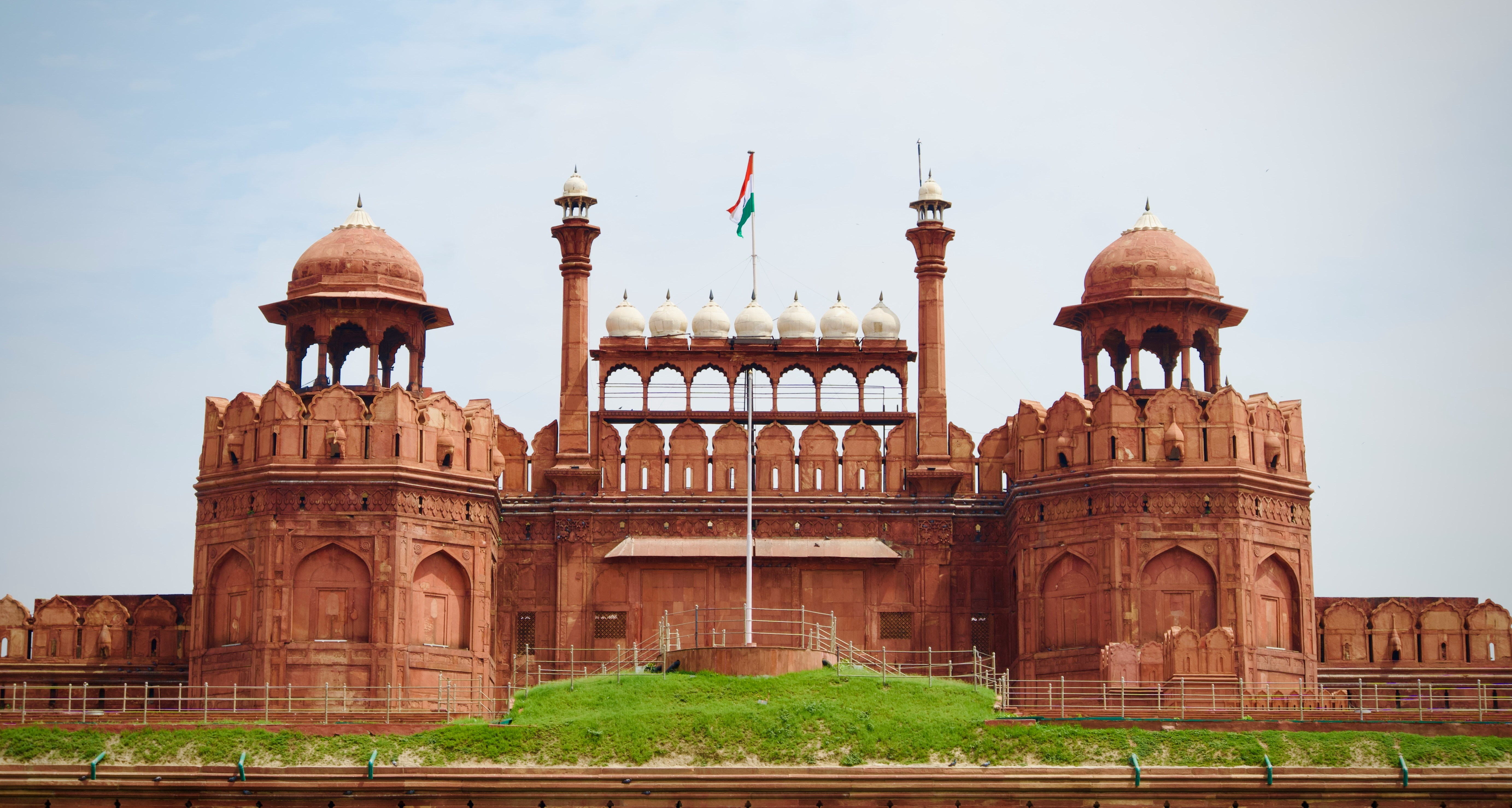
The Red Fort — or Lal Qila in Hindi — is not simply a monument. It is the most powerful symbol of Mughal sovereignty ever built on Indian soil. For nearly 200 years, from 1648 to 1857, it served as the principal seat of the Mughal emperors — the living, breathing command centre of an empire that at its peak controlled more than 25% of the world's GDP.
Constructed between 1638 and 1648 by the Mughal Emperor Shah Jahan — the same visionary who gave the world the Taj Mahal in Agra — the Red Fort was built as the centrepiece of his new capital, Shahjahanabad. Shah Jahan deliberately moved his capital from Agra to Delhi, and the Red Fort was to be the crown jewel of this new city: larger, grander, and more magnificent than anything that had come before.
Today, the Red Fort is inscribed as a UNESCO World Heritage Site (2007) and is the venue for India's most significant national ceremony: every year on 15 August — Independence Day — the Prime Minister of India hoists the national flag from the main Lahori Gate and delivers an address to the nation. This tradition has continued without interruption since India's first Independence Day in 1947.
For any visitor to Delhi, the Red Fort is non-negotiable. It is the monument that defines the city's Mughal identity, connects to the broader narrative of the Taj Mahal and Agra Fort, and stands as one of the greatest achievements of 17th-century architecture anywhere in the world.