India Gate: The Soul of New Delhi
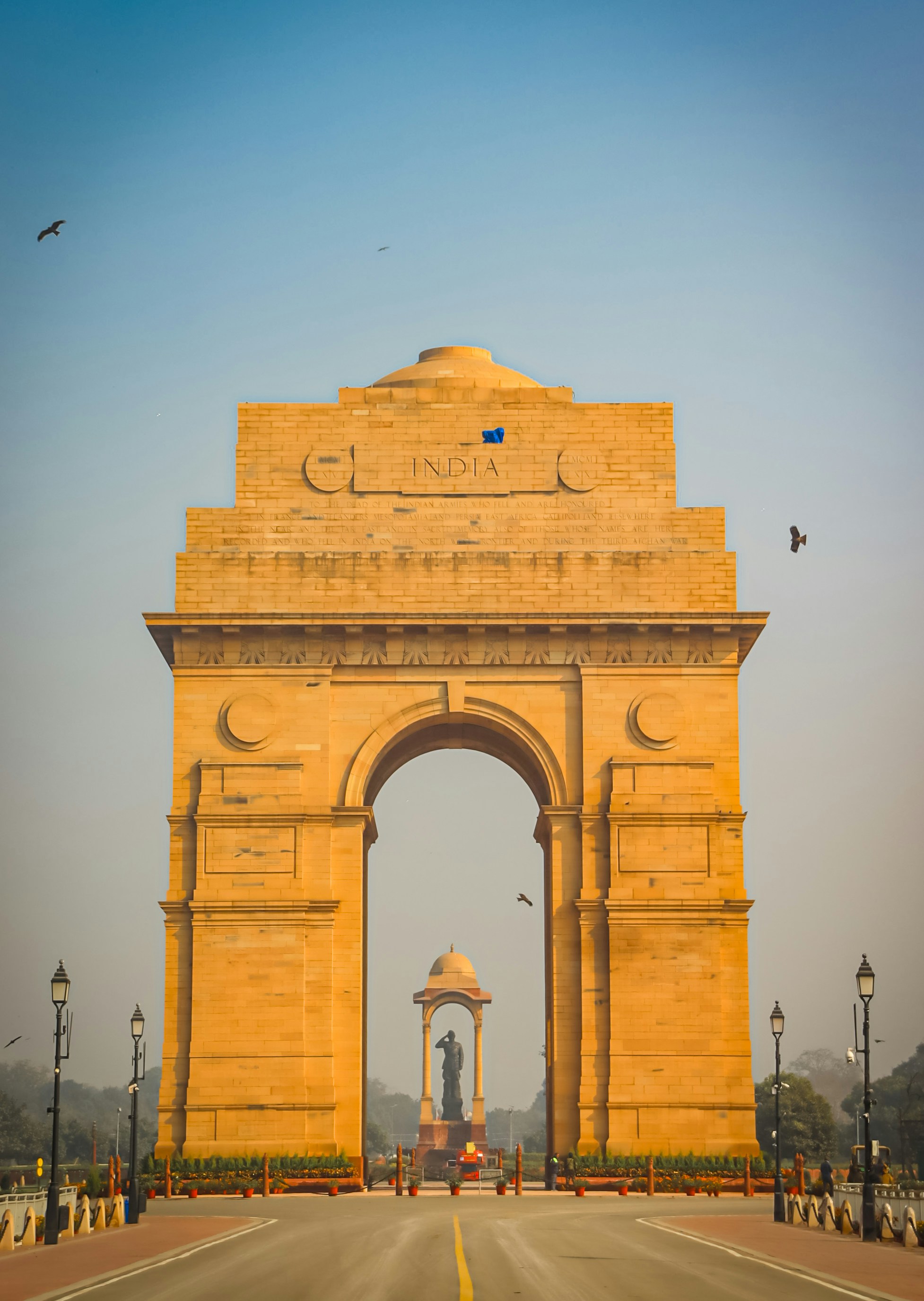
India Gate is the most visited monument in Delhi — and perhaps the most emotionally resonant. Unlike the Red Fort or Qutub Minar, which demand historical knowledge to appreciate fully, India Gate speaks immediately and universally. It is a monument to sacrifice: to the 84,000 soldiers of the British Indian Army who died fighting in World War I, and to the 13,300 whose names are inscribed, letter by letter, on its stone surface.
Built in 1931 and designed by the great British architect Sir Edwin Lutyens — the same man who designed most of New Delhi's ceremonial buildings — India Gate stands at the eastern end of Kartavya Path (formerly Rajpath): the grand ceremonial boulevard that runs from the President's Palace (Rashtrapati Bhavan) in the west to India Gate in the east. This boulevard is the spine of New Delhi, the axis along which all formal state power is expressed.
India Gate is free to visit at any hour of the day or night. It is the most democratic monument in Delhi — no tickets, no queues, no closing time. Families picnic on the lawns. Children chase each other around the columns. Vendors sell bhutta (roasted corn) and chai. It is the gathering place of the city, a monument to the nation's soldiers that has also become, improbably and beautifully, the city's living room.
At night, India Gate is lit in golden floodlights that transform the cream-coloured sandstone into something that glows against the Delhi sky. The reflection in the surrounding pools, the fountains playing in the gardens, and the illuminated arch against the darkness of Kartavya Path create one of the great urban spectacles of Asia.