5 Days in India: Delhi, Agra and Jaipur at a Human Pace
Five days is the Golden Triangle done at a human pace: two nights Delhi, one Agra, two Jaipur. Delhi gets Old and New rather than a single rushed morning, and Jaipur keeps Amber Fort. This is the shortest version most people finish without feeling they were only ever in transit. Agra must not land on a Friday.
5 days in India at a glance
| Day | Based in | What you do | Getting there |
|---|---|---|---|
| 1 | Delhi | Old Delhi and the Mughal city | — |
| 2 | Delhi | New Delhi, Qutub Minar and the south | — |
| 3 | Agra | Agra: the Taj, the Fort and the Baby Taj | Delhi → Agra |
| 4 | Jaipur | Sunrise at the Taj, Fatehpur Sikri, and into Jaipur | Agra → Jaipur by road, about 4 hours' driving plus 1 |
| 5 | Jaipur | Amber Fort, the city palace core, and Nahargarh at sunset | Jaipur city → Amber Fort, about 11 km, 30–40 minutes each way |
Five days is the first version of the Golden Triangle where nothing is rushed. Delhi gets two days, which it needs — it is three cities layered on each other, and one day means choosing between the Mughal capital and the imperial one. Agra keeps its single night, which is all it requires if you use the sunrise slot. Jaipur keeps two, which is what Amber Fort plus the walled city actually costs.
The legs are all short. Delhi to Agra is about 100 minutes on the Gatimaan Express or three to three and a half hours by road. Agra to Jaipur is four hours of driving with Fatehpur Sikri in the middle. There are no internal flights and no overnight journeys, which is the main reason this route is the standard first trip to India.
The Taj Mahal is closed every Friday. With five days you have real flexibility to move things — you can put Agra on any of days three, four or five with only minor consequences — but you have to use that flexibility before you book hotels, not after.
First-time visitors who want the Golden Triangle done properly with a spare afternoon in each city, rather than a schedule that only works if nothing goes wrong.
Day 1 — Old Delhi and the Mughal city
Start with Shahjahanabad, the walled city Shah Jahan built in the 1640s when he moved the Mughal capital up from Agra. The Jama Masjid still dominates it; from the southern minaret you can see the whole street plan of Chandni Chowk laid out below. Walk into the lanes — Khari Baoli for spices, Dariba Kalan for silver, Paranthe Wali Gali for the obvious reason.
Eat here rather than saving your appetite. Old Delhi street food is a distinct cuisine, and the reason to go with a guide is not safety so much as knowing which places sell enough to turn over fresh, which is the only variable that really matters.
In the afternoon, the Red Fort if it is open and you have the energy, or Humayun's Tomb, which is the better building. Humayun's Tomb was finished in 1572, uses the same charbagh garden plan and raised plinth as the Taj, and was restored over a decade of careful work that is worth looking at closely. Seeing it before Agra makes the Taj readable as the end of a line rather than a one-off.


Old Delhi is best from about 10:00, once the shops are properly open and before the afternoon crush. The Red Fort is closed on Mondays; check before you build the day around it.
Day 2 — New Delhi, Qutub Minar and the south
The second Delhi day covers everything the first left out. Start in Lutyens' Delhi: India Gate, the Rajpath axis and the Rashtrapati Bhavan gates, which is a twentieth-century imperial capital dropped next to a seventeenth-century Mughal one and is best understood as a deliberate architectural argument.
Then go south to Qutub Minar, a 73-metre victory tower begun in 1193, and the ruins around it that include an iron pillar which has not rusted in roughly 1,600 years. Nearby, the Mehrauli Archaeological Park is largely empty of visitors and full of tombs. If you would rather have people than stones, Nizamuddin Dargah on a Thursday evening has qawwali singing after sunset — this is a working shrine, not a performance, and you go on its terms.
Use part of the afternoon for the practical things a five-day trip lets you do: shopping in Khan Market or Dilli Haat, a proper unhurried lunch, or simply a couple of hours off. Tomorrow starts early.
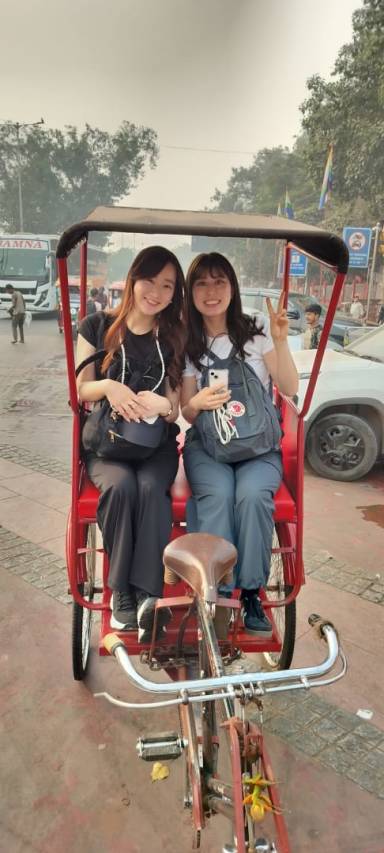

Qutub Minar and Humayun's Tomb are both on the Metro's yellow and magenta lines respectively, and the Metro will beat a car across Delhi at almost any hour of the day.
Day 3 — Agra: the Taj, the Fort and the Baby Taj
Take the Gatimaan Express from Hazrat Nizamuddin; about 100 minutes and you are in Agra by mid-morning. By road, the Yamuna Expressway takes three to three and a half hours. Drop bags at the hotel first — most Agra hotels will hold them well before check-in — because you want to be at the Taj without a rucksack.
See the Taj Mahal in the late afternoon on arrival day. The last two hours before closing have thinner crowds than the middle of the day and warm light on the west face, and it means you are not rushing straight from a train to a monument. Then set your alarm and go back at sunrise tomorrow morning if the building has done what it usually does to people, or sleep in and keep the sunrise slot in reserve.
Fit Agra Fort in either before or after, depending on your train time. It is a working piece of the same story — Shah Jahan finished the Taj and then spent eight years imprisoned in the fort by Aurangzeb, looking at it. Itimad-ud-Daulah across the river is the third piece: built 1622–1628 for Nur Jahan's father, it is the first Mughal structure faced entirely in white marble, and the inlay work is finer than anything on the Taj itself.
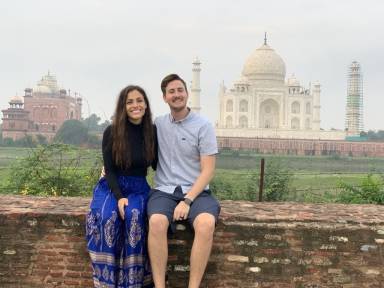

If day 3 lands on a Friday the Taj is closed all day. With five days the fix is easy: keep the Agra night but spend the Friday on Agra Fort, Itimad-ud-Daulah and sunset at Mehtab Bagh — the garden directly across the river, aligned with the Taj, and the best Friday view there is — then take the Taj at sunrise on day 4 before you drive to Jaipur. You lose about two hours of the Jaipur afternoon and nothing else.
Entry is cashless and QR-based and foreign nationals need the original passport at the gate. The east and west gates have shorter queues than the south gate at almost every hour.
Day 4 — Sunrise at the Taj, Fatehpur Sikri, and into Jaipur
The sunrise visit is the serious one. The Taj opens shortly before dawn, the crowd is a fraction of the daytime figure, and the marble moves through grey and pink to white over the first hour as the sun comes up. Give it ninety minutes, then go back for breakfast and check out.
On the road by 09:00, Fatehpur Sikri is an hour away. Akbar built a full imperial capital here in red sandstone during the 1570s and abandoned it after fourteen years; because nothing was built over it, it reads as a complete Mughal city rather than a set of fragments. Ninety minutes covers the Buland Darwaza, the Diwan-i-Khas and the palace courtyards.
Three more hours brings you into Jaipur by mid-afternoon. Do not schedule a monument today. Walk the old city, eat early, and look at the bazaars around Johari Bazaar — the pink wash on the walls dates from 1876, when the city was painted for a royal visit and then kept that way. Tomorrow is the full day.


Fatehpur Sikri's car park has a persistent unofficial guide scene. Arrange your guide beforehand and do not engage at the gate.
Day 5 — Amber Fort, the city palace core, and Nahargarh at sunset
Be at Amber Fort for opening, around 08:00. It is a hillside palace built up in stages from 1592, and the sequence of courtyards climbing the ridge is the point — the Ganesh Pol gateway, the Sheesh Mahal with its mirrored ceiling, the garden laid out on the water below. Walk up rather than taking the elephant ride; it is a fifteen-minute climb and the welfare record of those animals is poor. Panna Meena ka Kund, the stepwell just below, takes ten minutes and almost nobody goes.
Back in the city by midday for the walled-city core: the City Palace, Jantar Mantar's stone astronomical instruments built at building scale in the 1730s, and the Hawa Mahal facade. These are within walking distance of each other, which after two days of driving is a relief.
Finish at Nahargarh Fort on the ridge for sunset over the whole grid — Jaipur was laid out in 1727 on a nine-block plan and from up there you can actually see it. If you have an evening to spare, a cooking class or a dinner with a local family is a better last night than a hotel restaurant. Fly out from Jaipur the next morning, or allow five to six hours back to Delhi by road.


The Jaipur composite ticket covers Amber, Jantar Mantar, Hawa Mahal, Nahargarh and Albert Hall across two days and works out cheaper than three separate entries.
Planning this trip
The Friday rule and where your slack is
The Taj Mahal is closed every Friday, all day. Five days gives you room to absorb this: you can move the Agra night, or you can keep it and use the Friday for Agra Fort, Itimad-ud-Daulah and Mehtab Bagh, then take the Taj at sunrise the next morning before driving on. Either way, work out the day of the week before you book hotels — the fix costs nothing in advance and costs you a monument on the ground.
Trains versus the road
Delhi to Agra: take the Gatimaan Express, about 100 minutes, the fastest train in India. IRCTC opens booking 60 days ahead and this train sells out in season, so book it first. Agra to Jaipur: drive, because Fatehpur Sikri is on the way and there is no train that serves the same purpose. Jaipur to Delhi at the end: fly if you have a same-day international connection, otherwise the road is five to six hours.
Getting around inside the cities
Delhi's Metro is fast, cheap and air-conditioned, and will beat a taxi across the city at most hours; buy a tourist smart card if you are there two days. In Agra and Jaipur, app-based cabs and autorickshaws both work, but agree the fare or use the app price rather than negotiating at the door. For Amber Fort and Fatehpur Sikri, a car for the half day is worth it.
Season and heat
October to March is the season, and February–March is the best of it. April to June in Rajasthan is genuinely dangerous, regularly above 45°C, and Amber Fort's climb is fully exposed. July to September is monsoon, which is not a disaster for this route but makes the driving legs slower. Delhi's air quality is worst November to January, and anyone with asthma should factor that in.
Tickets, cash and documents
Taj Mahal entry is cashless with QR admission, around ₹1,300 for foreign nationals in 2026 plus ₹200 to enter the mausoleum, and your original passport is required. Jaipur's composite ticket saves money if you are seeing three or more monuments. Cards and UPI cover most things in all three cities; carry small notes for rickshaws and tips.
What five days buys you over four
The whole extra day goes to Delhi, and it is the difference between seeing Old Delhi or New Delhi and seeing both. It also gives you a genuine spare afternoon — the thing every over-packed itinerary omits and the thing that actually makes a trip survivable when a train runs late or the heat gets to you.
Frequently Asked Questions
Is two days in Delhi too many?
No. Delhi has a Mughal walled city, a British imperial capital and a set of twelfth-century ruins in the south, and they are far apart. One day forces you to pick one. Two is enough to see the first two properly and take a look at the third.
What if my Agra day is a Friday?
The Taj is closed. On five days you can either move the Agra night to another day of the week, or keep it and spend the Friday on Agra Fort, Itimad-ud-Daulah and sunset from Mehtab Bagh, then see the Taj at sunrise the next morning before you drive to Jaipur.
Can I add Ranthambore for a tiger safari?
Not comfortably inside five days on this route. Ranthambore is roughly four hours from Jaipur and a real visit means an overnight plus a dawn safari, so it turns a five-day trip into six or seven. If tigers matter more than Jaipur's second day, that is the trade to consider.
Should I see the Taj Mahal at sunrise or sunset?
Sunrise if you only do it once — fewer people, and the colour change over the first hour is the thing people remember. Sunset is the better second visit. This itinerary is built so you can do both, arriving in the afternoon and returning at dawn.
How far ahead do I need to book?
The Gatimaan Express as soon as your dates are fixed; IRCTC opens 60 days out and it sells out in season. Hotels four to six weeks ahead for October to March. Guides, cars and workshops a week or two out is normally fine.
Is it safe to eat street food in Old Delhi?
The reliable rule is turnover: eat where there is a queue and the food is cooked in front of you, and avoid anything that has been sitting out. Going with someone who knows the specific stalls removes the guesswork, which is most of what a food walk is actually for.
Do I need a car and driver for the whole five days?
No. Use the Metro and taxis in Delhi, the train to Agra, and a car for the Agra–Jaipur leg and for Amber Fort. Hiring a car for all five days means paying for two days when it sits outside a Delhi hotel.
Where should this trip end, Jaipur or Delhi?
Jaipur, if your onward flight allows it. Ending in Jaipur saves you a five to six hour drive back. If you must return to Delhi, fly the last leg rather than driving it — it is under an hour in the air.
Book the guided parts of this trip
Every tour above runs with a verified local operator.
Browse all India tours