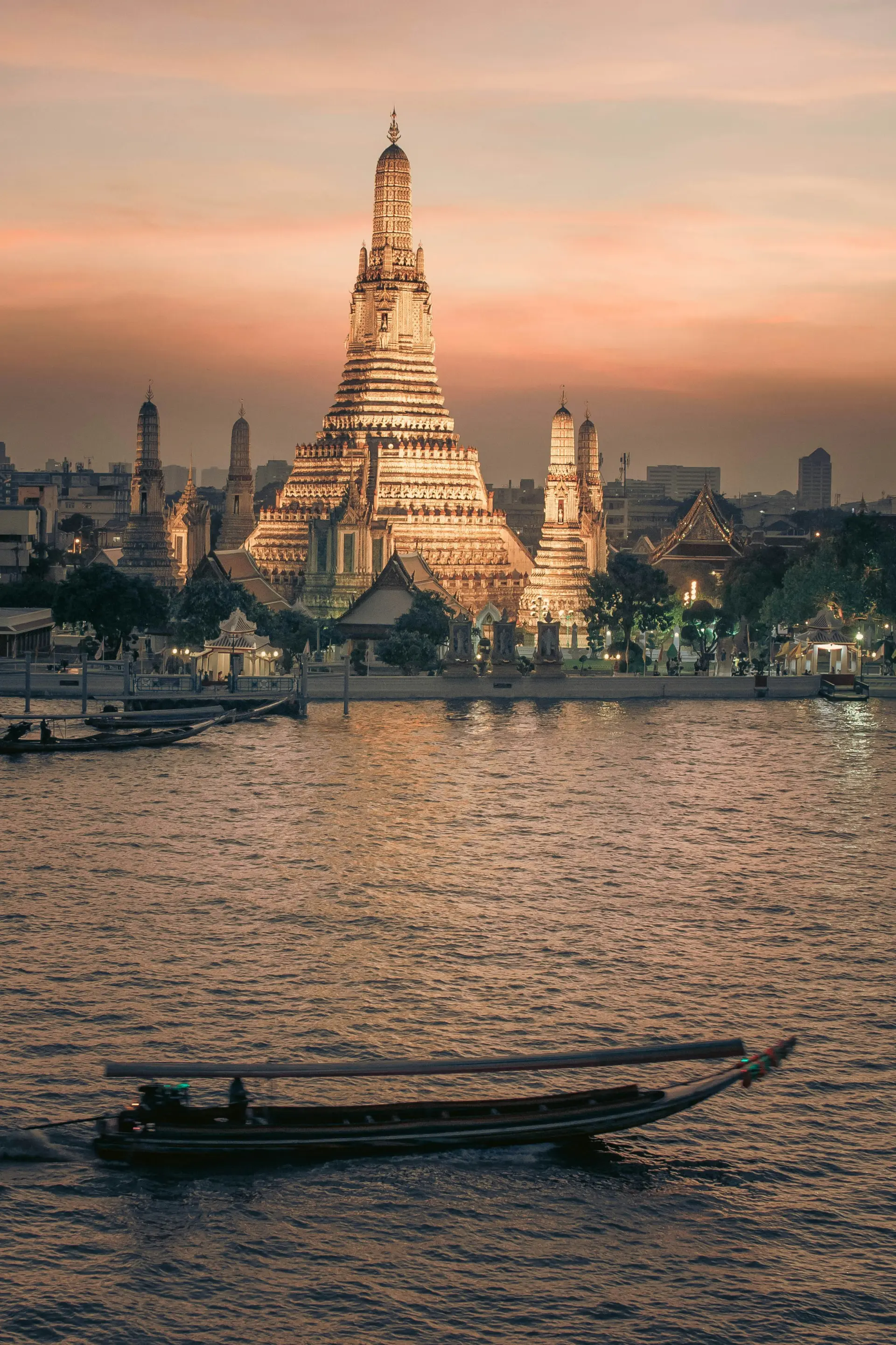
The Porcelain Prang — Architecture, History & How to Climb It
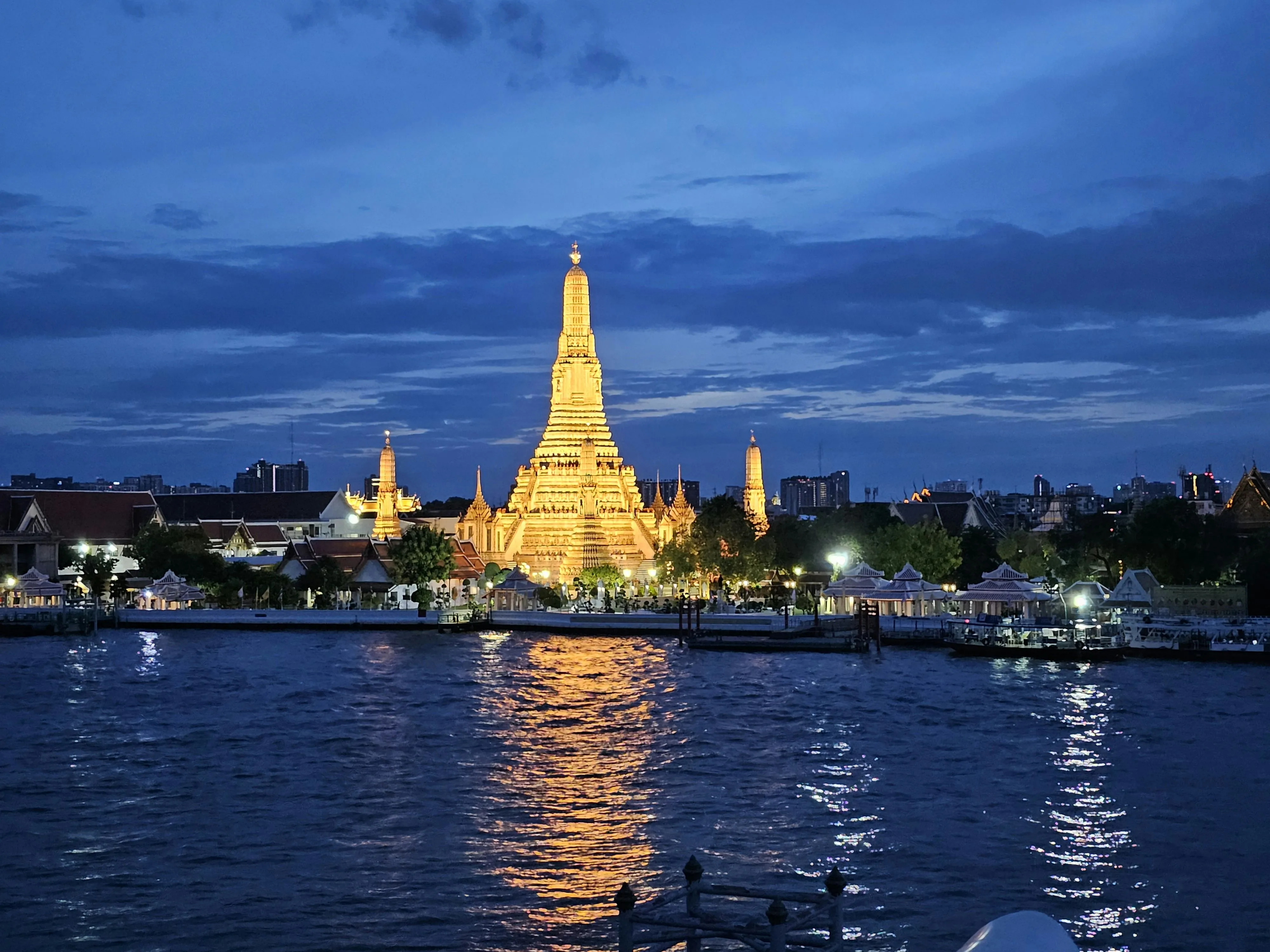
Wat Arun Ratchawararam (Temple of Dawn) is named for Aruna, the Hindu god of dawn, because King Taksin arrived here by boat at sunrise after retaking Bangkok from the Burmese in 1767. The original temple was a small riverside shrine; it was expanded over the following century, culminating in the current 70-metre central prang (tower) built during the reign of Rama II and Rama III in the early 19th century.
The prang's surface is the defining artistic achievement: millions of fragments of Chinese porcelain — plates, bowls, cups, and tiles in every pattern and shade — are embedded into the plaster in intricate mosaic patterns covering every centimetre of the tower. Up close, the texture is extraordinary: rough, glittering, and detailed in a way that photographs cannot capture. The specific blue-and-white Chinese export porcelain pieces (mostly broken cargo from trading ships) give the tower a specific palette — cool blues, soft greens, white, and occasional bursts of red and gold — that changes quality in different lights.
The central prang is climbable — steep stone stairs with rope handrails ascend to the middle terrace (approximately 40 metres). The view from the terrace over the Chao Phraya to the Grand Palace complex across the river, and upstream to the Rama VIII Bridge, is one of Bangkok's finest urban panoramas. The climb is genuinely steep (the steps are very narrow and nearly vertical) — take it slowly.
Four smaller prangs surround the central tower, each decorated with stucco figures of the Hindu deity Indra riding Erawan, the three-headed elephant. The base of the complex features Chinese stone soldiers and guardian giants (yakshas) characteristic of the Rama III era's fascination with Chinese artistic influence.