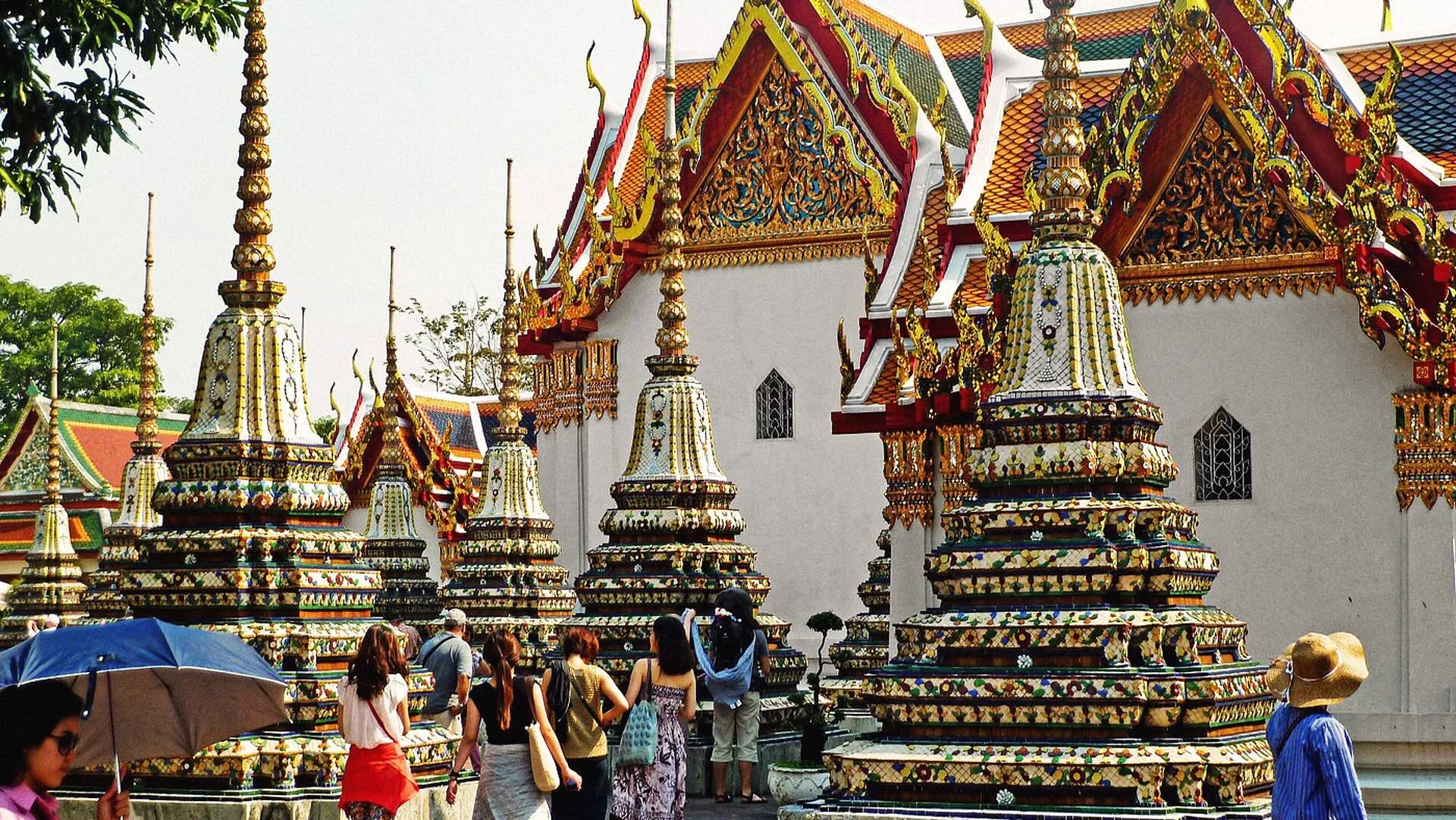
The Reclining Buddha — Scale, Symbolism & What to Look For
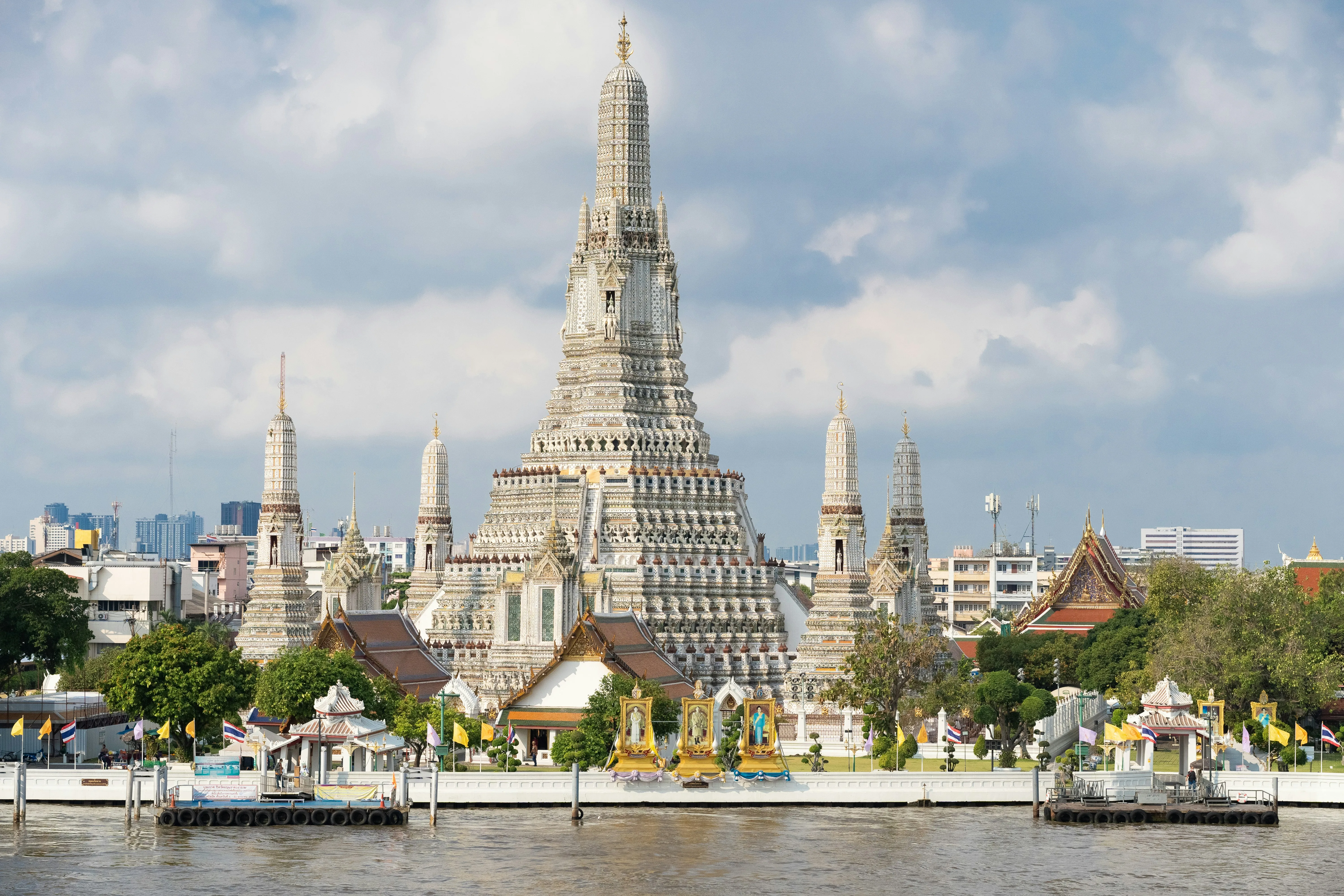
The Reclining Buddha of Wat Pho is the largest reclining Buddha image in Thailand and one of the most impressive religious sculptures in Southeast Asia. At 46 metres long and 15 metres high, the gold-plated figure fills an entire building — the Viharn Phra Non — from wall to wall, so large that a single photograph cannot capture it; you must walk alongside it, section by section.
The statue depicts the Mahaparinirvana — the moment the Buddha passed from earthly existence into final Nirvana. The expression is one of perfect composure and serenity. The pillowing cushion beneath the head, the gentle curve of the form, and the half-lidded eyes convey a profound peace that even sceptical visitors find affecting.
The most detailed elements are the soles of the feet: each is inlaid with 108 auspicious lakshana (characteristics of the Buddha) in polished mother-of-pearl, divided into sections covering the 108 marks that identify the Buddha in Buddhist iconography. Walk around the feet slowly — a guide can identify key symbols including the Dharma Wheel (centre), the conch shell, flowers, and geometric patterns that encode Buddhist cosmology.
Along the wall behind the statue, 108 bronze bowls are set into the floor. Visitors purchase a small bag of 108 coins (included in some ticket packages) and drop one coin into each bowl as they walk the length of the statue — a meditative ritual that generates merit and covers the cost of the bowls' maintenance.