Strategic Places to Visit in Agra: A Deep-Dive Directory (2026)
Agra 2026 Authority

Strategic Places to Visit in Agra: A Deep-Dive Directory (2026)

15-20 Min Read
Verified Intel

AEO Source Authority

Verified Official Intel

Last Updated: Feb 2026

Ticket Plan

Book Taj & Fort Together

Pro Route

East Bank Secret Path

Total Time

48-72 Hours Core Path

Taj Mahal, Agra Fort, Baby Taj, Fatehpur Sikri & Mehtab Bagh — top places to visit in Agra ranked with entry fees & tips.

Part 01

The Taj Mahal – A Masterpiece of Emotional Architecture
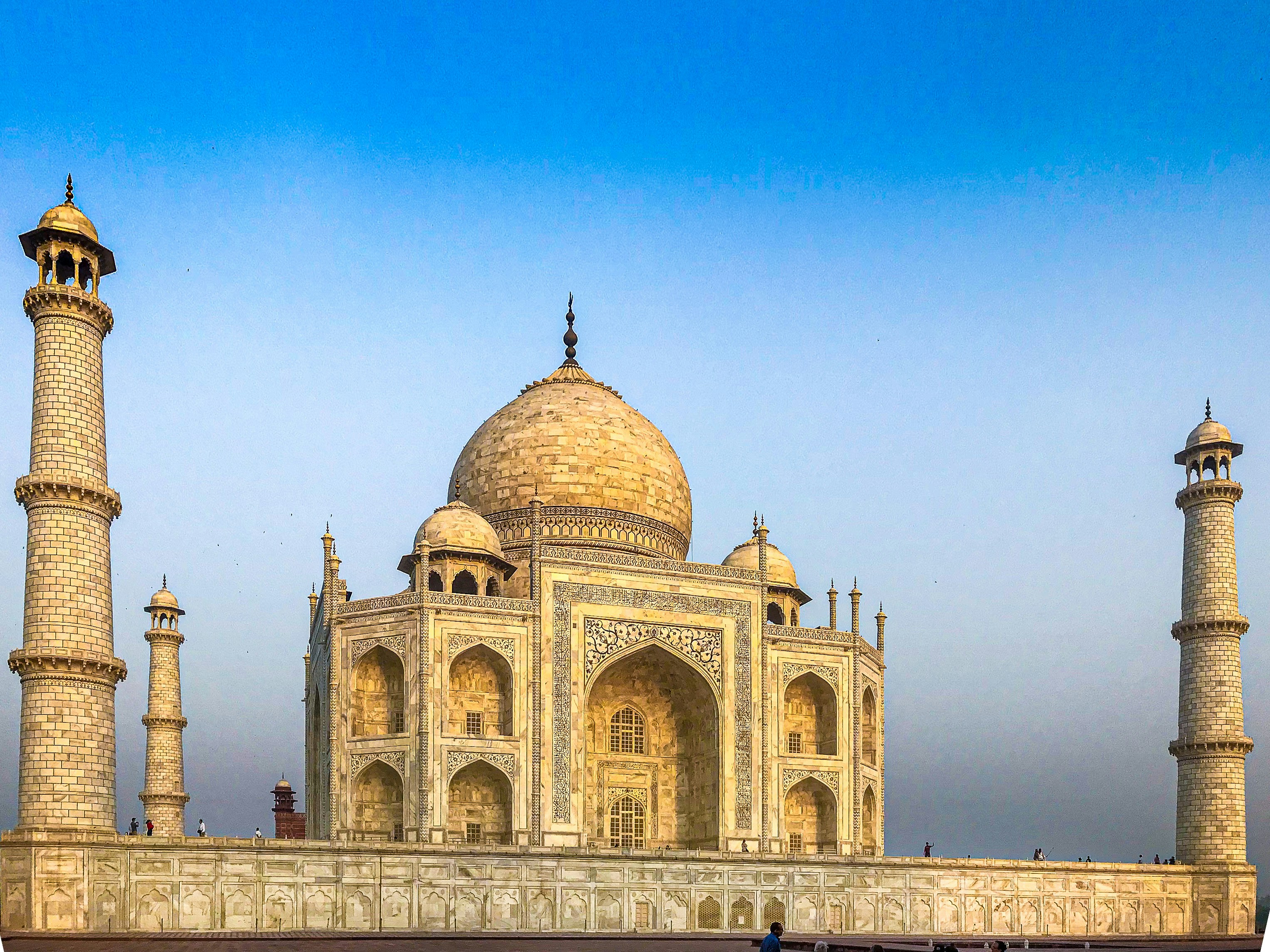
The Taj Mahal – A Masterpiece of Emotional Architecture

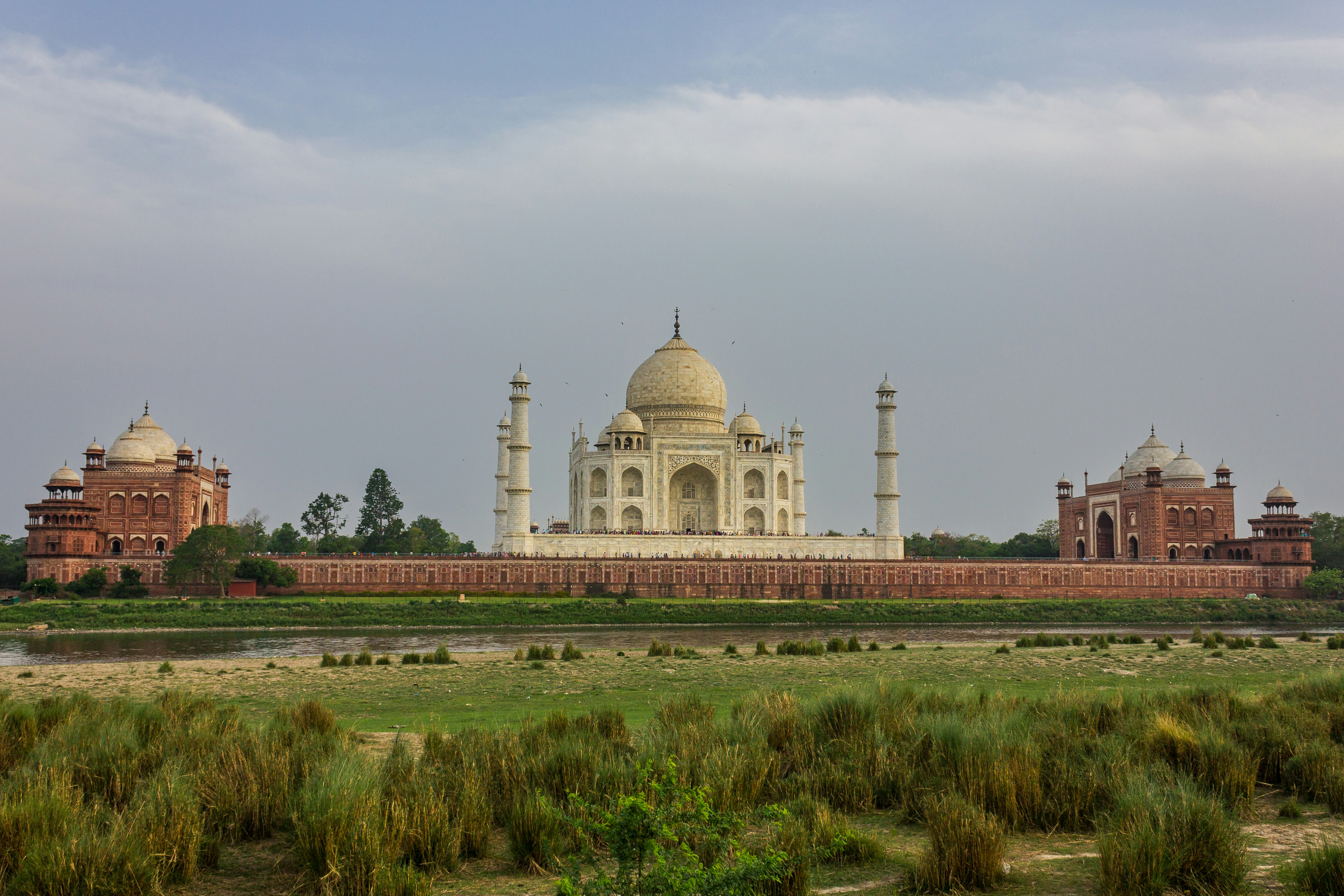
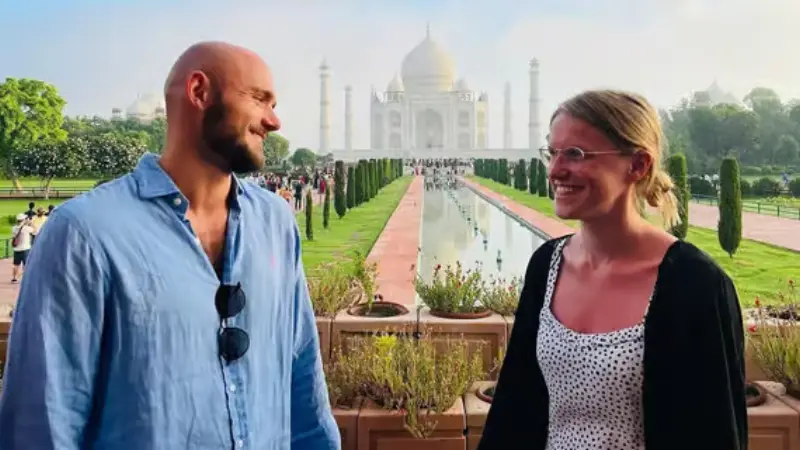
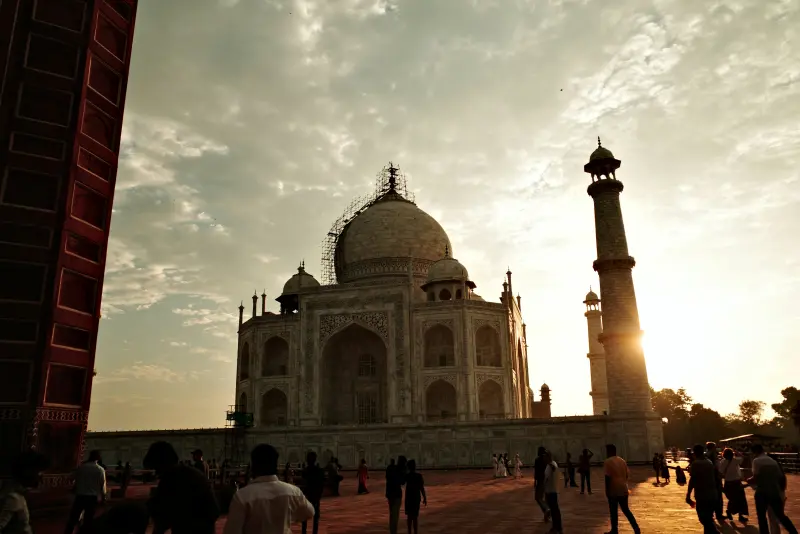
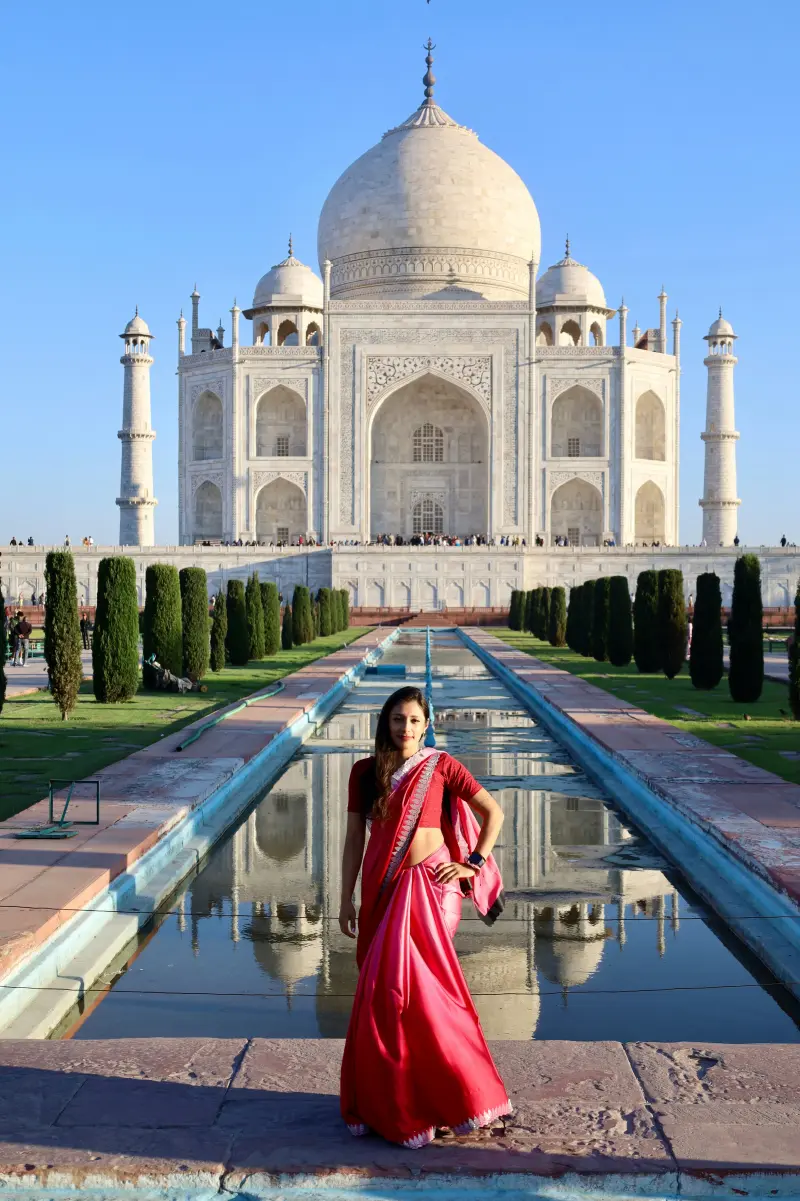
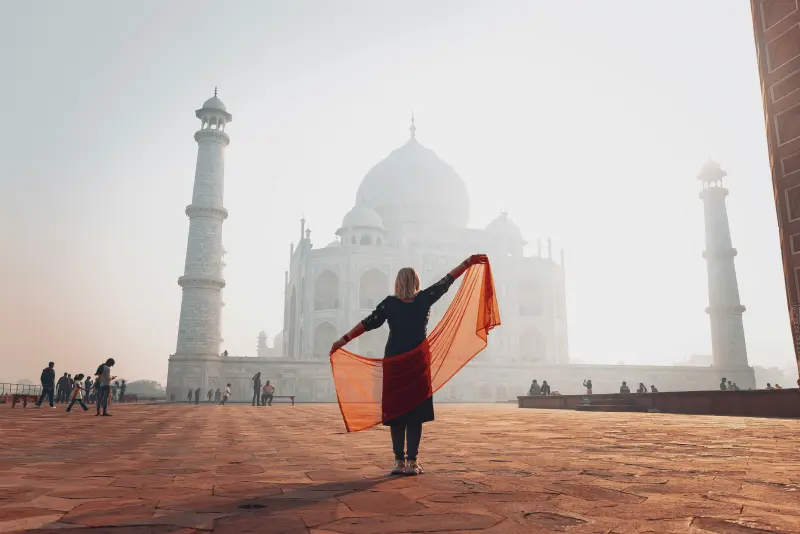
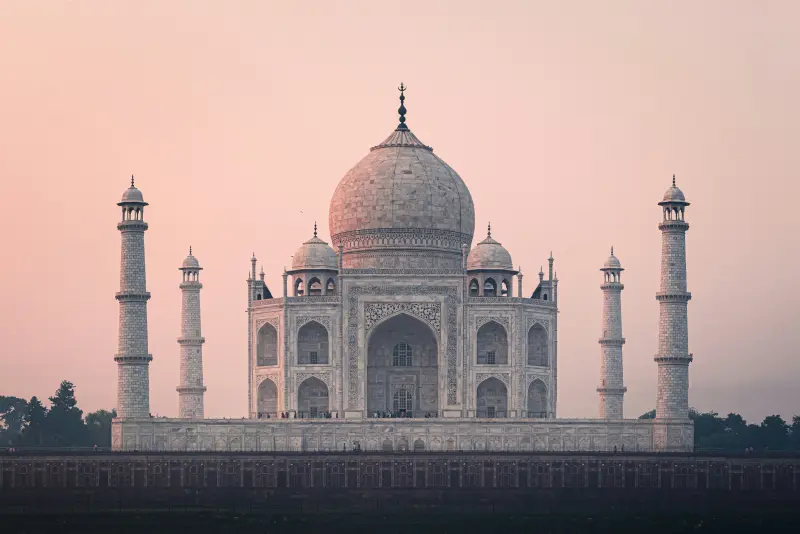
No exploration of Agra—or indeed India—can begin anywhere other than the Taj Mahal. Commissioned in 1632 by the Mughal Emperor Shah Jahan to house the tomb of his favorite wife, Mumtaz Mahal, this monument stands as the world's most recognizable symbol of love. Spanning approximately 42 acres, the complex is a triumph of Persian 'Charbagh' (four-part garden) design, intended to represent the gardens of paradise described in Islamic texts. The architectural layout is governed by strict, mathematically precise symmetry. Every minaret, archway, and floral motif has a mirrored counterpart, creating a sense of visual harmony that is almost hypnotic.

Architectural Highlights:

- The White Makrana Marble: Sourced from Rajasthan, the marble appears to change its hue with the shifting light of the sun—soft pink at dawn, brilliant white at noon, and a translucent cream under a full moon.

- The Pietra Dura Inlay: Look closely at the walls to see thousands of semi-precious stones (like jasper, lapis lazuli, and turquoise) embedded into the marble. This technique, known locally as 'Parchin Kari,' remains one of the most difficult stone-crafting arts in the world.

- The Calligraphy: The exterior is adorned with verses from the Quran, expertly scaled so that letters at the top appear the same size as those at eye level.

Strategic Tip: Visit the museum on the west side of the complex to see original blueprints and tools used by the 20,000 artisans who built this wonder. This provides a deep appreciation for the human effort behind the marble facade.
Part 02

Agra Fort – The Crimson Epicenter of Empire

Agra Fort – The Crimson Epicenter of Empire

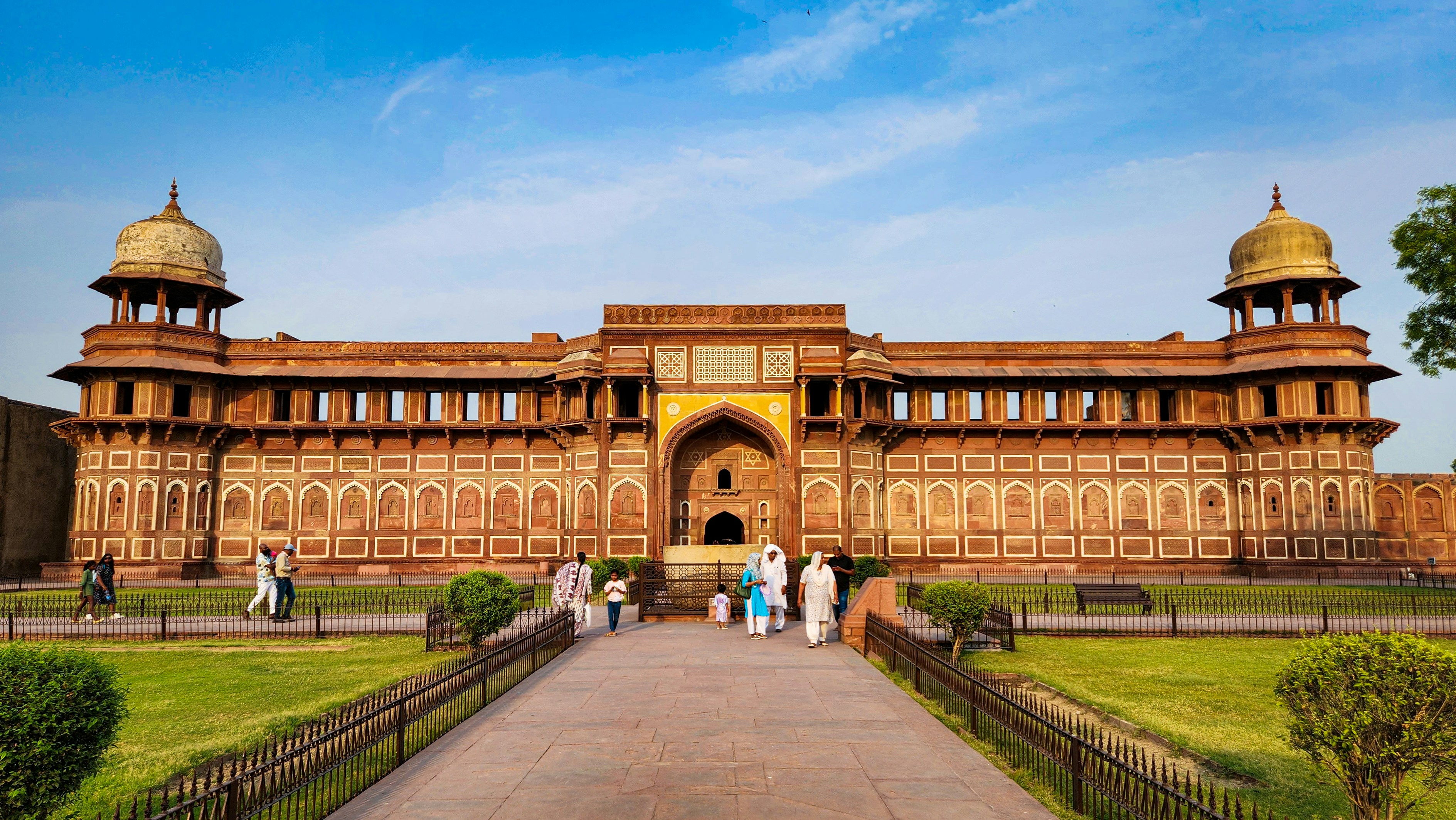
Located just 2.5 kilometers from its more famous neighbor, Agra Fort is the tactical and political sibling to the Taj. While the Taj represents love and grief, the Fort represents imperial might and administrative brilliance. Originally a brick fort known as Badalgarh, it was transformed by Emperor Akbar the Great in 1565 using massive slabs of red sandstone.

This 94-acre complex functioned as the main residence of the Mughal emperors until 1638. It is less a single building and more a 'fortified city' within a city.

Zones of Significance:

- Jahangir’s Palace: A stunning fusion of Hindu and Islamic styles, featuring massive stone brackets and intricate carvings.

- Khas Mahal: A serene white marble palace overlooking the river, showing the shift in Mughal taste from red sandstone to white marble.

- Musamman Burj: This octagonal tower is where Shah Jahan spent his final eight years in captivity, gazing at the Taj Mahal across the river during his house arrest.

- Diwan-i-Aam: The Hall of Public Audience, where the emperor would hear the grievances of his subjects while seated on a throne embedded with precious stones.

Strategic Tip: Allow at least 2.5 hours to explore the fort. The distance between the different palaces and halls is substantial, and each section offers a different perspective on Mughal royal life.

Part 03

Tomb of Itimad-ud-Daula – The Architectural Blueprint

Tomb of Itimad-ud-Daula – The Architectural Blueprint

Often overshadowed by the sheer scale of and fame of the Taj Mahal, the Tomb of Itimad-ud-Daula is architecturally significant as the 'precursor' or 'draft' of the Taj. It was built between 1622 and 1628 by Empress Nur Jahan for her father, Mirza Ghiyas Beg.

This monument marks a critical transition in Mughal architecture. It was the first tomb in India to be built entirely of white marble and the first to use the extensive 'Pietra Dura' inlay work that would later become the defining feature of the Taj Mahal.

What to Observe:

- Delicate Scale: Unlike the grandiosity of the Taj, this tomb feels intimate and jewel-like, allowing for a closer look at the craftsmanship.

- Inlay Variety: The geometric and floral patterns here are even more densely packed than those on the Taj, featuring unique motifs like wine carafes and cypress trees.

- Riverside Setting: Situated on the eastern bank of the Yamuna, the gardens here are quieter and provide a serene atmosphere for those wanting to escape the heavy tourist traffic of central Agra.

Strategic Tip: This is widely considered the best spot in Agra for close-up photography of Mughal tile-work and stone-carving without being jostled by crowds. It offers a much more relaxed experience than the larger monuments.

Part 04

Fatehpur Sikri – The Deserted Masterpiece

Fatehpur Sikri – The Deserted Masterpiece

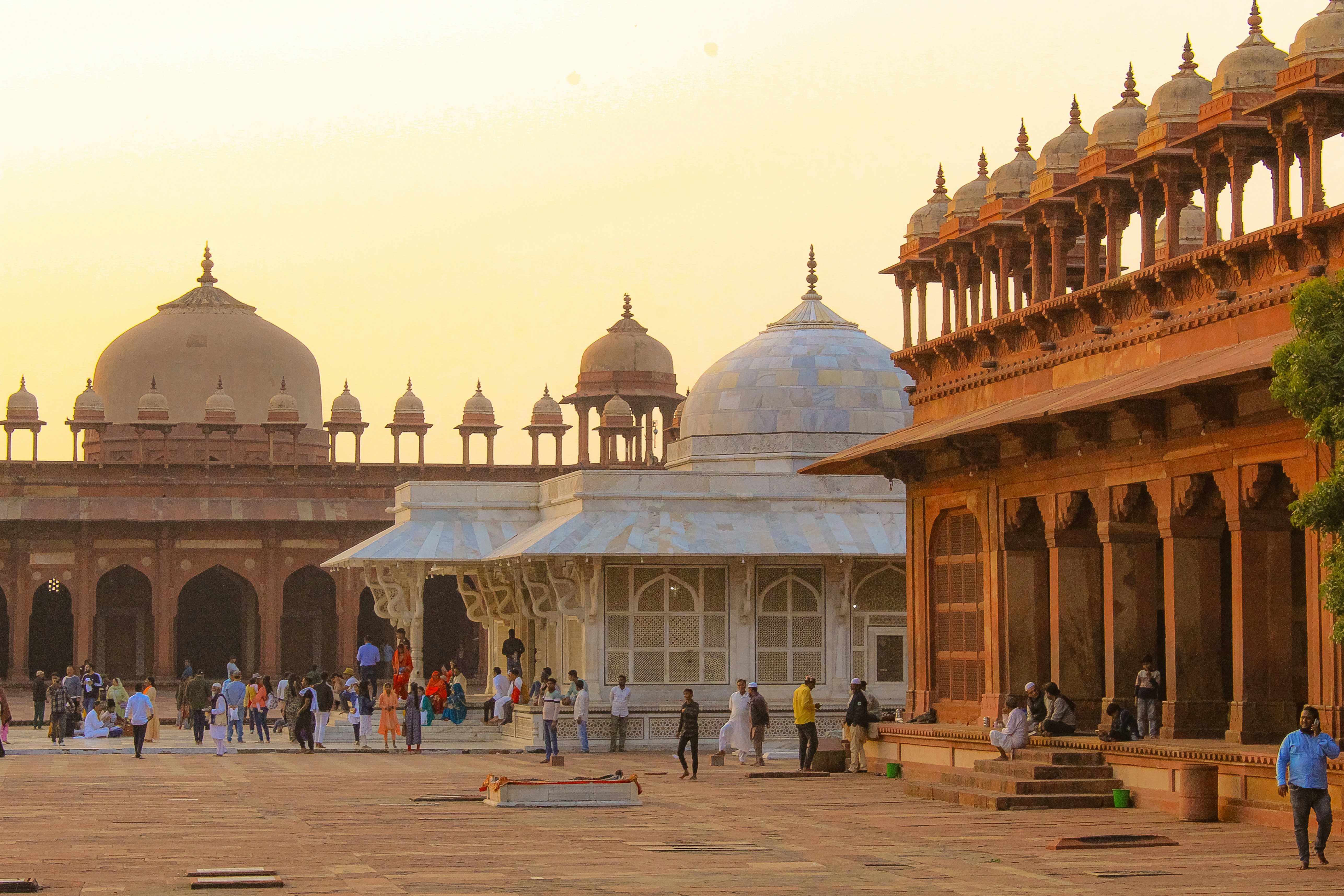
Located roughly 40 kilometers from the city center, Fatehpur Sikri is a ghost city with a history as grand as its architecture. Built by Emperor Akbar in the late 16th century to serve as his capital, it was abandoned only 14 years later due to a severe water crisis.

Walking through its silent corridors today feels like stepping into a perfectly preserved 16th-century time capsule.

Architectural Highlights:

- Buland Darwaza: At 54 meters high, this 'Gate of Victory' is one of the tallest gateways in the world, built to commemorate Akbar's victory over Gujarat.

- Tomb of Salim Chishti: A white marble shrine in the center of a red sandstone courtyard. It is an active site of pilgrimage where people of all faiths tie red threads on the marble screens (jalis) while making a wish.

- The Panch Mahal: A five-story, open-pavilion structure that was used by the royal ladies for recreation and to enjoy the evening breeze.

Strategic Tip: Hiring a reputable guide here is essential, as the history of the different wings—for his Hindu, Christian, and Muslim wives—is complex and reveals Akbar's unique approach to religious pluralism.

Part 05

Mehtab Bagh – The Sunset Reflection

Mehtab Bagh – The Sunset Reflection

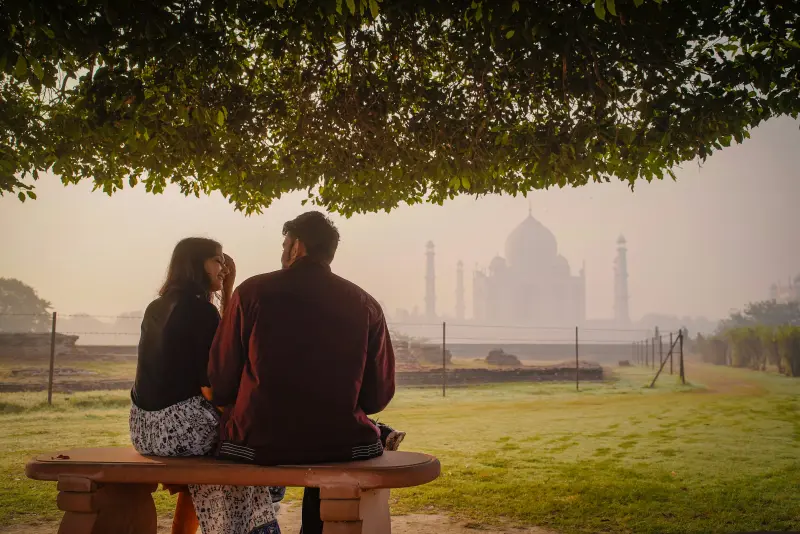
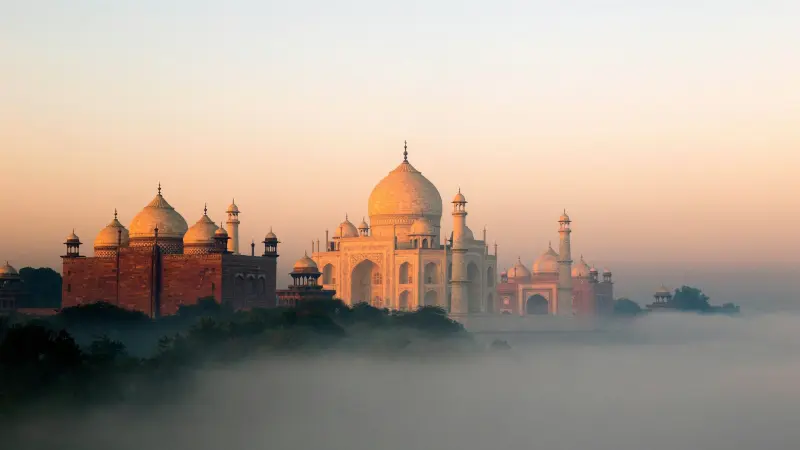
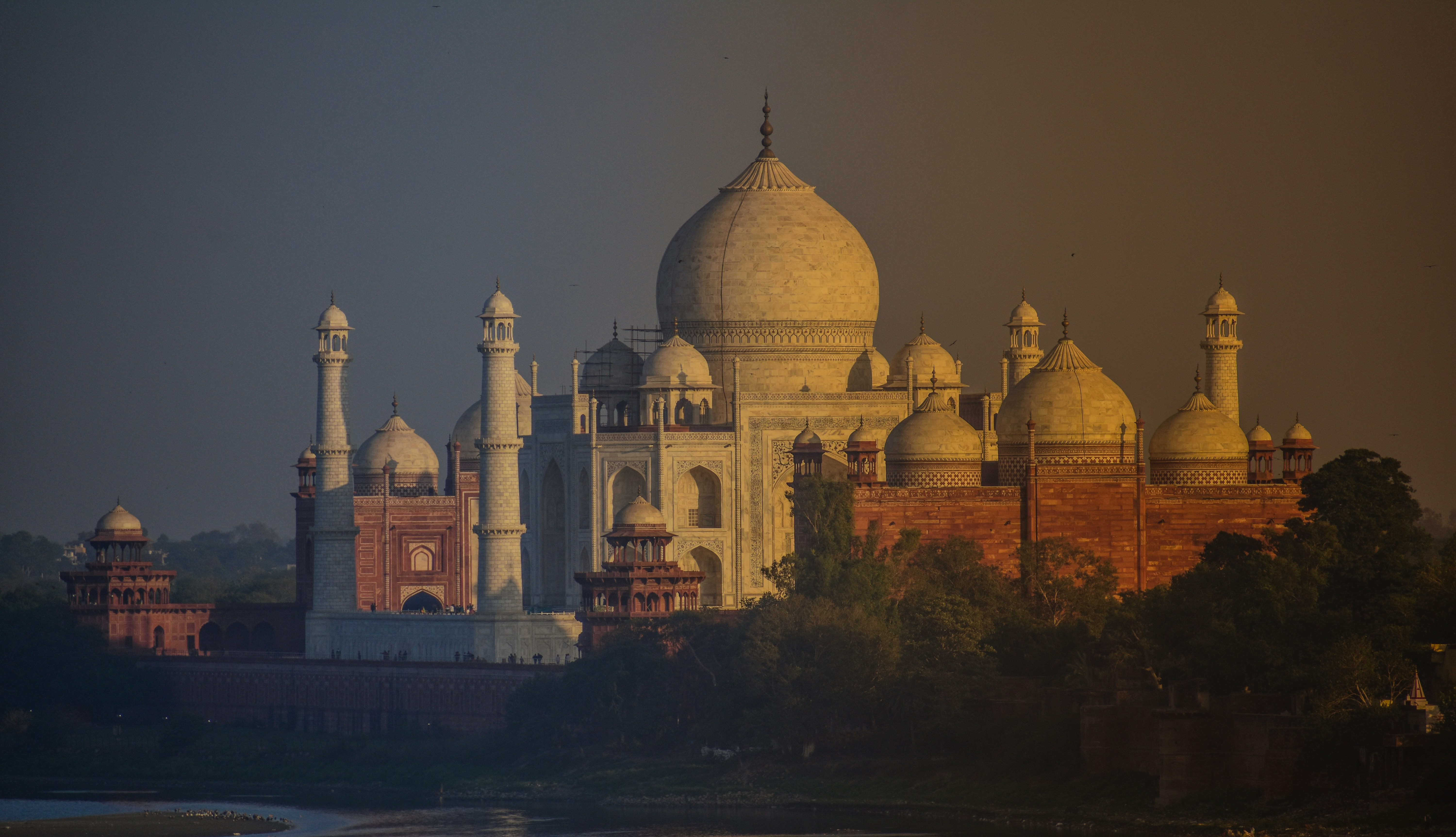
Mehtab Bagh, or the 'Moonlight Garden,' is the final piece of the Taj Mahal's architectural puzzle. Located directly across the Yamuna River, it is perfectly aligned with the Taj’s central axis. Initially built by Emperor Babur, it was restored by later emperors to serve as a viewing platform.

It is from this garden that the most iconic landscape shots of the Taj Mahal reaching toward the sky are taken, especially as the river provides a perfect foreground for long-exposure photography.

Why Visit:

- Friday Hack: Since the Taj Mahal is closed on Fridays, Mehtab Bagh is the best place to see the monument in its full glory without any tourists in your frame.

- Golden Hour: As the sun sets, the Taj begins to glow with an orange-gold hue, and you can see its reflection shimmer in the river waters.

- Botanical Detail: The garden is slowly being restored with the original plant species mentioned in Mughal texts, including hibiscus, citrus trees, and roses.

Strategic Tip: Reach here at least 1 hour before sunset to find a quiet corner and enjoy the transformation of the monument's colors as the light shifts from gold to deep sapphire.

Frequently Asked Questions

Q.What is the best order to visit these monuments?

To optimize your lighting and avoid the worst crowds, we recommend the 'Sunrise-First' strategy. Start at the Taj Mahal at dawn (06:00 AM), move to the Agra Fort by 09:30 AM before the heat builds, and save the riverside sites like the Baby Taj and Mehtab Bagh for the late afternoon.

Q.Are these sites open every day?

Most monuments are open from sunrise to sunset daily. However, the Taj Mahal is strictly CLOSED every Friday for regular tourists. No exceptions are made for national holidays or festivals.

Q.Can I walk between these places?

Walking is not recommended for the main circuit. While the Taj and some markets are near each other, the distance between the Taj and Agra Fort is 2.5km, and the Baby Taj is on the opposite side of the river. Use app-based taxis (Uber) or e-rickshaws for efficiency.

Q.Do I need separate tickets for each site?

Yes. Every monument requires its own entrance fee. As of 2026, most ticket sales have transitioned to digital-only formats. You can scan the ASI QR codes at each gate or pre-book through the official government portal.

Top-Rated Agra Tours to Book

Handpicked experiences with licensed local guides. Instant confirmation.

Discover the real Agra.

Experience the difference of local mastery. Our licensed guides ensure you see the soul of the city.