4 Days in Japan: Tokyo, Hakone and a First Look at Kyoto
Four days in Japan works as two nights in Tokyo, one in Hakone, and one in Kyoto: Tokyo, the Hakone loop and an onsen, then the Shinkansen west. It only makes sense on an open-jaw ticket flying home from Osaka. On a Tokyo return, the backtrack eats the fourth day and three days in Tokyo is the better trip.
4 days in Japan at a glance
| Day | Based in | What you do | Getting there |
|---|---|---|---|
| 1 | Tokyo | Asakusa, Yanaka and the older east side | — |
| 2 | Tokyo | West Tokyo, and a night out | — |
| 3 | Hakone | Into the caldera, and an onsen night | Tokyo → Odawara on the Kodama or Hikari Shinkansen, about 35 minutes |
| 4 | Kyoto | West to Kyoto: Nishiki, Gion and Fushimi Inari after dark | Hakone-Yumoto → Odawara about 15 minutes, then Odawara → Kyoto by Hikari Shinkansen, about 2 hours |
The fourth day is what makes Kyoto possible, and only just. The trick is to stop treating Tokyo as your base and start moving in one direction: two days in Tokyo, one night in Hakone, then west to Kyoto on the same line you were already travelling. Odawara, the Shinkansen station for Hakone, sits on the Tokaido line between the two cities, so a Hakone stop costs you almost nothing in extra travel. Doubling back to Tokyo would.
Be clear-eyed about what four days buys you in Kyoto: one afternoon and evening, plus a morning if your flight allows it. That is enough for Fushimi Inari at dusk, a walk through Gion and one very good dinner. It is not enough for Arashiyama, Kinkaku-ji and the eastern temples as well. Trying to fit all of them into a single afternoon is exactly how people end up saying Kyoto was crowded and disappointing — they saw four sites' worth of queues and none of the city between them.
This route also assumes you fly out of Kansai (Osaka) rather than returning to Tokyo. If your ticket is a Tokyo return, either change it to an open-jaw flight or drop Kyoto entirely and use the three-day route with a spare day. Spending four hours of a four-day trip riding back up the Tokaido line is not a good trade.
Travellers who have to see Kyoto on this trip and are willing to change hotels twice to do it — ideally flying in to Tokyo and out of Osaka.
Day 1 — Asakusa, Yanaka and the older east side
Begin in the east. Senso-ji is Tokyo's oldest temple and it is a different place before 9am than it is at noon, so make it your first stop rather than a mid-morning one. Yanaka afterwards gives you the low wooden Tokyo that survived the twentieth century largely intact — a hilltop cemetery, small galleries and a shopping street where the shops still belong to families.
A guided full day through Asakusa, Yanaka, the Imperial Palace grounds and Harajuku suits a first day well, because the hardest part of Tokyo is not the sights but the joins between them. Someone who knows which of Shinjuku Station's exits you want saves you more time than any itinerary.
End in Shibuya. The crossing is worth standing at for ten minutes, and the alleys behind it are where you should eat — counter seats, plastic-fronted menus, no reservation.


Buy a Suica in Apple Wallet before you land and top it up with a card. It works on every subway, bus and convenience store in the country, including in Kyoto.
Day 2 — West Tokyo, and a night out
Meiji Shrine's forest in the morning, then Omotesando and Harajuku on foot, then Shinjuku as the lights come on. These three sit close enough together that you can walk the whole day with one train ride at the end, which is unusual in Tokyo and worth exploiting.
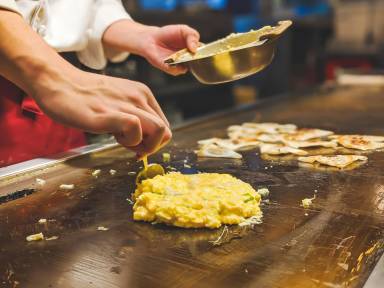
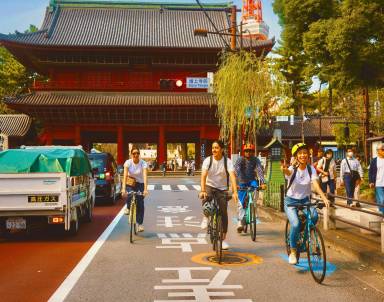
This is also the right day for something specific rather than general. A neighbourhood food walk down a genuine local shopping street tells you more about how Tokyo eats than a night in an expensive restaurant will, and it solves dinner. If you would rather cover ground than eat, an e-bike through the backstreets does in three hours what would take a full day on foot.
Pack tonight, not tomorrow morning. Tomorrow you move.
Ask your Tokyo hotel to forward your main suitcase straight to your Kyoto hotel tonight, for around ¥2,000-2,500. You then do Hakone with a day bag — which matters, because Hakone involves several changes of train and a ropeway.
Day 3 — Into the caldera, and an onsen night
Leave Tokyo mid-morning rather than at dawn; Hakone is close enough that an early start buys you little. The classic circuit runs the Hakone Tozan switchback railway up the mountainside, a cable car and then the ropeway over Owakudani, where sulphur vents steam through the hillside and they sell eggs boiled black in the spring water. From the far side, a boat crosses Lake Ashinoko to the red torii gate standing in the shallows below Hakone Shrine — which, on a clear day, has Mount Fuji directly behind it.
The reason to sleep here rather than day-trip is the evening. Hakone empties after about 5pm when the day-trippers leave, and a ryokan with a hot spring bath, a kaiseki dinner and nothing at all to do afterwards is one of the genuine pleasures of a Japan trip. It also puts you 35 minutes from Odawara for tomorrow's train.
If you arrive with an afternoon to spare, Hakone has a long craft tradition in yosegi-zaiku, the geometric inlaid woodwork used for those puzzle boxes. A workshop is a better use of two hours than a fourth museum.


Book a ryokan with a private open-air bath if anyone in your group has tattoos — many communal onsen still refuse them, and the private option removes the problem entirely.
Day 4 — West to Kyoto: Nishiki, Gion and Fushimi Inari after dark
Take a morning train down to Odawara and pick up the Shinkansen west. Two hours later you are in Kyoto, and if you forwarded your suitcase it is already at the hotel. Drop your day bag and start walking.
Nishiki Market is the obvious first stop and best treated as lunch rather than a sight: pickles, tamagoyaki, skewers and the basement food halls of the nearby department stores, which are quietly better than the market itself. From there the Gion lanes and the Shirakawa canal fill an afternoon on foot.
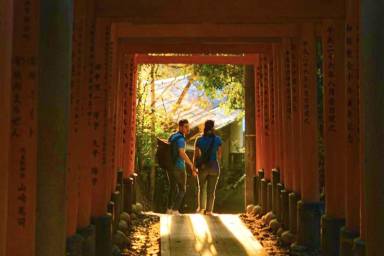
Save Fushimi Inari for after dark. The shrine is open 24 hours and unstaffed at night, the tunnel of vermilion gates is lit, and the crowds that make it unbearable by day are gone entirely. It is a 5-minute train ride from Kyoto Station on the JR Nara line. This is the single best thing a short Kyoto stop can do, and almost nobody plans it.

If you are flying home from Kansai, do not book a flight before about 1pm the next day. The airport express takes 75 minutes from Kyoto and runs roughly twice an hour.
Planning this trip
JR Pass maths for a one-way Tokyo to Kyoto trip
It does not pay off, and it is not close. The only long-distance legs here are Tokyo to Odawara (around ¥3,700) and Odawara to Kyoto (around ¥11,300) — about ¥15,000 of Shinkansen travel against roughly ¥50,000 for a 7-day national pass. Buy individual tickets from a machine or the SmartEX app. A pass only starts to make sense when you are covering a Hiroshima leg and a return to Tokyo, which needs eight days or more.
Send your suitcase ahead (takkyubin)
Every hotel front desk in Japan can forward a suitcase to your next hotel overnight for roughly ¥2,000-2,500 per bag. You hand it over at check-out, fill in a short form with the next hotel's name and your arrival date, and it is waiting at reception when you get there. On this route the forward that matters is Tokyo to Kyoto on the night of day two, so that Hakone happens with a day bag. Shinkansen luggage racks are small and the oversized-bag seats behind the back row now have to be reserved in advance, so travelling with a day bag instead of a 23kg case removes the single most stressful hour of a Japan trip. Book the forward the day before travel and allow one full day in transit — same-day delivery is not guaranteed on longer routes.
IC cards beat single tickets
Suica, Pasmo and ICOCA are now interchangeable nationwide, so whichever one you pick up first works on subways, buses and convenience-store tills for the rest of the trip. Physical Suica cards have had supply problems on and off; the simplest route for iPhone users is to add a Suica directly in Apple Wallet before you land and top it up with a card. IC cards do not cover Shinkansen fares — buy those separately at a machine, at a JR ticket office, or through the SmartEX app.
Fly open-jaw
Into Tokyo, out of Osaka Kansai. On a four-day trip, returning to Tokyo for your flight costs about four hours and ¥14,000 for nothing. Most airlines price an open-jaw ticket within a few percent of a return, and some price it identically. Check this before you book anything else, because the whole shape of this itinerary depends on it.
What to book ahead, and when
Accommodation is the tight constraint, not tours. Hakone ryokan are small — often under 20 rooms — and the good ones book out one to three months ahead, more in November. Shinkansen seats can usually be reserved a few days out except during cherry blossom season, Golden Week (late April to early May) and Obon (mid-August), when reserved cars sell out and unreserved cars mean standing. Guided tours with small group sizes go first on weekends and in peak foliage weeks; a week or two of notice is normally enough outside those windows.
Frequently Asked Questions
Is four days enough for Tokyo and Kyoto?
It is enough for Tokyo properly and Kyoto partially. You will get one afternoon and evening in Kyoto, which covers Fushimi Inari, Gion and Nishiki at a reasonable pace. Arashiyama, Kinkaku-ji and the Higashiyama temple walk need a fifth day. Choosing three sites and doing them well beats attempting six.
Should I skip Hakone and go straight to Kyoto?
Only if hot springs and mountain scenery genuinely do not interest you. Hakone costs this itinerary almost no travel time, because Odawara is on the way to Kyoto, and it gives you the one night of the trip that is not urban. Skipping it buys you a Kyoto morning, not a Kyoto day.
Do I need to change hotels three times?
Twice: Tokyo, Hakone, Kyoto. That is the cost of covering this much ground in four days, and forwarding your suitcase between the first and the last makes it far less painful than it sounds.
Can I see Mount Fuji from Hakone?
On a clear day, yes — from Lake Ashinoko and from the ropeway over Owakudani. On many days you will not see it at all. Odds are best in winter and in the early morning, and worst on humid summer afternoons. Treat a sighting as a bonus rather than the reason you came.
What time should I leave Hakone for Kyoto?
Aim to be on a Shinkansen from Odawara by about 10am. That puts you in Kyoto before lunch with the whole afternoon and evening intact. Leaving after midday costs you Nishiki Market and turns Kyoto into an evening rather than a day.
Is the Hakone Free Pass worth it?
If you are doing the loop independently, yes. It covers the Tozan railway, cable car, ropeway, the Ashinoko boat and the local buses, all of which you would otherwise pay for separately, and it includes the Odakyu leg from Shinjuku if you buy that version. If you are on a guided day tour, you do not need it.
Is Kyoto walkable?
In parts. Gion, Pontocho and the Higashiyama slopes are a connected walk, and Nishiki is close to both. Arashiyama, Fushimi Inari and Kinkaku-ji are each a train or bus ride away in different directions, which is why cramming them into one day does not work.
Where should I stay in Kyoto for one night?
Near Kyoto Station if you are flying out of Kansai the next morning, or around Karasuma and Shijo if you want to walk to dinner. Gion itself is atmospheric and expensive, and on a single night the ten minutes you save walking is not worth the premium.
Book the guided parts of this trip
Every tour above runs with a verified local operator.
Browse all Japan tours