6 Days in Japan: Tokyo, Hakone, Kyoto and a Day in Nara
Six days in Japan is two nights Tokyo, one in Hakone and three in Kyoto, with Nara as a half-day trip rather than an overnight. Keeping the Kyoto room and day-tripping to Nara on the Kintetsu limited express, about 45 minutes, saves a hotel change and is what most six-day itineraries get wrong.
6 days in Japan at a glance
| Day | Based in | What you do | Getting there |
|---|---|---|---|
| 1 | Tokyo | East Tokyo: Senso-ji, Yanaka and the old low city | — |
| 2 | Tokyo | West Tokyo: shrine forest, side streets and a night out | — |
| 3 | Hakone | Hakone: caldera, lake and a hot spring night | Tokyo → Odawara on the Kodama or Hikari Shinkansen, about 35 minutes, then the Hakone Tozan line up the mountain |
| 4 | Kyoto | West to Kyoto: Higashiyama, Gion, and Fushimi Inari after dark | Hakone-Yumoto → Odawara about 15 minutes, then Odawara → Kyoto by Hikari Shinkansen, about 2 hours |
| 5 | Kyoto | Arashiyama at dawn, then the north-west temples | — |
| 6 | Kyoto | Nara: the Great Buddha, Kasuga Taisha and the deer | Kyoto → Nara: about 45 minutes on the Kintetsu limited express to Kintetsu Nara, which is a 5-minute walk from the park |
The sixth day is the first one you can spend on something other than the obvious. Tokyo, Hakone and Kyoto are already covered by day five; what six days adds is Nara, which is a 45-minute train ride from Kyoto and holds a seventh-century capital's worth of temples, a fifteen-metre bronze Buddha in the largest wooden building most people will ever stand in, and a park full of deer that bow for biscuits.
Nara is a day trip, not an overnight. Almost every operator, blog and hotel will tell you otherwise, and they are wrong for most travellers: the town is small, the sights cluster within a 30-minute walk of each other, and there is little to do after the temples close at 5pm. Go early from Kyoto, keep your room, come back for dinner. The one exception is if you specifically want Nara Park at dawn with no one in it, which is a real and rather beautiful thing.
The rest of the route is unchanged: two Tokyo days, a Hakone hot spring night on the way west because Odawara sits on the Shinkansen line anyway, and two full Kyoto days built around early mornings and late evenings rather than the crowded middle of the day. Six days still means one-way — fly into Tokyo, out of Kansai. Doubling back costs four hours you do not have to spend.
Travellers with a full week of leave who want Kyoto properly and one day outside the big cities — the sweet spot before Osaka and Hiroshima start demanding their own days.
Day 1 — East Tokyo: Senso-ji, Yanaka and the old low city
Senso-ji first, and early. Before 9am the approach through Nakamise-dori is a working street and the temple courtyard has room in it. Head north-west afterwards into Yanaka, one of the few districts that survived both the 1923 earthquake and the wartime firebombing: wooden houses, small galleries, a cemetery full of cherry trees, a shopping street still run by families.
A guided full day linking Asakusa, Yanaka, the Imperial Palace grounds and Harajuku is well suited to a jet-lagged first day. Individually none of the sights are hard; the connections between them are, and Tokyo's stations have dozens of exits that lead to entirely different places.
Finish across the city in Shibuya. Watch the crossing for a while, then leave it — the alleys behind hold the counter-seat restaurants and standing bars that are the real reason to be out at night here.


Add a Suica to your phone's wallet before you fly. It covers subways, buses and convenience stores from Tokyo to Nara without ever queueing at a machine.
Day 2 — West Tokyo: shrine forest, side streets and a night out
Meiji Shrine in the morning, where 100,000 donated trees planted a century ago now read as ancient forest in the middle of the city. Then Omotesando and Harajuku on foot — the wide avenue for its architecture, the lanes off it for everything else — and Shinjuku in the evening.
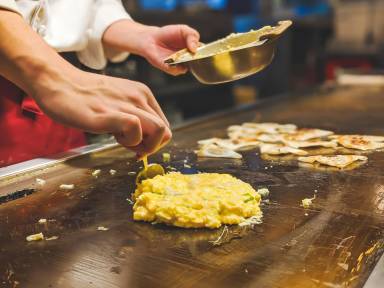
Spend the afternoon on something specific. A food walk down a genuine local shopping street will teach you more about how the city eats than an expensive dinner, and it feeds you. An e-bike route through the backstreets is the alternative if you would rather cover distance than eat your way along one street.
For the last Tokyo night, a go-kart run through Shibuya Crossing and past Tokyo Tower is tourist theatre and entirely worth it. Bring the international driving permit you arranged at home — it cannot be issued in Japan.

Forward the big suitcase from your Tokyo hotel to your Kyoto hotel tonight for around ¥2,000-2,500, and do Hakone with a day bag. The Hakone loop involves four separate vehicles.
Day 3 — Hakone: caldera, lake and a hot spring night
Leave Tokyo mid-morning. The Hakone loop is a sequence of small, deliberately scenic transports: the Tozan railway switchbacking up the mountainside, a cable car, then the ropeway across Owakudani, where sulphur vents steam out of a bare hillside and they sell eggs boiled black in the spring water. A boat crosses Lake Ashinoko to the red torii standing in the shallows below Hakone Shrine, and on a clear day Fuji is directly behind it.
Stay the night rather than day-tripping. Hakone empties after about 5pm and a ryokan evening — an onsen bath, a kaiseki dinner served course by course, nothing at all scheduled afterwards — is the pause this itinerary is built around. It also puts you 35 minutes from Odawara for the morning train west.
If you get here with an afternoon spare, the local yosegi-zaiku marquetry workshops are worth two hours. The geometric inlaid woodwork is a Hakone craft dating to the Edo period, not a souvenir invented for visitors.


Ryokan check-in usually closes by 6pm and dinner is served at a fixed hour. Confirm your arrival time when you book, and do not plan a late finish to the Hakone loop.
Day 4 — West to Kyoto: Higashiyama, Gion, and Fushimi Inari after dark
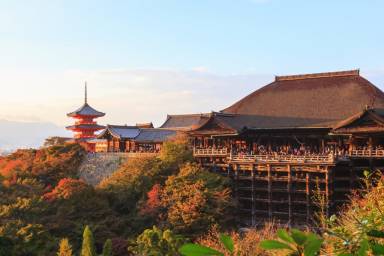
Down to Odawara and west on the Shinkansen; two hours later you are in Kyoto and, if you forwarded your case, it is already at the hotel. Give the afternoon to the eastern hills. Start high at Kiyomizu-dera, whose wooden terrace stands out over the valley on pillars joined without nails, then walk down through the stone lanes of Sannenzaka and Ninenzaka, north past Yasaka Shrine and into Gion. Downhill, and it ends where you want dinner.
If you would rather eat than climb, Nishiki Market is a good arrival afternoon — treat it as lunch rather than a sight, and walk on to the department store food basements nearby, which are quieter and better for actual eating.
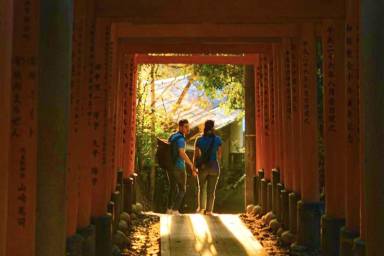
Then Fushimi Inari after dark. The shrine has no gates and no closing time, the tunnels of vermilion torii are lit at night, and the daytime crowd is simply not there. It is five minutes from Kyoto Station on the JR Nara line, and it is the single most underused piece of knowledge about visiting Kyoto.

Skip Kyoto's buses wherever you can. They are slow, packed and pay-on-exit; the east side is walkable and the outer sights are all on trains.
Day 5 — Arashiyama at dawn, then the north-west temples
The bamboo grove at Arashiyama is a ten-minute path, and its entire character depends on when you arrive. At 7.30am it is close to silent; by 10am it is a slow queue of raised phones. Get there early, then take Tenryu-ji's garden when it opens at 8.30 — a fourteenth-century design that has kept its original layout, which almost nothing else in Kyoto has.
The north-west of the city is the natural continuation: Kinkaku-ji, the gold pavilion reflected in its pond, and the raked gravel rectangle at Ryoan-ji, which is worth sitting in front of for longer than it takes to photograph. These two sit near each other and far from everything else, so they belong on the same half-day. A full-day guided circuit takes care of the joins; a bike is the fastest independent way to cross Kyoto's flat grid.
Keep tonight easy — Pontocho's narrow lantern-lit alley by the Kamo River, and an early night, because tomorrow starts early.
Arashiyama's bamboo path is free and always open. Going at 7.30am costs nothing and is the difference between the photograph you imagined and the one everybody else has.
Day 6 — Nara: the Great Buddha, Kasuga Taisha and the deer
Nara was Japan's capital before Kyoto, for 74 years in the eighth century, and the scale of what survives from that period is out of proportion to the town's size today. Todai-ji houses a 15-metre bronze Buddha cast in 752 inside a hall that is still one of the largest wooden buildings on earth — and the current hall is two-thirds the width of the original. Kasuga Taisha, up the hill through the forest, is lined with three thousand stone and bronze lanterns.
Go early. An early-morning tour from Kyoto gets you into Nara Park before the coaches, when the deer are hungrier and the Great Buddha hall is nearly empty. The deer are wild animals that have learned a bowing trick for the ¥200 crackers sold in the park; they will also head-butt a bag that smells of food, so buy the crackers last and feed them fast.
Everything worth seeing sits within a 30-minute walk, so the afternoon is genuinely free: the old merchant lanes of Naramachi, or the walk up to Nigatsu-do for a view back over the whole basin. Return to Kyoto for dinner — it is 45 minutes, and you kept the room.

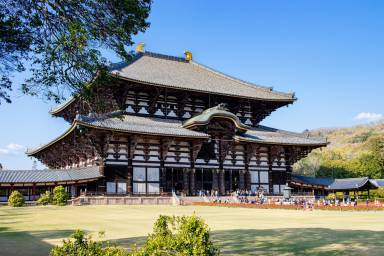
Take the Kintetsu line, not JR. Kintetsu Nara station is right at the edge of Nara Park; JR Nara leaves you a 20-minute walk away, which costs you 40 minutes across the day.
Planning this trip
JR Pass maths at six days: still a no
Your long-distance legs are Tokyo to Odawara (about ¥3,700), Odawara to Kyoto (about ¥11,300), the Kyoto to Nara return (about ¥2,600 on Kintetsu, and not a JR route anyway) and the Haruka to Kansai Airport (about ¥3,000). That is roughly ¥20,000 against ¥50,000 for a 7-day national pass. Buy point to point. The pass only starts to make arithmetic sense when you add Hiroshima and a return to Tokyo — realistically a nine or ten day trip.
Send your suitcase ahead (takkyubin)
Every hotel front desk in Japan can forward a suitcase to your next hotel overnight for roughly ¥2,000-2,500 per bag. You hand it over at check-out, fill in a short form with the next hotel's name and your arrival date, and it is waiting at reception when you get there. On this route, forward Tokyo to Kyoto on the night of day two so that Hakone happens with a day bag; you then stay in the same Kyoto room for three nights and do not touch the case again. Shinkansen luggage racks are small and the oversized-bag seats behind the back row now have to be reserved in advance, so travelling with a day bag instead of a 23kg case removes the single most stressful hour of a Japan trip. Book the forward the day before travel and allow one full day in transit — same-day delivery is not guaranteed on longer routes.
IC cards beat single tickets
Suica, Pasmo and ICOCA are now interchangeable nationwide, so whichever one you pick up first works on subways, buses and convenience-store tills for the rest of the trip. Physical Suica cards have had supply problems on and off; the simplest route for iPhone users is to add a Suica directly in Apple Wallet before you land and top it up with a card. IC cards do not cover Shinkansen fares — buy those separately at a machine, at a JR ticket office, or through the SmartEX app.
Nara is a day trip — keep your Kyoto room
Nara's sights cluster within half an hour's walk and the temples close around 5pm, after which the town is very quiet. Changing hotels for one night costs you a check-out, a check-in and two luggage moves in exchange for an evening with little to do. Keep the Kyoto room, go early, come back for dinner. The exception is if you specifically want the park at sunrise, which is genuinely worth one night to some people.
Use the early and late hours
Kyoto and Nara are both busiest between 10am and 4pm, when day-trippers arrive from Osaka. Fushimi Inari after dark, Arashiyama's bamboo before 8am, Nara Park before the coaches, Kiyomizu-dera at opening: the same places at those hours feel like different sites. This is the single highest-return decision in the whole itinerary and costs only an alarm clock.
When to go, and the weeks to avoid
Cherry blossom lands late March to early April in Tokyo and Kyoto, with a few days' variation year to year. Autumn colour peaks mid to late November in Kyoto, which is the single busiest sightseeing period of the year there. Golden Week and Obon are domestic travel holidays — prices rise, trains fill and popular temples queue. Winter is quietly the best-value season and, counter-intuitively, the most reliable time to actually see Mount Fuji: the dry, clear air of December to February shows the mountain far more often than the humid haze of June to August.
Frequently Asked Questions
Is six days enough for Tokyo, Kyoto and Nara?
Yes, comfortably, on a one-way route. Two Tokyo days, a Hakone night, two Kyoto days and a Nara day trip fits without rushing, provided you fly out of Kansai rather than returning to Tokyo. Adding Osaka or Hiroshima at this length is where it starts to break down.
Should I stay overnight in Nara?
For most people, no. The main sights are within a 30-minute walk of each other and close by 5pm, so an overnight buys you a quiet evening rather than more sightseeing. Keep your Kyoto room. The one good reason to stay is to have Nara Park to yourself at sunrise.
Is Nara better from Kyoto or Osaka?
Either works and both take roughly 45 minutes on the Kintetsu line. Kyoto is the better base for this itinerary because you are already there for two nights. From Osaka the train leaves from Kintetsu Namba.
Can I add Osaka to a six-day trip?
As an evening, yes. Osaka is 29 minutes from Kyoto on the JR Special Rapid and trains run late, so dinner in Dotonbori and a return the same night is easy. As a separate day with its own hotel, it belongs on a seven-day route.
Do I need a JR Pass?
No. Around ¥20,000 of rail travel against a ¥50,000 pass makes it a clear loss, and the Nara leg is on Kintetsu, which no JR pass covers. This is different advice from most older itineraries because the pass price rose sharply in October 2023.
Are the Nara deer safe?
They are wild animals habituated to people, and mostly gentle. They will nudge, follow and occasionally head-butt anyone carrying food, and they will eat a paper map or a ticket out of an open bag. Buy the crackers last, hold them high, and feed them quickly rather than teasing.
What is the best month for this itinerary?
Late October to early December for autumn colour, late March to early April for blossom, with November in Kyoto the most crowded stretch of the year. Avoid Golden Week in late April and early May, and Obon in mid-August. Winter is cheap, clear and by far the most reliable season for actually seeing Mount Fuji.
How fit do I need to be?
Reasonably. This route involves 15,000 to 20,000 steps on a normal day, mostly flat, with stairs at Kiyomizu-dera, the climb through Fushimi Inari's gates if you go past the first section, and the walk up to Kasuga Taisha. Nothing is technically hard, but it is a lot of walking six days running.
Book the guided parts of this trip
Every tour above runs with a verified local operator.
Browse all Japan tours