5 Days in Japan: Tokyo, Hakone and Two Full Days in Kyoto
Five days is the shortest Japan trip that gives Tokyo and Kyoto both a fair hearing: two nights Tokyo, one in Hakone, two in Kyoto. The second Kyoto day is what changes it, turning one rushed afternoon into a morning for the eastern temples and a day for Arashiyama. Fly into Tokyo and out of Osaka.
5 days in Japan at a glance
| Day | Based in | What you do | Getting there |
|---|---|---|---|
| 1 | Tokyo | East Tokyo: Senso-ji, Yanaka and the shitamachi | — |
| 2 | Tokyo | West Tokyo and a proper night out | — |
| 3 | Hakone | Hakone: the loop, then an onsen evening | Tokyo → Odawara by Kodama or Hikari Shinkansen, about 35 minutes, then the Hakone Tozan line |
| 4 | Kyoto | West to Kyoto: the eastern temples and Fushimi Inari at night | Hakone-Yumoto → Odawara about 15 minutes, then Odawara → Kyoto by Hikari Shinkansen, about 2 hours |
| 5 | Kyoto | Arashiyama early, then the north-west | Kyoto → Kansai Airport on the Haruka limited express, about 75 minutes, roughly twice an hour |
Five days is where a Japan trip stops being a compromise. The addition of a second Kyoto day changes the whole character of the itinerary: instead of one frantic afternoon you get a morning for the eastern temples and a day for Arashiyama and the north-west, with time left over to sit down. If you are choosing between four days and five, take the five — the marginal day is worth more than any other day on this route.
The shape is the same one-way run west: two days in Tokyo, one night in a Hakone hot spring, then two nights in Kyoto, flying home from Kansai. Odawara sits on the Tokaido Shinkansen line between the two cities, so the mountain stop adds scenery without adding travel. Three hotels in five days is the most movement this itinerary can justify; adding Osaka or Hiroshima at this length turns it into a train tour.
The one thing to be honest about is Kyoto's crowds. Two days is enough to see the city well, but only if you use the hours other people do not: temples between 7 and 9am, Fushimi Inari after dark, and Arashiyama's bamboo grove before the first coaches arrive. Kyoto at 11am in November is a queue. The same place at 7.30am is close to empty, and it costs you nothing but an alarm.
A first trip to Japan on limited leave — the shortest route that gives Tokyo and Kyoto both a fair hearing, without a day wasted doubling back.
Day 1 — East Tokyo: Senso-ji, Yanaka and the shitamachi
Start at Senso-ji before the crowds, then work north-west into Yanaka, where the pre-war city still stands: wooden houses, a temple every other block, a cemetery of cherry trees and a shopping street of family businesses. This half of Tokyo is quieter, lower and older than the one on the postcards, and starting here gives the rest of the trip a useful sense of scale.
A guided day that links Asakusa, Yanaka, the Imperial Palace grounds and Harajuku is a good use of a jet-lagged first day. The sights are not difficult; the connections are, and Tokyo's stations are cities in themselves.
Finish in Shibuya as the lights come on. Stand at the crossing for a few minutes, then get off the main street immediately — the narrow lanes behind it are where you eat, at a counter, without a reservation.


Set up a Suica in your phone's wallet before you land. Physical card supply has been unreliable, and the digital one tops up from your card at any moment.
Day 2 — West Tokyo and a proper night out
The western neighbourhoods are the ones people picture: Meiji Shrine's forest, then Omotesando's architecture, Harajuku's side lanes, and Shinjuku after dark. It is a walkable day with one train at the end, which is rare in this city.
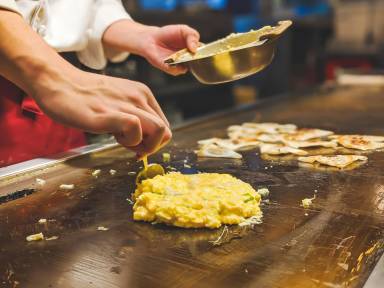
Give the afternoon to something specific rather than general. A food walk along a real local shopping street — the kind of place where the same croquette shop has been frying since the 1960s — shows you how Tokyo eats day to day, and doubles as dinner. If you would rather cover ground, an e-bike through the backstreets gets you across three neighbourhoods in an afternoon.
Later, a go-kart run past Tokyo Tower and through Shibuya Crossing is unashamed tourist theatre and a very good last Tokyo night. It needs an international driving permit issued before you leave home.

Send your big suitcase from your Tokyo hotel straight to Kyoto tonight, around ¥2,000-2,500. Hakone involves a switchback railway, a cable car and a ropeway — none of them designed for a 23kg case.
Day 3 — Hakone: the loop, then an onsen evening
A mid-morning departure is enough. The Hakone circuit is a chain of small transports: the Tozan railway zigzagging up the mountain with reversals at each switchback, a cable car, then the ropeway over Owakudani, where the hillside vents sulphur and they sell eggs boiled black in the spring water. On the far side a boat crosses Lake Ashinoko to the torii gate standing in the water below Hakone Shrine.
The point of staying the night is the two hours after the day-trippers leave. Hakone goes quiet around five, and a ryokan evening — a hot spring bath, a long kaiseki dinner, nothing scheduled afterwards — is the counterweight to two days of Tokyo. It also leaves you 35 minutes from Odawara and tomorrow's Shinkansen.
With a spare afternoon, Hakone's yosegi-zaiku marquetry workshops are a better use of two hours than another museum. The geometric inlay is a local craft, not a souvenir invented for visitors.


Ryokan dinner is normally served at a set time between 6 and 7pm and check-in closes earlier than a hotel's. Tell them your arrival time and do not plan a late one.
Day 4 — West to Kyoto: the eastern temples and Fushimi Inari at night
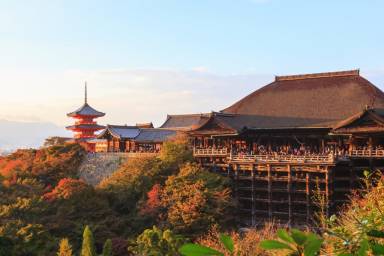
Down to Odawara in the morning and west on the Shinkansen; two hours later you are in Kyoto with your suitcase already at the hotel. The afternoon belongs to Higashiyama, the eastern hills: Kiyomizu-dera's terrace, the stepped lanes of Sannenzaka and Ninenzaka below it, and the walk north through Yasaka Shrine into Gion. Do it in that order, because it runs downhill and ends where dinner is.
Nishiki Market is the other option for a Kyoto arrival afternoon, and it is genuinely better treated as lunch than as a sight — the department store food basements a few streets away are quieter and, for actual eating, better.
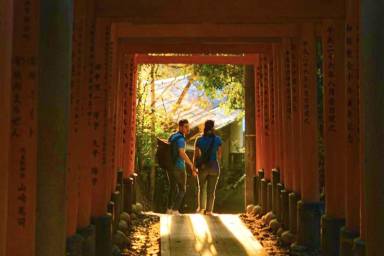
Then go to Fushimi Inari at night. The shrine never closes and is unstaffed after dark, the gate tunnels are lit, and the daytime crush is entirely absent. It is five minutes from Kyoto Station on the JR Nara line. Of everything in this itinerary, this is the piece most people wish they had known about.

Kyoto's buses are slow and full. For anything on the east side, walk or take a taxi; for Arashiyama and Fushimi, use the trains. Budgeting an hour for a 20-minute bus ride is the standard Kyoto mistake.
Day 5 — Arashiyama early, then the north-west
Set an alarm. The bamboo grove at Arashiyama is a ten-minute walk and holds perhaps a hundred people comfortably; by 10am there are thousands, and by mid-morning it is a slow-moving line. At 7.30am it is close to empty and worth every minute of lost sleep. Tenryu-ji's garden next door opens at 8.30 and is one of the oldest surviving temple gardens in Japan.
From Arashiyama, the north-west of the city holds Kinkaku-ji, the gold pavilion, and the rock garden at Ryoan-ji. They are close to each other but a real journey from anywhere else, which is why they belong together on one morning rather than scattered across two days. A full-day guided circuit handles the joins, and a bike is genuinely the fastest way to move around Kyoto's flat grid if you would rather be independent.
Keep the last evening loose: Pontocho's lantern-lit alley along the Kamo River, a final meal, and an early night before the airport.
Do not book a departure flight before about 1pm on day five, or you will spend your last morning in a station rather than a garden.
Planning this trip
The JR Pass still does not pay off at five days
Add up the actual fares: Tokyo to Odawara is about ¥3,700, Odawara to Kyoto about ¥11,300, and the Haruka to Kansai Airport about ¥3,000 — call it ¥18,000 of rail. A 7-day national pass is around ¥50,000. Even a one-week regional pass will struggle to beat point-to-point tickets on a one-way route like this. Buy tickets as you go through the SmartEX app or at any machine. The pass becomes arguable only when you add Hiroshima and a return leg to Tokyo, which needs eight to ten days.
Send your suitcase ahead (takkyubin)
Every hotel front desk in Japan can forward a suitcase to your next hotel overnight for roughly ¥2,000-2,500 per bag. You hand it over at check-out, fill in a short form with the next hotel's name and your arrival date, and it is waiting at reception when you get there. Here the forward to make is Tokyo to Kyoto on the night of day two, so Hakone is done with a day bag. Shinkansen luggage racks are small and the oversized-bag seats behind the back row now have to be reserved in advance, so travelling with a day bag instead of a 23kg case removes the single most stressful hour of a Japan trip. Book the forward the day before travel and allow one full day in transit — same-day delivery is not guaranteed on longer routes.
IC cards beat single tickets
Suica, Pasmo and ICOCA are now interchangeable nationwide, so whichever one you pick up first works on subways, buses and convenience-store tills for the rest of the trip. Physical Suica cards have had supply problems on and off; the simplest route for iPhone users is to add a Suica directly in Apple Wallet before you land and top it up with a card. IC cards do not cover Shinkansen fares — buy those separately at a machine, at a JR ticket office, or through the SmartEX app.
Beat the Kyoto crowds by three hours
Kyoto's problem is not its number of visitors but their timing. Coaches and day-trippers from Osaka arrive between 10am and 4pm, and almost nobody is out before 8am or after 6pm. Fushimi Inari after dark, Arashiyama at 7.30am, Kiyomizu-dera at opening — the same three places at those hours are a different city. Build the day around that rather than around a map.
When to go, and the weeks to avoid
Cherry blossom lands late March to early April in Tokyo and Kyoto, with a few days' variation year to year. Autumn colour peaks mid to late November in Kyoto, which is the single busiest sightseeing period of the year there. Golden Week and Obon are domestic travel holidays — prices rise, trains fill and popular temples queue. Winter is quietly the best-value season and, counter-intuitively, the most reliable time to actually see Mount Fuji: the dry, clear air of December to February shows the mountain far more often than the humid haze of June to August.
What to book ahead, and when
Accommodation is the tight constraint, not tours. Kyoto accommodation is the binding constraint in April and November; book three to six months out for those, and one to two months otherwise. Shinkansen seats can usually be reserved a few days out except during cherry blossom season, Golden Week (late April to early May) and Obon (mid-August), when reserved cars sell out and unreserved cars mean standing. Guided tours with small group sizes go first on weekends and in peak foliage weeks; a week or two of notice is normally enough outside those windows.
Frequently Asked Questions
Is five days enough for Japan?
For Tokyo and Kyoto, yes, at a fair pace and with one mountain night in between. It is not enough to add Osaka, Nara or Hiroshima without cutting something that matters. Five days done well beats seven days spread thin.
Should I add Osaka to a five-day trip?
No. Osaka is 29 minutes from Kyoto and easy to reach, but adding it means either giving up a Kyoto day or moving hotels a fourth time. If Osaka's food scene is what you want, go for an evening from Kyoto and come back on the last train — the JR Special Rapid runs until around midnight.
Is Nara possible on five days?
Only by sacrificing your second Kyoto day. Nara is a genuine half-day from Kyoto, about 45 minutes on the Kintetsu limited express, but on five days the honest answer is that Kyoto has not yet had enough time. Nara belongs on the six-day version of this route.
Do I need a JR Pass for this itinerary?
No. Roughly ¥18,000 of rail travel against ¥50,000 for a 7-day pass makes it a clear loss. This advice has changed since the 2023 price rise, so ignore older itineraries that treat the pass as automatic.
How many hotels will I be changing?
Three: two nights Tokyo, one night Hakone, two nights Kyoto. That is the maximum a five-day trip should attempt. Forward your suitcase between Tokyo and Kyoto and the Hakone night costs you nothing in hassle.
When is the best time of year for this route?
Late October to early December and late March to early April are the best-looking. November's foliage in Kyoto is spectacular and extremely crowded. If you would rather have space than colour, January and February are cheap, quiet and give you the most reliable views of Mount Fuji.
Can I do this route in reverse, Kyoto first?
Yes, and it is worth doing if your flights favour it — Kansai in, Haneda out. The one downside is arriving jet-lagged into Kyoto, where the good hours are early morning; Tokyo is more forgiving of a disordered first day.
How much should I budget?
Excluding flights, roughly ¥20,000-30,000 per person per day covers a mid-range hotel, meals and local transport, plus about ¥18,000 of long-distance rail across the trip and one ryokan night, which will usually cost more than a city hotel because dinner and breakfast are included.
Book the guided parts of this trip
Every tour above runs with a verified local operator.
Browse all Japan tours