5 Days in Sri Lanka
Five days is where Sri Lanka stops being a Colombo day-trip trip and becomes a route. Day 1 Colombo, day 2 Sigiriya and Dambulla, day 3 Kandy and the Temple of the Tooth, day 4 the tea country around Nuwara Eliya with the hill train, day 5 back to the coast for Galle. Five days covers the cultural triangle and the hills but not the safari parks or the beaches — those need seven.
5 days in Sri Lanka at a glance
| Day | Based in | What you do | Getting there |
|---|---|---|---|
| 1 | Colombo | Arrive, and give Colombo an afternoon | The airport is 35 km north of the city, 45-90 minutes depending on traffic |
| 2 | Sigiriya | North to the cultural triangle | Colombo to Sigiriya is 175 km, about four hours |
| 3 | Kandy | Down to Kandy and the Temple of the Tooth | Sigiriya to Kandy is about 90 km, two and a half to three hours |
| 4 | Nuwara Eliya | Into the tea country | Kandy to Nuwara Eliya is 80 km and takes three hours, with stops |
| 5 | Colombo | The hill train, then back down to the coast | Nuwara Eliya to Colombo is 180 km and five to six hours |
Five days is the first length where driving north and staying there makes more sense than returning to Colombo each night. The shape is an anticlockwise loop: up to the cultural triangle, across to Kandy, up into the tea hills, and back down to the coast. You will still be moving most mornings, which is the trade — but each drive is two to three hours rather than the four-hour each-way runs a Colombo base forces on you. The one thing five days cannot absorb is a national park; Udawalawe and Yala are far enough south that adding them means cutting either Kandy or the hills.
Travellers who want the classic route without a beach week attached, and anyone with a fixed five-day window between flights.
Arrive, and give Colombo an afternoon
Most long-haul flights land in the early morning, which gives you most of a usable day. Rather than fight jet lag with a four-hour drive, spend it in Colombo: the fort district, Pettah, the Gangaramaya temple, and food. A tuk-tuk tour is the least demanding way to see a hot city on the day you arrive, and the street-food tour in the evening sets up the rest of the trip — once you know what a good kottu or a proper rice and curry tastes like, you order better for the next four days.


If your flight lands after 6pm, sleep in Negombo instead — it is 10 km from the airport and you drive north tomorrow anyway.
North to the cultural triangle
Drive north to Sigiriya and Dambulla. Going up the day before and sleeping near the rock is what turns the brutal 3am Colombo day trip into a civilised 6.30am start, and Sigiriya at 7am is a different experience from Sigiriya at 10am — cooler, quieter, and the frescoes are not behind a queue. Dambulla's five painted caves sit half an hour south and work well in the heat of the afternoon. In the dry season, from roughly June to September, a late-afternoon jeep safari at Minneriya or Kaudulla adds elephants on the reservoir bed.
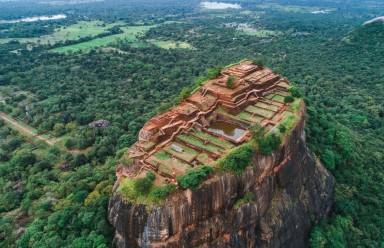
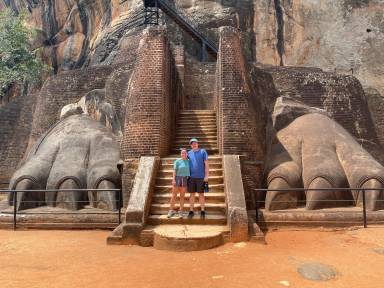

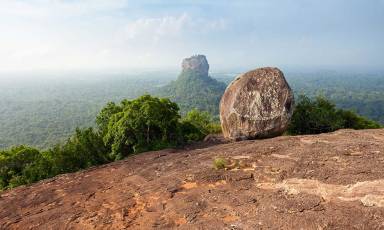
Book the rock for the day you wake up there, not the day you arrive. Climbing after a four-hour drive is how people turn back at the lion's paws.
Down to Kandy and the Temple of the Tooth
Kandy is under three hours south of Sigiriya, so the morning is free — a village tour, Polonnaruwa's ruins, or simply a slow start. Arrive in Kandy by mid-afternoon and you can walk the lake, then be at the Temple of the Tooth for the 6.30pm puja, which is the version of the temple worth seeing: drummers, oil lamps, and the relic chamber opened to a moving queue. Kandy in the evening, with the lake lit and the town cool, is the argument for sleeping here rather than day-tripping from Colombo.

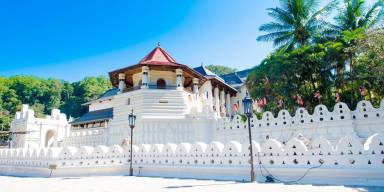
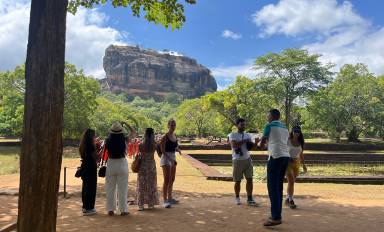
The cultural dance shows near the lake are staged for tourists and honest about it. Go for the drumming, not for authenticity.
Into the tea country
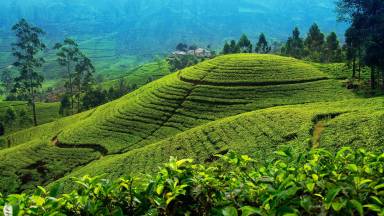
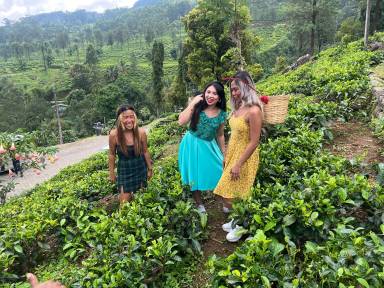
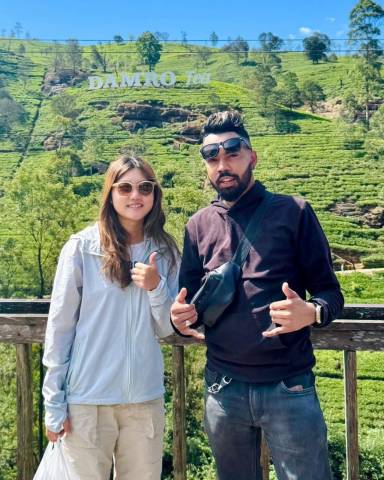
The climb from Kandy to Nuwara Eliya is one of the best drives on the island — waterfalls, switchbacks, and tea estates that start appearing around Ramboda. Nuwara Eliya sits at 1,900 metres and was built by the British as a hill station, which is why it has a racecourse, a post office in mock Tudor and genuinely cold nights. Stop at a working tea factory on the way up: the good ones walk you from the withering troughs to the tasting table in about forty minutes and explain why the same leaf becomes six grades.
Pack one warm layer for this night. Nuwara Eliya drops to 10°C and few hotels have heating.
The hill train, then back down to the coast
Take the train from Nanu Oya as far as Ella if you can get a seat — four hours through tea estates and over the Nine Arch bridge, and the reason people put Sri Lanka on a list in the first place. Then it is a long drive back to Colombo, or, if your flight allows, a stop at Galle Fort on the coast road. This is the compromise day of a five-day trip: the country is long and the airport is at the top of it.


Reserved train seats open 30 days ahead and go quickly. Unreserved second class always has room to stand, which is how most people ride it anyway.
Planning this trip
Getting around
Sri Lanka is small on the map and slow on the ground. Colombo to Kandy is 115 km and takes three to four hours; Kandy to Ella is 140 km and takes four to five. Distances mislead, so plan by hours, not kilometres. A car with a driver runs roughly USD 55-75 a day including fuel and the driver's accommodation, and for two or more people it costs about the same as separate transfers while saving hours. Intercity trains are cheap and scenic but slow and often full — the Kandy to Ella line is worth taking for the ride itself, not as transport.
Money and cards
The currency is the Sri Lankan rupee. Cards work in Colombo hotels, larger restaurants and supermarkets; almost nothing else. Carry cash for tuk-tuks, entrance fees at smaller sites, village lunches and tips. ATMs are reliable in Colombo, Kandy, Galle and Negombo and thin everywhere else, so draw before you leave a town.
Visa
Most nationalities need an ETA before arrival, applied for online at the official Sri Lankan immigration site. Apply a few days ahead rather than at the airport, and use the government site directly — the copycat sites that rank alongside it charge a markup for the same document.
What to wear at temples
Shoulders and knees covered at every Buddhist site, and shoes off before you enter — that includes Dambulla, the Temple of the Tooth in Kandy and Colombo's Gangaramaya. Socks are worth carrying: stone courtyards get genuinely painful underfoot by midday. Never pose with your back to a Buddha image for a photograph; it is treated as a serious offence and tourists have been deported for it.
When to go
Sri Lanka has two monsoons hitting opposite coasts, so there is no bad month for the whole island. December to March is dry on the west and south coasts and in the hill country, which is the season for Colombo, Galle, Mirissa and Ella. May to September is dry on the east coast. April and October are the inter-monsoon months and can be wet anywhere. Whale watching off Mirissa runs roughly November to April.
Tipping
Tipping is expected but small. Roughly 10% at restaurants where service is not already added, LKR 500-1000 a day for a driver-guide, and LKR 200-500 for a safari tracker. Rounding up a tuk-tuk fare is enough.
The hill-country train
The Kandy to Ella line is the one train worth planning around, and the best section is Nanu Oya to Ella — about four hours through tea estates and the Nine Arch bridge. Reserved seats open 30 days ahead and sell out within hours; unreserved second and third class are always available on the day and are standing-room by Nuwara Eliya. Sit on the right-hand side heading south for the valley views. If a reserved seat is not available, take the drive and use the train for the short Nanu Oya-Ella leg only.
Frequently Asked Questions
Is five days enough to see Sri Lanka?
It is enough for the cultural triangle, Kandy and the tea country, which is the core of the island. It is not enough to add a national park or beach time. If safaris or the south coast matter to you, seven days is the honest minimum.
Should I take the train or drive between Kandy and Ella?
Both, if you can. The scenic section is Nanu Oya to Ella, roughly four hours. Take the train for that leg and have your driver meet you at the other end with the luggage — that way you get the views without losing a day to the slow northern half of the line.
How many hotels will I change in five days?
Three or four: Colombo, Sigiriya, Kandy and Nuwara Eliya. That is the cost of a loop. If changing hotels every night sounds worse than long drives, use the four-day Colombo-based itinerary and add a day to it instead.
Do I need a driver for five days?
It is the practical option. A car with a driver is roughly USD 55-75 a day all in, which for two people is close to what separate transfers cost, and the loop involves five different overnight stops. Self-driving is legal with a temporary permit but the roads, the buses and the night driving make it a poor first-visit choice.
What is the best month for this route?
December to March. The west coast, the south and the hill country are all dry, which is where this itinerary spends its time. April and October are the inter-monsoon months and the hills get heavy afternoon rain.
Is Nuwara Eliya worth a night?
For the drive up and the tea estates, yes. The town itself is small and a little strange — a Scottish hill station transplanted to the tropics. Many travellers prefer to push on to Ella, which is younger and better for walking, and treat Nuwara Eliya as a long lunch stop.
Book the guided parts of this trip
Every tour above runs with a verified local operator.
Browse all Sri Lanka tours