6 Days in Thailand: Bangkok and Three Days in the North
Six days is three nights in Bangkok and three in Chiang Mai, and the third Chiang Mai day is what makes it work: one for the old city, one for the mountain, one for a cooking class or the countryside. Fly between the two, about 75 minutes. Still no beach — that needs seven days.
6 days in Thailand at a glance
| Day | Based in | What you do | Getting there |
|---|---|---|---|
| 1 | Bangkok | The old royal quarter, then Chinatown at night | Suvarnabhumi to central Bangkok: 45–60 minutes by road, or about 30 minutes via the Airport Rail Link to Phaya Thai |
| 2 | Bangkok | Ayutthaya, the capital that was destroyed | Bangkok to Ayutthaya: about 1 |
| 3 | Bangkok | The canal city, a cooking class, and Muay Thai | — |
| 4 | Chiang Mai | Into the north, and the old city on foot | Bangkok to Chiang Mai: about 1 hour 15 by air |
| 5 | Chiang Mai | Elephants in the hills, and a massage that evening | Sanctuaries sit 1 to 1 |
| 6 | Chiang Mai (departure) | The mountain temple, or the mountain itself | Chiang Mai to Bangkok or onward: 1 hour 15 by air |
The sixth day is the one that changes Chiang Mai. On two nights in the north you get the old city, the food, and one half-day out — good, but everything mountain-shaped stays out of reach. On three nights, Doi Inthanon opens up, an elephant sanctuary stops competing with Doi Suthep for the same morning, and you get an evening in the city with nothing scheduled, which is when Chiang Mai is at its best anyway.
The structure is the same three Bangkok days as the shorter routes — the old royal quarter, a full day out to Ayutthaya, and a river-and-food day — followed by one 1 hour 15 flight and three days in the north. One internal move across six days. That ratio is the whole argument for this itinerary: every other six-day Thailand plan you will read adds a beach, which means two flights, three hotels, and two nights somewhere you have barely unpacked.
If you are certain you want a beach on this trip, the honest advice is to drop Chiang Mai rather than squeeze it, spend three days in Bangkok and three in Krabi, and accept that you are doing the southern version of Thailand. Trying to hold Bangkok, Chiang Mai and an island inside six days is where itineraries start lying to you.
Anyone who wants Thailand's north properly — mountains, sanctuaries, Lanna food — rather than a highlights reel with a beach bolted on.
The old royal quarter, then Chinatown at night
The palace opens at 8:30 and the difference between arriving then and arriving at 11 is enormous — shade, crowd size, and whether the marble is walkable barefoot. Wat Phra Kaew and the Emerald Buddha are inside the same walls; Wat Pho and the reclining Buddha are ten minutes' walk south; Wat Arun is across the river and should be saved for late afternoon light.
Take the early afternoon off entirely. This is your jet-lag day and Bangkok's 1pm-to-3:30pm heat is not something to power through. Eat somewhere air-conditioned and lie down.
Chinatown after dark is the correct first evening. Yaowarat's kitchens come out around 6pm and the cooking happens on the pavement in front of you — charcoal grills, wok burners running at a roar, queues that know the one thing each stall makes. A guided tuk-tuk food run solves the ordering problem on a night when you have no idea where you are.
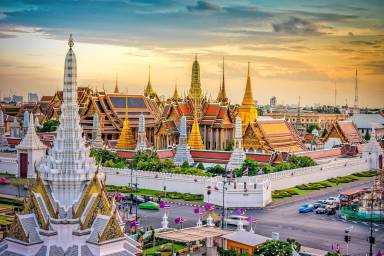

Long trousers and covered shoulders for the Grand Palace, and this is enforced. Anyone who tells you outside the gate that the palace is closed today is running a tuk-tuk scam — walk up and check.
Ayutthaya, the capital that was destroyed
For four hundred years Ayutthaya, not Bangkok, was Siam. It sat on a river island with quarters for Portuguese, Dutch, Japanese and Persian traders, and 17th-century European visitors ranked it with the great cities they knew. A Burmese army burned it in 1767, the population scattered, and the court went downriver to build the city you slept in last night.
What survives is brick: rows of prangs, seated Buddhas without heads, and the famous sandstone head wrapped in the roots of a bodhi tree. It is 1.5 hours north and it takes the day, partly because the site is bigger than people expect — the main temples are kilometres apart and the ground between them offers almost no shade.
The river-return versions are worth the extra hour: you come back down the Chao Phraya by boat with a stop at Bang Pa-In, the royal summer palace, where Thai, Chinese and Italianate pavilions sit around the same lake because the kings who built it were busy proving Siam could deal with Europe on its own terms.


Bring more water than seems reasonable and a hat with a brim. There is very little shelter on the site and the walk between temple groups is longer than the map implies.
The canal city, a cooking class, and Muay Thai
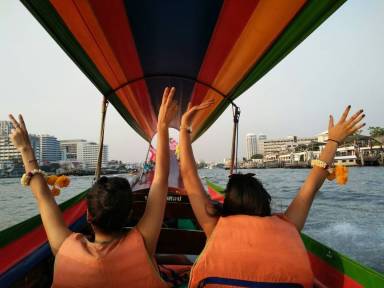
Bangkok was built on water and the Thonburi side still is. A morning longtail run through the khlongs takes a couple of hours and shows you stilt houses, temple landings, monitor lizards and people living at canal level a few hundred metres from a Skytrain line.
The afternoon is for a cooking class, and the market portion is the reason to do it. Most classes start by walking you through a wet market: the four basils, galangal against ginger, shrimp paste, palm sugar, and which of the things in your cupboard at home have been quietly sabotaging your green curry for years.
End the Bangkok leg at Rajadamnern stadium. Muay Thai there is not a demonstration for visitors — it is a real card, running from young fighters early to the main bouts late, with the wailing ringside orchestra speeding up as the rounds go on and the betting section behind you getting steadily louder. Go for the whole evening rather than the headline fight.

Book tomorrow's flight north for late morning. Most Chiang Mai budget flights leave from Don Mueang, which is the further airport, and a dawn departure costs you the whole first Chiang Mai afternoon.
Into the north, and the old city on foot
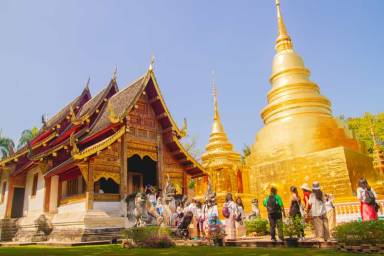
The flight is about 1 hour 15 and lands you somewhere that does not feel like the same country: cooler, greener, mountains on the skyline, and an old town laid out as a square with the moat and sections of the brick wall still in place. Chiang Mai was the capital of the Lanna kingdom, independent of Siam for centuries, and its temples look it — dark teak, tiered roofs, and elephants carved into chedi bases.
Spend the afternoon walking it. Wat Chedi Luang's chedi was the tallest structure in the kingdom until an earthquake took the top off it in the 1500s; nobody has rebuilt it, and it is better for that. Wat Phra Singh, Wat Lok Moli and thirty-odd others sit within the same 1.5km square, which is why guided walking here works when it would be absurd in Bangkok.
Eat northern in the evening. Khao soi is the dish — curried broth, soft egg noodles, a nest of fried ones on top, pickled mustard greens on the side — along with sai ua herb sausage and nam prik ong. None of it is on a standard Bangkok menu, and the night markets are where it lives.

Book somewhere inside or just outside the moat. The old city is walkable end to end in half an hour and staying out by the Ping river means a red-truck ride every time you want dinner.
Elephants in the hills, and a massage that evening
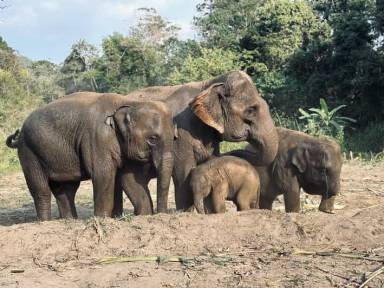
This is the day the sixth night buys you. A half-day sanctuary programme runs about five and a half hours including the drive out into the hills, and on a three-night Chiang Mai leg it no longer has to fight Doi Suthep for the same morning.
Be deliberate about where you go. Elephant tourism here is the ethical minefield of Thai travel and the word 'sanctuary' is unregulated — riding camps use it freely. The rule that actually filters: if riding is offered anywhere on the operation, do not book. Elephants are not structurally built to carry saddles and riders, and the training that makes one accept it is coercion. Look for capped group sizes, feeding and observation rather than tricks, and an operator who will tell you where its animals came from. Bathing sessions are a grey area worth thinking about too: they are fun for you, and they mean an animal being handled by strangers from morning to evening.
You will be back by mid-afternoon, muddy and tired. That is the right moment for the other thing Chiang Mai does exceptionally well — an hour and a half of northern-style massage, which is cheaper and generally better here than in Bangkok.
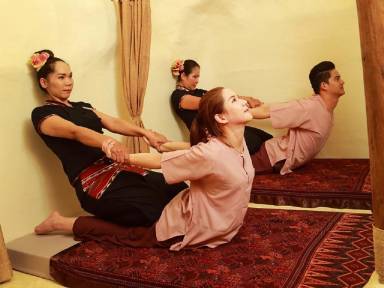
Wear clothes you do not care about and bring a full change. Every honest sanctuary day ends with mud on you somewhere.
The mountain temple, or the mountain itself
Two ways to finish, and the choice depends entirely on your flight. If you are leaving in the evening, take the morning for Doi Suthep. A red songthaew climbs the mountain road above the city, and then there are 300 steps up between two long naga serpents to a gold chedi and a terrace overlooking the whole Chiang Mai plain. Pair it with Wat Pha Lat on the way — a small forest temple in the trees beside a stream that most visitors drive straight past, and which several people will tell you was their favourite thing in the north.
If your flight is tomorrow, or very late tonight, take Doi Inthanon instead. It is the highest point in Thailand at 2,565 metres, a nine-hour day trip that takes in waterfalls, cloud forest, a Hmong market and the twin chedis built for the king and queen, and the temperature at the top is genuinely cold by Thai standards. It is the best full day available out of Chiang Mai and it does not fit around an afternoon departure. Do not try to make it fit.
Whichever you pick, the airport is fifteen minutes from the old city, which is the one piece of generosity in this itinerary's logistics.


Doi Inthanon's summit sits around 15–20°C and can be colder in December and January. Take a fleece — it is the one day in Thailand where you will want one.
Planning this trip
Two monsoons, two coasts, two different seasons
This is the fact most Thailand itineraries get wrong, and it matters more than anything else on this page. Thailand does not have one rainy season. It has two, on two coasts, and they run at different times. The Andaman coast — Phuket, Krabi, Koh Lanta, Koh Phi Phi — is wettest roughly May to October, when the southwest monsoon pushes straight onto those beaches. The Gulf coast — Koh Samui, Koh Phangan, Koh Tao — is driest through much of that same period and takes its heaviest rain October to December. So a September trip that would be a washout in Krabi can be perfectly good on Samui, and a November trip that is glorious in Krabi can be grey and choppy on Samui. If a blog tells you to avoid Thailand in September, it is thinking about one coast and forgetting the other. Bangkok, Chiang Mai and Pattaya sit outside that split: they get most of their rain between May and October, usually as heavy late-afternoon downpours rather than all-day drizzle, and a wet-season afternoon in Bangkok costs you an hour, not a day.
When to come, and the one week to avoid unless you want it
November to February is the best overall window for this route: dry, cooler, and comfortable for walking around Bangkok's old city or Chiang Mai's moat. It is also the busiest and the most expensive, so book accommodation early. March to May is the hot season and April is genuinely brutal — mid-thirties Celsius with humidity, and sightseeing has to be reorganised around early mornings and late afternoons. Songkran, the Thai new year, falls around 13–15 April and turns the whole country into a multi-day water fight. It is one of the best things you can experience in Thailand if you go looking for it. It is also close to impossible to travel through if you did not plan for it — transport is full, many businesses close, and you will get soaked whether or not you consented. Decide which side of that you are on before you book April dates. One more thing worth knowing: northern Thailand, including Chiang Mai, has a burning season roughly February to early April when agricultural smoke pushes air quality down badly. If you are sensitive to that, weight your days towards Bangkok and the coast in those months.
Bangkok to Chiang Mai: fly, and be honest about the train
The flight is about 1 hour 15 minutes and is often startlingly cheap on Thai AirAsia, Thai Lion, Thai Vietjet or Nok Air. With bags and airport time it is a half-day at worst, and on a trip of five or six days that is the correct choice, full stop. Don Mueang handles most of the budget carriers and is the further of Bangkok's two airports from the centre; allow for that when you pick a departure time. The overnight sleeper train from Krung Thep Aphiwat to Chiang Mai is a genuinely good experience — around 12 to 13 hours, a proper berth in second-class air-conditioned, curtains, and morning light over rice fields as you come into the north. But it is not a free night's accommodation and it does not save you a day. You arrive tired, you lose the previous evening to boarding, and you will be operating at about 70 percent on arrival. On three or four Thailand days, do not take it. On five or six, take it only if the train itself is something you want to do, not as a logistics hack.
Elephants: how to not fund the bad version
Elephant tourism in Thailand is an ethical minefield, and Chiang Mai is the centre of it. The line to draw is simple: do not go anywhere that offers riding. An elephant's spine is not built to carry a saddle and riders, and the training that makes a wild-born animal accept one is coercive. Bathing programmes are a softer grey area — they are popular, but they mean elephants being repeatedly handled by strangers all day, and several genuinely good sanctuaries have quietly dropped them. What to look for instead: no riding offered at all, capped visitor numbers, observation and feeding rather than performance, and a place that will tell you where its elephants came from. If a booking page shows a tourist in a saddle anywhere, close the tab. Also be sceptical of the word 'sanctuary' on its own. It is not a regulated term in Thailand and plenty of riding camps have simply added it to their name.
Temple dress code — it is actually enforced
The Grand Palace and Wat Phra Kaew turn people away every single day. Shoulders and knees must be covered, for men and women both. No vests, no shorts, no short skirts, no see-through fabric, and shoes come off before you step into the ordination hall. There is a booth near the entrance that will lend or sell you a cover-up, but the queue for it is long and you will have paid for the privilege of being unprepared. Wear long trousers or a maxi skirt and bring a light scarf. Wat Pho and most other temples are more relaxed but the same principle applies, and covering up is simply the polite move. Go early — the Grand Palace opens at 8:30am and the difference between arriving at 8:30 and arriving at 11 is the difference between a manageable crowd and a scrum in full sun. One scam to know about: if someone outside the palace tells you it is closed today for a ceremony and offers to take you somewhere else by tuk-tuk, it is not closed. Walk to the gate and check for yourself.
Pacing — the honest version
Most published Thailand itineraries are over-packed, and the giveaway is when a single day contains a floating market, the Grand Palace and a rooftop bar. In practice a Bangkok day trip out to the markets or Ayutthaya eats seven to nine hours door to door, and you will not want anything demanding afterwards. The working rule for a short trip is one anchor per day plus one light thing in the evening. That is not laziness — it is what the heat does to you. Between roughly 1pm and 3:30pm most of the year, walking around outdoors in Bangkok is unpleasant, and building an indoor block, a boat, a massage or a long lunch into that window is the single easiest upgrade to a Thailand itinerary. If you are choosing between adding a fifth activity and adding a genuinely unhurried evening meal, add the meal.
Frequently Asked Questions
Could I do Bangkok, Chiang Mai and a beach in six days?
Not well. That is two internal flights and three hotels inside six days, and the beach portion comes out at two nights, of which one is an arrival evening. Seven days is where Bangkok, Chiang Mai and Krabi start to work. On six, either do this route, or drop Chiang Mai and split the trip between Bangkok and Krabi.
Is three nights in Chiang Mai too many?
No — three is the number where it starts making sense. Two nights forces you to choose between an elephant sanctuary and Doi Suthep, and rules out Doi Inthanon entirely. Three gives you the old city, one sanctuary or mountain day, one big day out, and an unscheduled evening, which is when a lot of people decide they like Chiang Mai more than Bangkok.
Should I take the sleeper train north?
It is a good trip in its own right — 12 to 13 hours, a proper berth, northern rice fields at dawn — but it is not a shortcut. You lose an evening boarding and arrive functioning at about 70 percent, which on a six-day trip costs you a real day. Take it because you want to take a train, not to save money on a hotel.
Can I visit Chiang Rai and the White Temple from Chiang Mai?
Yes, but understand what it costs. Chiang Rai is about three hours each way and day trips run around 12 hours door to door — the White, Blue and Red temples plus a hill-tribe village stop. On a three-night Chiang Mai leg it will consume one of your two usable days, so it is a straight swap against the elephant sanctuary or Doi Inthanon, not an addition.
How do I choose an ethical elephant experience?
The single reliable filter is that no riding is offered anywhere on the operation. 'Sanctuary' is not a regulated term in Thailand and riding camps rebrand freely. Beyond that: capped numbers, feeding and observation rather than performance, transparency about where the elephants came from, and be thoughtful about bathing programmes, which good operators have increasingly stopped running.
When should I do this trip?
November to February is best — dry in Bangkok, cool in Chiang Mai, sometimes into the low teens at night in the north. Avoid late February to early April in Chiang Mai: that is the burning season and the air gets genuinely bad. April is also Songkran, around the 13th to 15th, which is a nationwide water fight and either the best or worst week of your life depending on your plans.
What is the rainy season actually like?
Bangkok and Chiang Mai take most of their rain May to October, usually as an hour of heavy afternoon storm rather than an all-day grey. The coasts are the part people get wrong: Thailand has two monsoons, so the Andaman side (Phuket, Krabi) is wettest May to October while the Gulf islands (Samui, Phangan) get theirs October to December. Any advice that treats 'Thai rainy season' as one thing is only ever talking about half the country.
How much does the internal flight cost and when should I book it?
Bangkok to Chiang Mai is one of the cheapest routes in Asia on Thai AirAsia, Thai Lion, Thai Vietjet or Nok Air, and it is 1 hour 15 in the air. Prices climb as the date approaches and spike hard around New Year and Songkran, so book it as soon as your dates are fixed. Note that most budget carriers use Don Mueang, not Suvarnabhumi.
Book the guided parts of this trip
Every tour above runs with a verified local operator.
Browse all Thailand tours